Help from Fisher's Catechism – Just read the portion(s) you are interested in, and you will find much food for thought.
Fisher's Catechism on the Assemblies Shorter Catechism
QUESTION 49. Which is the Second Commandment?
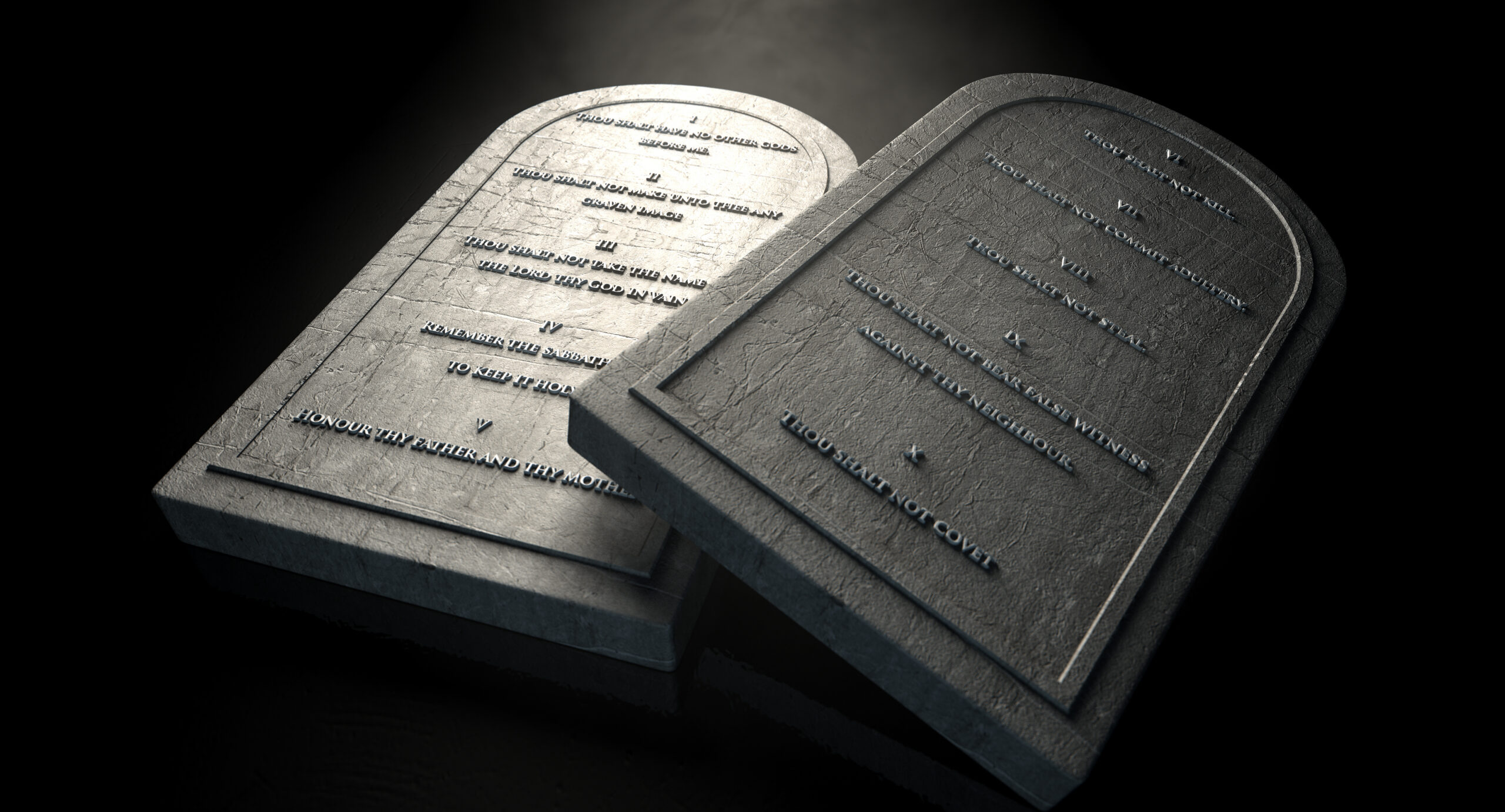
ANSWER: The Second Commandment is, Thou shalt not make unto thee any
graven image, or any likeness of any thing that is in heaven above, or that is in the
earth beneath, or that is in the water under the earth. Thou shalt not bow down
thyself to them, nor serve them: for I the Lord thy God am a jealous God, visiting the
iniquity of the fathers upon the children, unto the third and fourth generation of
them that hate me; and showing mercy unto thousands of them that love me and keep
my commandments.
QUESTION 50. What is required in the Second Commandment?
ANSWER: The Second Commandment requireth the receiving, observing, and
keeping pure and entire, all such religious worship and ordinances as God hath
appointed in his word.
Q. 1. What is the opinion of the Papists respecting this commandment?
A. They allege that it is not a distinct precept from the first, but only an appendix,
or supplement to it, by way of illustration.
Q. 2. What is their practice, in consequence of this opinion?
A. They constantly leave it out in their mass books and other liturgies of their
church, lest the people should observe the manifest contrariety of their image
worship, to what is here so expressly forbidden.
Q. 3. In what then does the Second Commandment differ from the first?
A. The First Commandment respects the object, and requires that we worship the
true God for our God, and no other: the second respects the means of worship, and
requires that the true God be worshipped in such a way only, and by such ordinances
as he has appointed in his word, in opposition to all human inventions.
Q. 4. What is meant by religious worship?
A. That homage and respect we owe to a gracious God, as a God of infinite
perfection; by which we profess subjection to, and confidence in him, as our God in
Christ, for the supply of all our wants; and ascribe the praise and glory that is due to
him, as our chief good, and only happiness, Psalm 95:6, 7.
Q. 5. What are these religious ordinances, which God has appointed in his word?
A. They are “prayer and thanksgiving in the name of Christ; the reading,
preaching, and hearing of the word, the administration and receiving of the
sacraments; church government and discipline; the ministry and maintenance thereof;
religious fasting; swearing by the name of God; and vowing to him.”64
Q. 6. Is prayer a moral duty founded in the law of nature?
A. It certainly is; the necessary dependence of the rational creature upon its
Creator, plainly proves it to be so. Hence we find the very Heathens practising it,
when reduced to straits, Jonah 1:14.
64 See Larger Catechism, Quest. 108.Q 49. WHICH IS THE SECOND COMMANDMENT
Q. 7. How does it appear to be an instituted means of worship?
A. From a variety of scripture texts enjoining the practice of it, in all cases and
circumstances, Psalm 50:15; Phil. 4:6; 1 Thess. 5:17.
Q. 8. What is acceptable prayer?
A. It is an asking in Christ’s name, what God has promised to give, John 14:13;
with a full persuasion that he hears, and will answer, Mark 11:24; James 1:6.
Q. 9. How manifold is religious thanksgiving?
A. TWOFOLD; stated and occasional.
Q. 10. What is stated thanksgiving?
A. It is not only the thankful acknowledgment of mercies daily received, which is
a branch of prayer; but likewise the singing the praises of God with the voice, which
is a stated act of worship, distinct from prayer, though ejaculatory prayer ought
always to be joined with it, Psalm 57:7.
Q. 11. How do you prove that singing with the voice is a stated act of worship
appointed under the New Testament?
A. From the example of Christ and his apostles, who, after the first supper, sang a
hymn, (or psalm, as on the margin,) Matt. 26:30; and from the injunction laid upon
all Christians to be employed in this exercise, as a stated duty, Eph. 5:18, 19; James
5:13.
Q. 12. What should be the subject matter of our praises to God?
A. The psalms, hymns, and spiritual songs, which are dictated by the Spirit of
God in scripture; and not any human composure whatever, Eph. 5:19.
Q. 13. In what manner should these be sung?
A. “With grace in our hearts to the Lord,” Col. 3:16.
Q. 14. What is it to sing with grace in our hearts to the Lord?
A. It is to have our hearts going along with our voice, in suitable acts of faith, and
elevated affections, Psalm 57:7.
Q. 15. Are not the Psalms of David, as we sing them in our language, of human
composure?
A. The translation in metre is human, but the sense and meaning are the same as
the original.
Q. 16. What is occasional thanksgiving?
A. It is the setting some time apart for giving thanks to God, on account of some
remarkable mercy and deliverance, respecting either churches and nations in general,
Neh. 12:27; or ourselves and families in particular, Eph. 5:20.
Q. 17. How ought we to engage in this duty?
A. With an humble sense of our utter unworthiness of the least of all God’s
favours, 2 Sam. 7:18.
Q. 18. Are reading, hearing, and preaching of the word, acts of worship?
A. Although they are not acts of such immediate worship as prayer and praise, in
which God is immediately addressed; yet being the instituted and ordinary means of
salvation, they ought to be practised and attended with that reverence and regard
which is due to the great God our Saviour, who is present in them, Matt. 28:20; Acts
10:33.
Q. 19. How are the administration and receiving of the sacraments acts of
worship?
A. As in them, by the sensible signs of divine appointment, Christ, and his
benefits, are represented, sealed, and applied to believers, Gal. 3:26; 1 Cor. 11:26.
Q. 20. In what sense are church government and discipline to be ranked among
the ordinances of divine worship?
A. In as far as they are exercised in the name of the Lord Jesus, the alone head of
the church, according to the rule of his word, by church judicatories lawfully
constituted, Matt. 18:20.
Q. 21. Why are the ministry and the maintenance of it placed among religious
ordinances?
A. Because, as a standing ministry in the church, till the end of time, is of express
divine institution, Eph. 4:11-13; so the suitable and comfortable maintenance of it, is
as expressly appointed, not only in the Old Testament, Num. 18:21, 24; but likewise
in the New, 1 Cor. 9:13, 14 — “Do ye not know, that they which minister about holy
things, live of the things of the temple? and they which wait at the altar, are partakers
with the altar? Even so hath the Lord ordained, that they which preach the gospel
should live of the gospel.”
Q. 22. What is religious fasting?
A. “A religious fast requires total abstinence, not only from all food, (unless
bodily weakness do manifestly disable from holding out, till the fast be ended,) but
also from all worldly labour, discourses, and thoughts, and from all bodily
delights.”65 Josh. 7:6; Judges 20:26.
Q. 23. Is bodily fasting, or bare abstinence from food, any part of religious
worship?
A. Not properly in itself; but as it is a mean of divine appointment, for fitting and
disposing us for more spiritual and solemn exercises.
Q. 24. How does fasting appear to be a mean of divine appointment?
A. From the practice of the saints under the Old Testament, Esth. 4:16; Dan. 10:2,
3; from the testimony of Christ, Matt. 6:17, 18, and 17:21; and the example of his
apostles under the New, Acts 13:3; and 14:23.
Q. 25. What are those spiritual and solemn exercises for which fasting is designed
to dispose us?
A. Deep humiliation of soul before the Lord on account of sin, Ezra 9:6; free
confession of it, Dan. 9:20, and turning from it, Joel 2:12, as the genuine fruits of our
taking hold of God’s covenant, Jer. 50:4, 5; together with an importunate requesting
of our gracious God, for that which is the particular occasion of the fast, Psalm
35:13.
Q. 26. Is religious fasting an occasional or a stated duty?
A. It is merely occasional and extraordinary, to be observed as the call of
Providence may require and direct.
Q. 27. What are the occurrences in providence, which are a call to this
extraordinary duty?
A. “When some great and notable judgments are either inflicted upon a people,”
Dan. 9:3, 12-14, “or apparently imminent,” 2 Chron. 20:2-4; “or, by some
extraordinary provocations notoriously deserved,” 1 Sam. 7:3, 6; “as also when some
special blessing is to be sought and obtained,”66 ver. 5, 8, 10.
Q. 28. Is swearing by the name of God an act of immediate and instituted
worship?
A. It is undoubtedly: and that either when we devote ourselves to God in a
covenant of duties, Deut. 6:13, or declare the truth upon oath, when called thereto:
because, in both cases the name of God is solemnly interposed and invoked, Jer. 4:2.
Q. 29. To whom are vows to be made?
A. To God alone, as the only party and witness in the making and performing of
them, Psalm 76:11 — “Vow and pay unto the LORD your GOD.”
Q. 30. What should be the subject matter of our vows to God?
A. Nothing except what may tend either to promote the practice of commanded
duty, Psalm 119:57, or prevent the commission of any sin to which we are more
ordinarily inclined and addicted, verse 106.
Q. 31. What does this commandment require, with respect to all those ordinances,
and parts of worship, which God has appointed in his word?
A. The receiving and observing them; and keeping them pure and entire.
Q. 32. What is it to receive God’s ordinances?
A. It is to approve of, and embrace them, as bearing the stamp of his authority
upon them, Psalm 84:1, 2.
Q. 33. What is it to observe them?
A. It is to set about the practice of them, or to be actually employed in them,
Psalm 55:17, and 119:164; Luke 2:37.
Q. 34. What is it to keep the ordinances of God pure?
A. It is to contribute our utmost endeavour to preserve them from all mixture of
human invention, Deut. 12:32.
Q. 35. What is it to keep them entire?
A. It is, in the exercise of faith, to attend upon each of them in its proper season,
so as that one duty may not jostle out another, Luke 1:6.
Q. 36. What does God require of us in this command, with reference to all false
worship?
A. He requires “the disapproving, detesting, opposing all false worship, Psalm
16:4; and according to each one’s place and calling, removing it, and all monuments
of idolatry, Deut. 7:5.”67
QUESTION 51. What is forbidden in the Second Commandment?
ANSWER: The Second Commandment forbiddeth the worshipping of God by
images, or any other way not appointed in his word.
Q. 1. What are the leading sins forbidden in this commandment?
A. Idolatry and will-worship.
Q. 2. What is the idolatry here condemned?
A. The worshipping of God by images: “Thou shalt not make unto thee any
graven image,” &c.
Q. 3. What is an image?
A. It is a statue, picture, or likeness of any creature whatever.
Q. 4. Is it lawful to have images or pictures of mere creatures?
A. Yes, provided they be only for ornament; or the design be merely historical, to
transmit the memory of persons and their actions to posterity.
Q. 5. Can any image or representation be made of God?
A. No; it is absolutely impossible; he being an infinite, incomprehensible Spirit,
Isaiah 40:18 — “To whom will ye liken God? or, what likeness will ye compare unto
him?” If we cannot delineate our own souls, much less the infinite God; Acts 17:29
— “We ought not to think that the Godhead is like unto gold, or silver, or stone,
graven by art and man’s device.”
Q. 6. What judgment should we form of those who have devised images of God,
or of the persons of the adorable Trinity?
A. We should adjudge their practice to be both unlawful and abominable.
Q. 7. Why unlawful?
A. Because directly contrary to the express letter of the law in this commandment,
and many other scriptures, such as, Jer. 10:14, 15; Hos. 13:2, and particularly Deut.
4:15-19, 23 — “Take ye therefore good heed unto yourselves, (for ye saw NO
MANNER of similitude on the day that the Lord spake unto you in Horeb, out of the
midst of the fire,) lest ye corrupt yourselves, and make you a graven image, the
similitude of any figure, the likeness of male or female,” &c.
Q. 8. How is it abominable?
A. As debasing the Creator of heaven and earth to the rank of his own creatures;
and a practical denial of all his infinite perfections, Psalm 50:21.
Q. 9. May we not have a picture of Christ, who has a true body?
A. By no means; because, though he has a true body and a reasonable soul, John
1:14, yet his human nature subsists in his divine person, which no picture can
represent, Psalm 45:2.
Q. 10. Why ought all pictures of Christ to be abominated by Christians?
A. Because they are downright lies, representing no more than the picture of a
mere man: whereas, the true Christ is God-man; “Immanuel, God with us,” 1 Tim.
3:16; Matt. 1:23.
Q. 11. Is it lawful to form any inward representation of God, or of Christ, upon
our fancy, bearing a resemblance to any creature whatever?
A. By no means; because this is the very inlet to gross outward idolatry: for, when
once the Heathens “became vain in their imaginations, they presently changed the
glory of the incorruptible God into an image made like to corruptible man, and to
birds, and four-footed beasts, and creeping things,” Rom. 1:21, 23.
Q. 12. What is it to worship God by images, according to the idolatrous practice
of Papists?
A. It is either to make use of images, as pretended helps to devotion; or, to
worship God before the images of saints, as intercessors with him.
Q. 13. Can any feigned image of God, or of Christ, be helpful in devotion?
A. No; it is the Spirit only who helpeth our infirmities in all acts of spiritual
devotion, Rom. 8:26; and that faith which is necessary for acceptance in duty, fixes
upon the word of the living God, as its sole foundation, and not upon dead images,
Luke 16:31.
Q. 14. Will it excuse any from the charge of idolatry, that they pretend to worship
the true God before images, or by them, as means of worship, and not the very
images themselves?
A. Not at all; because this is a mean of worship expressly forbidden in this
commandment, which prohibits all bowing down before images, upon whatever
pretext it be — “Thou shalt not BOW DOWN thyself to them, nor serve them.”
Q. 15. Do they worship images who bow down before them, even though it be the
true God they intend to worship by them?
A. In scripture reckoning they do; Isaiah 2:8, 9 — “Their land is full of idols: they
worship the work of their own hands. The mean man boweth down, and the great
man humbleth himself.”
Q. 16. Was it the ultimate intention of the Israelites in the wilderness to pay
divine worship to the golden calf itself; or, to JEHOVAH, by it, and before it?
A. It was undoubtedly their ultimate intention to worship JEHOVAH, the true
God, before that image; as appears from Ex. 32:5 — “When Aaron saw it, he built an
altar BEFORE IT; — and said, “To-morrow is a feast to the Lord,” (or JEHOVAH,
as it is in the original.) And yet, because they did this, so directly contrary to the very
letter of this commandment, they are charged with worshipping the image itself,
verse 8:— “They have made them a golden calf, and have worshipped IT,” &c.
Q. 17. Do not they who honour the picture of a prince, honour the prince himself?
A. If the prince forbid the making of his picture, it is a contempt of his authority
to have it. God has strictly prohibited all images for religious purposes, and therefore
it is impious to have or use them for these ends, Lev. 26:1, 30.
Q. 18. May images be worshipped at all, upon their own account?
A. No; because they are the work of man’s hands: far inferior in dignity to man
himself, Isaiah 45:9-18.
Q. 19. May they be worshipped on account of their ORIGINALS; or those whom
they are designed to represent?
A. They may not; whether designed to represent God, or the saints.
Q. 20. Why may they not be worshipped as they are designed to represent God?
A. Because he never put his name in them; but declares his greatest hatred and
detestation of them, Jer. 44:2-9.
Q. 21. Why may they not be worshipped as they are designed to represent
eminent saints?
A. Because saints, however eminent, are only mere creatures; and therefore
cannot be the objects of worship, either in themselves, or by their images, Acts
14:14, 15.
Q. 22. Can saints in heaven be intercessors for sinners on earth?
A. No; because intercession being founded on satisfaction, none but Christ can
be the intercessor, as none but he is the propitiation for our sins, 1 John 2:1, 2.
Q. 23. Is it lawful, as some plead, to have images or pictures in churches, though
not for worship, yet for instruction, and raising the affections?
A. No; because God has expressly prohibited not only the worshipping but the
MAKING of any image whatever on a religious account; and the setting them up in
churches, cannot but have a natural tendency to beget a sacred veneration for them;
and therefore ought to be abstained from, as having at least an “appearance of evil,”
Isaiah 45:9-18. 1 Thess. 5:22.
Q. 24. May they not be placed in churches for beauty and ornament?
A. No; the proper ornament of churches is the sound preaching of the gospel, and
the pure dispensation of the sacraments, and other ordinances of divine institution.
Q. 25. Were not the images of the cherubims placed in the tabernacle and temple,
by the command of God himself?
A. Yes; but out of all hazard of any abuse, being placed in the holy of holies,
where none of the people ever came: they were instituted by God himself, which
images are not; and they belonged to the typical and ceremonial worship, which is
now quite abolished.
Q. 26. Are our forefathers to be blamed for pulling down altars, images, and other
monuments of idolatry, from places of public worship at the Reformation?
A. No; they had Scripture precept and warrant for what they did, Num. 33:52, and
Deut. 7:5 — “Ye shall destroy their altars, and break down their images, and cut
down their groves, and burn their graven images with fire.”
Q. 27. What do you understand by will-worship, the other leading sin forbidden
in this command?
A. It is the worshipping God in any other way not appointed in his word.
Q. 28. Should there be an express appointment in the word for every part of
divine worship in which we engage?
A. Undoubtedly there should; otherwise we are guilty of innovating upon the
worship of God, and prescribing rules to the Almighty, which is both displeasing to
him, and unprofitable to ourselves, Matt. 15:9.
Q. 29. Who are they that are guilty of innovating upon the worship of God?
A. All they who presumptuously annex their own superstitious inventions to the
divine institutions, under pretence of their being teaching significant ceremonies; as
they of the Popish and Episcopal persuasions do.
Q. 30. What are these significant ceremonies which they add to the instituted
ordinances of God’s worship?
A. The sign of the cross in baptism; kneeling at receiving the sacrament of the
supper; erecting altars in churches; and bowing at the name of Jesus, are a few of
many.Q 51. WHAT IS FORBIDDEN IN THE SECOND COMMANDMENT?
- 231 -
Q. 31. Why may not such ceremonies be used, when they are designed for
exciting devotion, and beautifying the worship of God?
A. Because God has expressly forbidden the least addition to or abatement from
the order and directions he himself has given in his word concerning his own
worship, Deut. 12:30-32 — “What thing soever I command you, observe to do it:
thou shalt not ADD thereunto, nor DIMINISH from it.”
Q. 32. Were there not significant ceremonies in the Jewish worship, under the Old
Testament?
A. Yes; but they were of express divine appointment; and by the same
appointment abolished in the death and resurrection of Christ, Heb. 9:1-15.
Q. 33. May not significant ceremonies be founded on 1 Cor. 14:40 — “Let all
things be done decently and in order?”
A. No; because that text speaks only of the decent and orderly observance of the
ordinances of God already instituted, and not in the least of any thing new to be
added as a part of worship.
Q. 34. Is reading of sermons or discourses from the pulpit an ordinance of God
appointed in his word?
A. So far from it, that we find the contrary practised by our Lord while he was
here upon earth, Luke 4:16, 23; where, after reading his text out of the prophet
Esaias, it is said, he CLOSED the book, and “began to say unto them, This day is this
Scripture fulfilled in your ears,” &c.
Q. 35. How may we be further guilty of a breach of his commandment, than by
idolatry and will-worship?
A. When we neglect, Heb. 10:25, contemn, Matt. 22:5, hinder, chap. 23:13, or
oppose the worship and ordinances which God has appointed in his word, 1 Thess.
2:16; or tolerate those who publish and maintain erroneous opinions or practices,
Rev. 2:14, 15, 20.
Q. 36. What is the doctrine of our Confession concerning the tolerating of those
who publish and maintain erroneous opinions or practices?
A. That “for their publishing of such opinions, or maintaining of such practices,
as are contrary to the light of nature, or the known principles of Christianity, whether
concerning faith, worship, or conversation, or to the power of godliness, they may
lawfully be called to account, and proceeded against by the censures of the church,
and by the power of the civil magistrates.”68
QUESTION 52. What are the reasons annexed to the Second Commandment?
ANSWER: The reasons annexed to the Second Commandment, are, God’s
sovereignty over us, his propriety in us and the zeal he hath to his own worship.
Q. 1. Why does our Catechism make mention of REASONS ANNEXED to this
and the three following commandments?
A. Because God himself has been pleased to subjoin to each of these precepts, the
reasons, arguments, or motives, that should influence our obedience to them.
Q. 2. How many reasons are annexed to this Second Commandment?
A. THREE; contained in these words, “I the Lord thy God am a jealous God.”
Q. 3. Which is the first of these reasons?
A. It is God’s sovereignty over us, in these words I THE LORD; or, I JEHOVAH.
Q. 4. What do you understand by God’s sovereignty over us?
A. It is his absolute supreme power, or right of dominion over us, as his creatures,
Rom. 9:20, 21, by which he can dispose of, ver. 22, 23, and prescribe to us as seems
to him good, Deut 6:17.
Q. 5. In what lies the strength of this first reason for worshipping God by means
of his own appointment?
A. It lies in this, that being our sovereign Lord, it must be his sole prerogative to
prescribe to us the means of his own worship; and, consequently, that it must be our
duty to make his pleasure in this, both the rule and reason of our punctual observance
of what he enjoins, Psalm 95:2, 3.
Q. 6. What is the SECOND reason annexed to this commandment?
A. It is his propriety in us, in these words, THY God.
Q. 7. What other propriety has God in us than by right of creation.
A. He has a propriety likewise by right of redemption, intimated in the preface to
the commands, “I am the Lord THY God, which have brought thee out of the land of
Egypt, out of the house of bondage,” Ex. 20:2.
Q. 8. Is it his propriety by right of creation, or by right of redemption, that
constitutes the federal relation between him and us?
A. It is his propriety by right of redemption, Isaiah 43:1 — “I have REDEEMED
thee; I have called thee by thy name: thou art MINE.”
Q. 9. What influence should his propriety in us, as his people, have upon our
receiving and observing the ordinances of his worship?
A. If we are his people: we are ransomed by the blood of his only begotten Son,
and so under the strongest ties of duty and gratitude, to cleave to the precise manner
of worship prescribed in his word, rejecting all other modes and forms whatever,
Josh. 24:24.
Q. 10. What is the THIRD reason annexed to this commandment?
A. It is the zeal he hath to his own worship, in these words, — I AM A JEALOUS
GOD.
Q. 11. In what sense is God said to be a jealous God?
A. Jealousy is ascribed to him (after the manner of men,) to denote that he puts no
confidence in his creatures, Deut. 5:29 that he has his eye upon them; and is highly
offended when they slight him and bestow that love upon any other, which is due to
him alone, chap. 32:15-26.
Q. 12. What is it for God to have zeal for his own worship?
A. It is to have Such a regard for the ordinances of his own institution, as highly
to resent or revenge any addition to, or alteration of them; of which there is an awful
instance in Nadab and Abihu, who offered strange fire before the Lord, Lev. 10:1-4.
Q. 13. In what does God manifest his zeal for his worship?
A. Both by way of threatening, and by way of promise.
Q. 14. What does God threaten as a testimony of his zeal for his worship?
A. To visit “the iniquity of the fathers upon the children, to the third and fourth
generation of them that hate” him.
Q. 15. What is it to visit the iniquity of the fathers upon the children?
A. It is to inflict punishment upon the children for the faults and offences of their
fathers.
Q. 16. Are there any scripture examples of God’s doing so?
A. As to temporal punishments there are: Seven of Saul’s sons were hanged
before the Lord, for his offence in slaying the Gibeonites, 2 Sam. 21:8, 9; and for the
sins of Jeroboam, his whole house was utterly extinguished, 1 Kings 15:29, 30.
Q. 17. Is this thought just and equal among men?
A. Yes; as appears by the common practice of disinheriting the children of traitors
and rebels for the treasonable practices of their fathers, in order to create a greater
detestation of these crimes in others.
Q. 18. Whether are temporal judgments only, or spiritual and eternal plagues also,
intended in this threatening?
A. Spiritual and eternal plagues are also intended, Matt. 25:41.
Q. 19. How does it appear that spiritual and eternal judgments are included in this
threatening?
A. It appears from this, that the punishment threatened should bear some
proportion to the mercy promised; so that if the mercy promised be of a spiritual and
eternal nature, the judgments threatened must be of the same kind.
Q. 20. How does the scripture illustrate this?
A. By the issue of the final sentence at the great day, which is, that the wicked
“go away into everlasting punishment, but the righteous into life eternal,” Matt.
25:46.
Q. 21. How does it consist with the justice of God, to inflict spiritual and eternal
judgments upon children for the sins of their parents?
A. It is entirely consistent with it; because the children punished with spiritual
and eternal judgments, are only such as have shown themselves heirs to their fathers’
sins, either by copying them, Jer. 31:29, 30, or not disapproving of and mourning for
them; by which means their fathers’ sins become their own, Psalm 49:13.
Q. 22. How can the visiting the iniquity of the fathers upon the children be
reconciled with Ezek. 18:20 — “The son shall not bear the iniquity of the father.
A. This passage in Ezekiel is to be understood of the son who does not tread in
the steps of his wicked father; as is evident from ver. 14, 17 — “If he beget a son that
seeth all his father’s sins, and doth not such like, he shall not die for the iniquity of
his father, he shall surely live;” whereas the threatening in this commandment
respects wicked children, who copy after the example of their graceless parents, as
Nadab the son of Jeroboam did, who “walked in the way of his father, and in his sin
wherewith he made Israel to Sin” I Kings 15:26.
Q. 23. How does it appear from the threatening itself, that this is the meaning?
A. Because the children on whom God visits the iniquity of their fathers are
expressly said to be “the third and fourth generation of them that HATE him.”
Q. 24. Why does God threaten to visit the iniquity of the fathers upon the
children, to the third and fourth generation only, of them that hate him; and not to all
succeeding generations of such children?
A. Not but that the haters of God to all generations shall meet with deserved
punishment; but the threatening is limited to the third and fourth generation, for a
greater judgment upon wicked parents, some of whom may live to see their posterity
of these generations, and to read their own sin in the punishment of their offspring
whom they have seduced; as Zedekiah, for his wickedness, saw his sons, and the
princes of Judah, slain before his eyes, Jer. 52:3, 10.
Q. 25. What if such wicked parents should die, before they see their third and
fourth generations?
A. In that case, if their consciences are not quite seared, they will die under the
dread and fear of the judgments here threatened, befalling their children, Hos. 2:4; as
well as of the fiery indignation which shall devour themselves, Heb. 10:27.
Q. 26. May not God sometimes visit the iniquities of the breakers of this
commandment upon their godly children?
A. He will never visit the iniquities of the fathers upon their godly children with
spiritual and eternal judgments, though sometimes he may do it with temporal
calamities: as no doubt many pious Israelites were carried captive to Babylon for the
sins of their fathers, Lam. 5:7; which, nevertheless, was for their real good, Jer. 24:5.
Q. 27. What may we learn from this threatening to visit the iniquity of the fathers
upon the children?
A. That as nothing can be more cruel than for parents to set a bad example before
their children, Jer. 9:14, 15; so the example of forefathers will not vindicate their
posterity in the way of sin, particularly in the practice of any corrupt or false
worship, Ezek. 20:18, 21.
Q. 28. What is it, on the other hand, that God promises as an evidence of his zeal
for his worship?
A. To show mercy to thousands of them that love him, and keep his
commandments.
Q. 29. Who are they that truly love God?
A. They who, from a faith of his own operation, have complacency and delight in
him as their own God and portion, Psalm 5:11.
Q. 30. What is it to keep his commandments?
A. It is to essay a uniform and self-denied obedience to the law as a rule, because
Christ has fulfilled it as a covenant, Rom. 7:4.
Q. 31. What mercy does God show to them that love him, and keep his
commandments?
A. He shows strengthening, Psalm 94:18, comforting, Psalm 31:7, directing, Ex.
15:13, and persevering mercy to them, 2 Sam. 7:15.
Q. 32. Does God show mercy to children because they are the offspring of godly
parents?
A. No; but merely because so it pleases him, Rom, 9:15 — “I will have mercy on
whom I will have mercy.”
Q. 33. What benefit then have the children of godly parents beyond others?
A. They have the privilege of a religious education, Gen. 18:19; are the children
of many prayers, Job 1:5; and may plead the promise, “I WILL be a God to thee, and
to thy seed after thee,” Gen. 17:7.
Q. 34. Why does the threatening run only to the third and fourth generation of
them that hate him, and yet the promise to thousands of them that love him?
A. To show that God has far greater pleasure in the exercise of mercy, than in the
venting of wrath, Ezek. 33:11; and likewise for an encouragement, both to parents
and children, to aim at “walking in all the commandments and ordinances of the Lord
blameless,” Luke 1:6.