Singing the Psalms

  • Thread starter Thread starter Deleted member 15539
  • Start date Start date
Status
Not open for further replies.
D

Deleted member 15539

Guest
Hello. I’ve only been a member here for a couple of weeks and I’d like to ask why there a number of new Psalters with modern tunes and even different words from the 1650 one.
I was totally taken aback the other week when Psalm 24 was sung to the tune of “To God be the glory” and found it quite off putting. I know it is said that tunes are neutral but in this case I found it intrusive, in that I started to think more about the hymn than the Psalm.
Thank you
 
Hello. I’ve only been a member here for a couple of weeks and I’d like to ask why there a number of new Psalters with modern tunes and even different words from the 1650 one.
I was totally taken aback the other week when Psalm 24 was sung to the tune of “To God be the glory” and found it quite off putting. I know it is said that tunes are neutral but in this case I found it intrusive, in that I started to think more about the hymn than the Psalm.
Thank you
The psalter of 1650 didn't have any set tunes. The metricated psalms were intended to be sung to a tune with the same meter, usually CM. Some congregations only knew so many tunes and regularly used the same tunes for different psalms and some congregations today may substitute more familiar or easier tunes for certain psalms.

Obviously not every tune is a good fit for every psalm, but it's somewhat subjective. Many hymn tunes were used for psalms first, and some historic psalm tunes were originally used with secular songs.
 
Thank you for your quick reply and I appreciate your explanation.

I was surprised, as I said, with the new words and tune and I searched through some of my books to see what I could find and I came across this review by John Murray of “The Everyday Work of the Westminster Assembly (by S W Carruthers), I came across this section on the Psalter -

“Carruthers devotes a chapter to the attention paid by the Assembly to a metrical psalter. "After the Confession of Faith and the Shorter Catechism, he says, 'the best known piece of work by the Divines is what are usually called the "Scottish Metrical Psalms". They were neither originated, nor were they finally completed by the Assembly; but it was due to their adoption by that body that they came, as a part of the proposed uniformity of worship, to be used in Scotland, and their singing by the Covenanters endeared them to the heart of that nation' (P. II5). In connection with this work perhaps the fact of greatest importance is the jealousy on the part of the Divines for accuracy of translation. This is evinced in the decision of the Assembly in favour of Rous's version rather than of Barton's. Albeit the said Mr Barton hath taken very good and commendable pains in his Meta-Phrase, yet the other version, so exactly perused and amended•.. with long and great labour, is so closely framed according to the original text, as that we humbly conceive it will be useful for the edification of the church",(p. II8).

To Rous's version as revised by the Assembly the Scottish commissioners gave fitting commendation. Robert Baille, who had a distinct liking for Rowallan's psalter as the best he had seen previously, says with respect to the psalter revised by the Assembly, 'The Psalms are perfected, the best without all doubt that ever yet were extant" (ibid.). And Rutherford and Gillespie, writing in February 1647, commend it as a '"considerable part of uniformity" ' , its accuracy being good compensation to make up the want of that poetical liberty and sweet pleasant running which some desire, (p. I19). This version was later carefully revised by the General Assembly of the Church of Scotland. It is this latter revision that is known as "The Scottish Metrical Psalms'.
(Works vol 3, p318-319).
Given the endorsement by Samuel Rutherford and George Gillespie, I suppose my worry was that something that has been part of our worship for hundreds of years is being set aside in favour of something “modern” without any obvious benefit.
Thank you again.
 
I think the book of church order, or equivalent document, for your denomination should specify if a certain psalter is the only one approved.

I would be interested to know the origin of this metrication of Ps. 24. Do you have a copy of the text?
 
Moderating/ Please, Updates and Information are for updates and information ABOUT THE BOARD. /Moderating
I will move this to the worship forum.
 
Given the endorsement by Samuel Rutherford and George Gillespie, I suppose my worry was that something that has been part of our worship for hundreds of years is being set aside in favour of something “modern” without any obvious benefit.

Not only without any benefit, but to the detriment of accuracy and the theological tradition. One that sticks out to me in the modern Scottish revision is the wholesale translation of "decrees" in the place of statutes or precepts. The new Psalter teaches us to pray that we might do God's decrees, which introduces complete confusion into the decretive/preceptive distinction of God's will. There are others that are also concerning but this one is repeated very often.
 
Not only without any benefit, but to the detriment of accuracy and the theological tradition. One that sticks out to me in the modern Scottish revision is the wholesale translation of "decrees" in the place of statutes or precepts. The new Psalter teaches us to pray that we might do God's decrees, which introduces complete confusion into the decretive/preceptive distinction of God's will. There are others that are also concerning but this one is repeated very often.
Which psalter is that?
 
why there a number of new Psalters with modern tunes and even different words from the 1650 one
Some old tunes are hard to sing, while new tunes are easier and fit with the words. I don't see an issue with new tunes.

For words, the 1650 is hard to understand (or at least, it is for me and everyone that I know). It also rigidly sticks to one meter, when another meter may be more suitable. Every individual rendering of a Psalm in meter would need to be evaluated on its own merits. A modern translation is not intrinsically bad (nor intrinsically good).
my worry was that something that has been part of our worship for hundreds of years
I don't think you are making an argument for tradition, but this form of argument sounds like an appeal to tradition. The same argument could be applied to the 1650 at its time of composition: why abandon the chanting of Psalms that we've done for a long time (plus, chanting is more in line with a formal equivalence method of translation than meter and rhyme). If the answer is about accessibility, then the accessibility argument for new renderings (whether words or tunes) is also valid, and not "without benefit."

To say "you should sing Psalms...but it must be only the 1650" is adding a burden that Scripture doesn't impose.

I am grateful that the Psalms, and the idea of singing them, is spreading. I'd rather have a lot of people interested and enthusiastic about singing Psalms (even imperfectly...which is of necessity the case anyways since we live in a fallen world), than have them refuse to look at the Psalms because they don't like the 1650 for whatever reason.
 
I mean that if there were any denominational standard of using only one psalter, it would most likely be found there as that is the constitutional document of the denomination, and that if not, there may be no formal standard.
 
Some old tunes are hard to sing, while new tunes are easier and fit with the words. I don't see an issue with new tunes.

For words, the 1650 is hard to understand (or at least, it is for me and everyone that I know). It also rigidly sticks to one meter, when another meter may be more suitable. Every individual rendering of a Psalm in meter would need to be evaluated on its own merits. A modern translation is not intrinsically bad (nor intrinsically good).

I don't think you are making an argument for tradition, but this form of argument sounds like an appeal to tradition. The same argument could be applied to the 1650 at its time of composition: why abandon the chanting of Psalms that we've done for a long time (plus, chanting is more in line with a formal equivalence method of translation than meter and rhyme). If the answer is about accessibility, then the accessibility argument for new renderings (whether words or tunes) is also valid, and not "without benefit."

To say "you should sing Psalms...but it must be only the 1650" is adding a burden that Scripture doesn't impose.

I am grateful that the Psalms, and the idea of singing them, is spreading. I'd rather have a lot of people interested and enthusiastic about singing Psalms (even imperfectly...which is of necessity the case anyways since we live in a fallen world), than have them refuse to look at the Psalms because they don't like the 1650 for whatever reason.
To be fair, OP did provide a quote that explained how the 1650 psalter was developed as an improvement of the older English psalters, so I think the concern is that careless and peacemeal subsequent revisions may gradually recede from the balance of literal translation and poetry achieved in the 1650. It's certainly true that some more recent psalters, such as the UP Psalter, have taken greater liberties with paraphrase for the sake of poetry.
 
I found the metrication in question. Link below


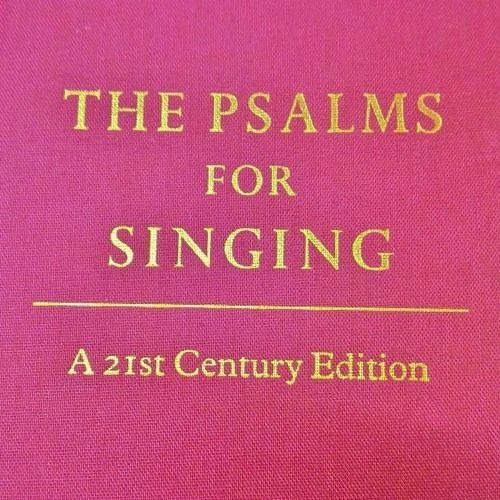
It is apparently from The Psalms for Singing: A 21st Century Edition, published in 2004 by the RPC in/of(?) Ireland.

The translation here seems to be fairly conservative I think.
 
The process of producing The Psalms for Singing: A 21st Century Edition predates my involvement in the denomination but I would imagine the process of updating was somewhat parallel to an updating of the language of the psalter in a similar way to NKJV updating the KJV. Now some may dislike that that was done, but I'm confident it was done with good motives, and not really for the sake of being modern. In addition, a fair number of the most beloved 1650 psalms are retained.

I do think it was also update to allow a wider variety of tunes to be used, thus you have LM, 87 87 and other meters. This helps with a degree of freshness versus repeativeness in the tunes available - and is also helpful is introducing hymn singers to familiarizing with the psalter more quickly.

Now for me, I'd be just as happy with the 1650, but I have no fears of a modernizing trajectory in either the RPCI or RPCS. The translation for new versions was made directly from the Hebrew, and very much more conservative that Sing Psalms, which Mr. WInzer laments above. I bears little relation to the 1912 USA versions as well which are ridicullously free in translation at times.

As far as I know RPCS does not stipulate a psalter to be used, nor do with in the RPCI - some of our congregations use 1650, some this "new version" some both.

To the original post: being a former hymnsinger myself - I have never found the struggle with thinking of To God be the Glory, when I was singing Psalm 24 - but as others have said all the tunes used for the 1650 forwards have always been used in different scenarios, maybe they were folks tunes - the only exception I can think of is that Calvin employed Louis Bourgeois to write tunes specifically for the Genevan Psalter - fantastic tunes which we still use - Old 100th, Old 124th etc. So as in all of worship we have a responsibily to pray before and particpate with the help of the Spirit to sanctify our minds and hearts to concentrate on the Word of God as we sing and much as when we read it or listen to preaching. This is maybe just an area you need to pray about and work on.
 
In a way then I suppose TPFS21 (is there a better shorthand?), while obviously modernized, could be compared to the psalter of 1650 in as much as it is a corrective to the more liberal psalters of the 20th century.
 
Thank you all for your views, all very helpful.

Until I sang Psalm 24 that day I didn’t know that there were other versions and updates. At the end of last year I bought John Brown’s “ The Psalms of David in Metre” published by Grange Press to use in my morning devotions, the words being the same as those appointed to be used in the Church of Scotland.

The tune I’m used to is St George’s Edinburgh and has been sung since 1820, it being a slight revision of one from the early 1700s.
 
We sing Psalm 24 to that tune too...it's at the back of the TPFS21 but it doesn't cover all the psalm.
 
Last edited:
In a way then I suppose TPFS21 (is there a better shorthand?), while obviously modernized, could be compared to the psalter of 1650 in as much as it is a corrective to the more liberal psalters of the 20th century.
Sort of! I'm not sure I would want to describe Sing Psalms by the Free Church of Scotland as liberal, but certainly it is more like the NIV of psalters in places. I'm not sure TPFS21 (as you have now named it! - I like it) was a response to those other psalters either. It was more an effort to update the language in places and probably reflecting something of a more expansive knowledge of Hebrew poetry etc etc. but that's not to criticise the 1650 - its more a reflection of our own modern ignorance and the changes in language. But I really, really don't want to get into a debate about that aspect of it.

Psalm-singing has fallen on hard times in Ireland, never was strong in England and Wales, and is hardly thriving in Scotland - lets agree to maintian it so far as we can in any version that seeks to be faithful to the scriptures without deteremined modernistic tendencies. And I'm not convinced any of our modern psalters were produced with that mindset.

I really like our translation, I really like the Scottish too.
 
For words, the 1650 is hard to understand (or at least, it is for me and everyone that I know). It also rigidly sticks to one meter, when another meter may be more suitable.
It sounds like perhaps you are not all that familiar with the 1650 psalter - it does not, for example, rigidly stick to one meter. Some are Common Meter (8.6.8.6 - the most common because it was/is considered the most singable), some are Short Meter (6.6.8.6), some are Long Meter (8.8.8.8).

They are no more difficult to understand than any other older English text. Folks who grow up with them have no issue. Those who discover them later in life will have some difficulty at first - just like someone reading Shakespeare for the first time as an adult (or the contemporaneous Geneva or Authorised versions of Scripture).
 
Here is a wee treat for you all from Knox’s Works -

1764088518605.jpeg


336 ]

PSALME XXIV. I. C.

Prom the edition printed at Edinburgh 1565.


0 God the earth doeth appertayne

with all things great and small :

The woride also is his de-mayne

with the in dwellers all.


For he hathe founded it ful faste,

above the salt sea strand:

And stablisht it t’abide and laste:

And on the floods to stand.


Now who is be that shal up go up

into God's holy hil,

And in his holy place also

who shal continue stil.


The man whose hands no wrong hath wroght,
whose heart is pure and neat:

Whose minde for vanitie not soght,

nor sworne hathe with deceit.


He that is suche the Lord wil send

his blessings him upon,

And righteousnes unto him lende

shal God his salvation.


This is the stocke and offrings eke,

of those which search for thee:

Of them O Lord that thy face seke

who true Isralites be.


Exalt your heades ye Gates on hie,

ye doores that last for aye,

Be lift: so the King of glorie

shal through you make his waye.


Who is this King so glorious?

the strong and mightie Lord,

Even he that is victorious

in battele tride by sword.


Exalt your heads ye Gates on hie,

ye doores that last for aye:

Be lifte; so the King of glorie

shal through you make his waye.


Who is this glorious King, I saye,

the Lord of hostes moste hie,

Even he is King and shalbe aye:

of everlasting glorie.
 
it does not, for example, rigidly stick to one meter. Some are Common Meter (8.6.8.6 - the most common because it was/is considered the most singable), some are Short Meter (6.6.8.6), some are Long Meter (8.8.8.8).
I grant that it is not exclusively common meter. I made a generalization, which was worded poorly. I believe the intent of my statement, that there can be much more flexibility in selecting a meter, and that such can be advantageous to the text, stands.

They are no more difficult to understand than any other older English text. Folks who grow up with them have no issue. Those who discover them later in life will have some difficulty at first - just like someone reading Shakespeare for the first time as an adult (or the contemporaneous Geneva or Authorised versions of Scripture).
This is going to be partly subjective. I am not swayed by the concept that you can get used to it. It is an artificial barrier for most of the church today. If we are looking for legitimate reasons why a different Psalter would exist, accessibility is definitely one. Making a Psalter that is modern English is significantly less burdensome on the church as a whole, than requiring that everyone in the church learn older English well enough to sing the 1650. That doesn't mean the 1650 is bad, for some (such as naturally understand older English because of upbringing), it is suitable. For me and those I know, it is a barrier.

It sounds like perhaps you are not all that familiar with the 1650 psalter
I attempted to use it for a few months in fact, and it was incredibly difficult for me. Resources like TPFS21, or the Trinity Psalter-Hymnal, were an incredible blessing to me by contrast.
 
This is going to be partly subjective. I am not swayed by the concept that you can get used to it. It is an artificial barrier for most of the church today. If we are looking for legitimate reasons why a different Psalter would exist, accessibility is definitely one. Making a Psalter that is modern English is significantly less burdensome on the church as a whole, than requiring that everyone in the church learn older English well enough to sing the 1650. That doesn't mean the 1650 is bad, for some (such as naturally understand older English because of upbringing), it is suitable. For me and those I know, it is a barrier.

The "burden" is one inherent in the process. Whichever medium is chosen to convey the thoughts of the original they must be taught and learned over time, and the language must be carefully chosen, guarded, and explained. One will grow used to the language whatever it happens to be. The meek will He teach His way -- one of the themes of the Psalter.
 
The "burden" is one inherent in the process
I will distinguish. There is a burden inherent to the process of language and communication in general. Yes. There is another burden which is artificial (and not inherent) in using the vocabulary and style of a different era. That burden is not inherent.

The use of modern vocabulary and style does not mean that such language is not carefully chosen, guarded, or explained.
 
I will distinguish. There is a burden inherent to the process of language and communication in general. Yes. There is another burden which is artificial (and not inherent) in using the vocabulary and style of a different era. That burden is not inherent.

Perhaps you do not realise the dangers inherent in relying on the "immediacy" of one's language and what it "intuitively" represents. The process of learning line upon line is part and parcel of taking in new ideas, absorbing them, and moulding them together. There is no extra burden in learning a concept in connection with a specific word that is not one's spoken language. In some ways it can be helpful because it frees the mind from other associations which gather around the language. At any rate, people learn specialised language in various fields of life. There is no reason why religion should be exempt.

The use of modern vocabulary and style does not mean that such language is not carefully chosen, guarded, or explained.

Sadly it is usually the case that the "modern" language has not appreciated the way the older language was chosen, guarded, and explained. Much can be lost in revisions, whatever might be gained by them.
 
Perhaps you do not realise the dangers inherent in relying on the "immediacy" of one's language and what it "intuitively" represents. The process of learning line upon line is part and parcel of taking in new ideas, absorbing them, and moulding them together. There is no extra burden in learning a concept in connection with a specific word that is not one's spoken language. In some ways it can be helpful because it frees the mind from other associations which gather around the language. At any rate, people learn specialised language in various fields of life. There is no reason why religion should be exempt.


Sadly it is usually the case that the "modern" language has not appreciated the way the older language was chosen, guarded, and explained. Much can be lost in revisions, whatever might be gained by them.
I think we will have to agree to disagree, but thank you for explaining your view.
 
Hello. I’ve only been a member here for a couple of weeks and I’d like to ask why there a number of new Psalters with modern tunes and even different words from the 1650 one.
I was totally taken aback the other week when Psalm 24 was sung to the tune of “To God be the glory” and found it quite off putting. I know it is said that tunes are neutral but in this case I found it intrusive, in that I started to think more about the hymn than the Psalm.
Thank you

You may want to be aware that there are two main historic Reformed traditions of psalmody -- the Scottish Psalter, which you are apparently using, and the Genevan Psalter, which was used in most of the Reformed world outside of English speaking circles.

For a number of reasons that would take more time to describe than would be helpful, the Scottish Psalter went through many revisions and the versions used today by some psalmsinging denominations, including the RPCNA's Book of Psalms for Singing and the 1912 UPNA Psalter which is still the official psalter in English of some of the Dutch Reformed denominations, while widely known and commonly used, are only distant derivatives of the original Scottish Psalter.

By contrast, the Genevan Psalter and its tunes have remained largely unchanged though widely translated from the original French of Calvin's Geneva into most modern European languages and four of the major modern Asian languages (Chinese, Japanese, Korean, and the standard Indonesian form of Malay). The standard modern English edition of the Genevan Psalter is the version produced by the Canadian Reformed Churches.

That statement will make clear that I have a preference, but that's not my point. My point is that there are two different traditions of Reformed psalmody and those differences date back to the Reformation era. There are pros and cons to both.
 
You may want to be aware that there are two main historic Reformed traditions of psalmody -- the Scottish Psalter, which you are apparently using, and the Genevan Psalter, which was used in most of the Reformed world outside of English speaking circles.

For a number of reasons that would take more time to describe than would be helpful, the Scottish Psalter went through many revisions and the versions used today by some psalmsinging denominations, including the RPCNA's Book of Psalms for Singing and the 1912 UPNA Psalter which is still the official psalter in English of some of the Dutch Reformed denominations, while widely known and commonly used, are only distant derivatives of the original Scottish Psalter.

By contrast, the Genevan Psalter and its tunes have remained largely unchanged though widely translated from the original French of Calvin's Geneva into most modern European languages and four of the major modern Asian languages (Chinese, Japanese, Korean, and the standard Indonesian form of Malay). The standard modern English edition of the Genevan Psalter is the version produced by the Canadian Reformed Churches.

That statement will make clear that I have a preference, but that's not my point. My point is that there are two different traditions of Reformed psalmody and those differences date back to the Reformation era. There are pros and cons to both.
Presbyterians in places like Spain use the Genevan psalter just fine, and I am sure there are Dutch psalm-singers which in English-speaking contexts just adopted something such as the 1650. It's more a matter of what the best (and where applicable, historically and widely used) psalter is in any given language. I love the Genevan tunes and it's nice someone got a translation into English made, but I see no reason to let a relatively novel translation supplant the 1650 just to use the old Genevan tunes.
 
Hello. Yes, thanks, I had read a little about this in “Reformation Worship: Liturgies from the Past for the Present” by Jonathan Gibson and Mark Earngey (New Growth Press).
If it’s allowable I’ve attached the following section -
“It was in Strassburg that Calvin's liturgical ideas were formed and realized. Moved by the sound of the congregational singing implemented under Bucer's liturgical reforms, Calvin and French poet Clement Marot produced a French congregational songbook (Aulcuns Pseaulmes et Cantiques) which included a collection of nineteen metrical psalms, followed by the Nunc Dimittis and Decalogue (both in verse), and the Apostles' Creed (in simple unmetrical chant).This Psalter was later expanded in its psalm collection and accompanied Calvin's liturgy (Form of Ecclesiastical Prayers, 1540).
On his deathbed, Calvin remarked that this form of worship looked to Bucer for guidance.

This is his “Form of Ecclesiastical Prayers 1545”
Service of the Word
Votum (Ps. 124:8)
Confession
Prayer for Forgiveness
Words of Comfort
Absolution
Decalogue (with Kyrie)
Prayer for Illumination
Lord's Prayer
Scripture
Sermon
Intercessions
Lord's Prayer Paraphrase
Psalm
Benediction

and
Service of the Lord's Supper

Votum (Ps. 124:8)
Confession
Prayer for Forgiveness
Words of Comfort
Absolution
Decalogue
Prayer for Illumination
Lord's Prayer
Scripture
Sermon
Intercessions
Lord's Prayer Paraphrase
Apostles' Creed
Prayer of Preparation
Lord's Prayer
Words of Institution
Long Exhortation
Distribution
Psalm
Prayer of Thanksgiving
Nunc Dimittis
Benediction

(I’m not very good at formatting, apologies!)
 
Presbyterians in places like Spain use the Genevan psalter just fine, and I am sure there are Dutch psalm-singers which in English-speaking contexts just adopted something such as the 1650. It's more a matter of what the best (and where applicable, historically and widely used) psalter is in any given language. I love the Genevan tunes and it's nice someone got a translation into English made, but I see no reason to let a relatively novel translation supplant the 1650 just to use the old Genevan tunes.

We agree. I would never tell someone devoted to the Scots Psalter to change to the Genevan tradition. Both are legitimate. I want to see more psalms sung and I don't object to either tradition though I have a preference and I have reasons for that preference.

The original poster was saying this:
Hello. I’ve only been a member here for a couple of weeks and I’d like to ask why there a number of new Psalters with modern tunes and even different words from the 1650 one.
I was totally taken aback the other week when Psalm 24 was sung to the tune of “To God be the glory” and found it quite off putting. I know it is said that tunes are neutral but in this case I found it intrusive, in that I started to think more about the hymn than the Psalm.
Thank you

In the English-speaking world, there are many different Psalters with many different tunes and texts. That's not new and it dates back to the Reformation and post-Reformation era. Many people, even in the 1600s, were not happy with the tunes and texts and that led to a lot of variations being used in different churches.

Explaining how and why that happened gets complicated. What counts for this purpose is to say that it's a feature in the Anglo-Saxon world that didn't happen, or at least didn't happen to the same degree, on the Continent where the Genevan Psalter remained the standard for much longer.

Full disclosure: the Reveil, a movement in Europe roughly comparable to the First Great Awakening, often introduced "evangelical hymns" out of a belief that the Genevan Psalter was unsingable and promoted deadness in church. We shouldn't assume that the ecclesiastical mandate to use the Genevan Psalter always had good effects, or that the Dutch Reformed experience of conservatives rejecting man-made hymns reflected the experience elsewhere in Europe. Today, conservative Reformed and Presbyterian churches in North America typically promote psalmody because our modern evangelical hymns and "praise and worship music" tend to downplay the wrath of God and are sappy love songs, not full-throated confession of our sinful state to a holy God who is justly angry at our sins. There was a day when quite a few conservative Calvinists said the psalter was insufficiently focused on Christ and His work. That view was wrong -- Christ most emphatically IS taught in the Psalms of David -- but the reasons given in the 1700s and 1800s for using hymns were sometimes very different from the reasons used today for man-centered "praise and worship" music.

My view on this is that I want to see more psalms sung in churches for two reasons. First, God gave us a songbook and we ought to be using it. Second, if a church is singing the Psalms, it can't get away from some REALLY tough teachings of God's wrath against our wickedness that most modern American songbooks downplay, or avoid entirely. But I'm not advocating exclusive psalmody and that's a separate question. Saying we should sing MORE psalms doesn't entail a view that we should sing ONLY psalms.

Since many American churches never sing psalms at all, encouraging singing more of them seems like a good thing to encourage.
 
Status
Not open for further replies.
Back
Top