
I've seen comments that the Charlie Kirk memorial was largest audience to hear the Gospel in history (100 million). For those who have watched the video, was the gospel presented clearly?


Follow along with the video below to see how to install our site as a web app on your home screen.
Note: This feature may not be available in some browsers.


Frank Turek was one person who preached the gospel.Who preached the gospel? I saw a list of a lot of unsaved political speakers that spoke. My wife watched his pastor and said there were some good things mixed in with some concerning things in what he presented.

I have not seen it myself. What were the concerning things his pastor presented?Who preached the gospel? I saw a list of a lot of unsaved political speakers that spoke. My wife watched his pastor and said there were some good things mixed in with some concerning things in what he presented.

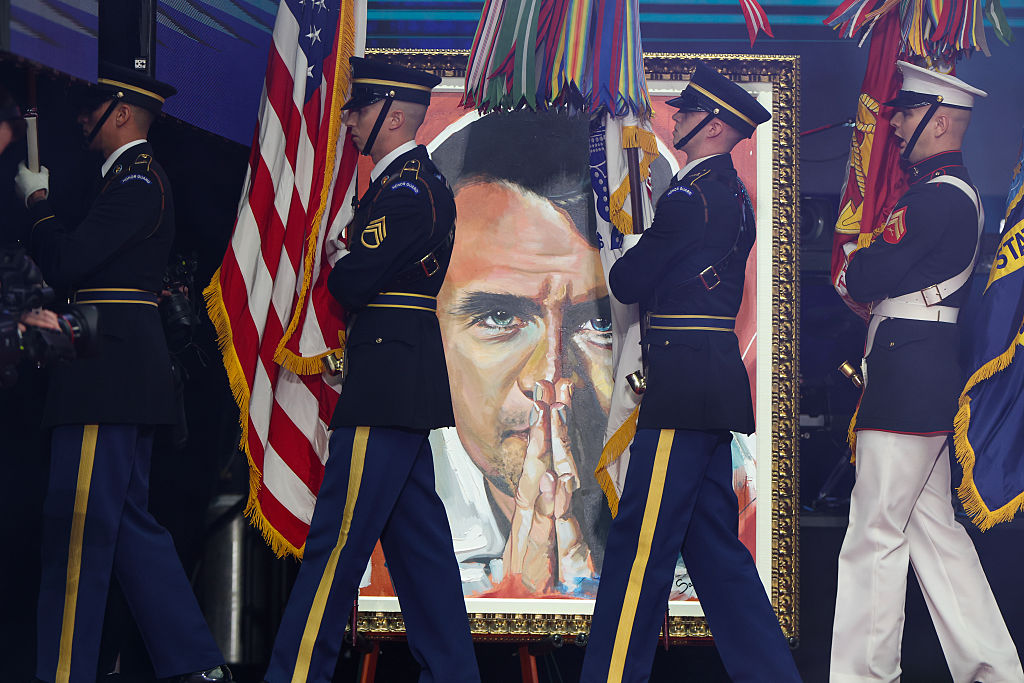
 albertmohler.com

I may look later. I have not listened, and I'll see what Turek said. Right before the altar call the pastor said, "Charlie looked at politics as the on ramp to Jesus. He knew that if you could get swimming in the stream of liberty that you would get to source." And the explanation of sin was truncated, but the need for Jesus was clearly communicated.I have not seen it myself. What were the concerning things his pastor presented?

 albertmohler.com


I must express my appreciation for this comment. I was drawn to Christ through flawed, imprecise means of preaching. The reformers, puritans, and some of the modern reformed icons helped refine my doctrine. Whatever was lacking in the preaching that I got, I praise God for what gospel truth remained.While I greatly appreciate our determination to preach Christ clearly and to honor him in our worship, we as Christians must rejoice when the gospel goes forth, even by means that lack the precision we'd hope for. Don't we see the droves of people going to church? This is something akin to any great revival in history (and believe me, I'm skeptical about revivals, but I do believe them to be desirable if true).
If we sit back and question things, scrutinize too closely, wish for greater precision, then we will miss an opportunity given to us by God. Look, we as Reformed don't have the best reputation (deserved or not) of being on the leading edge of evangelism and missions. Our greatest influence may come in the years after all of this as people seek a greater degree of purity in worship. However, we can't sit back and wait to see it come to us. Whether we wanted this upheaval or not, it is upon us. We should be out there with great efforts to meet the lost and those seeking answers for the chaos they see and feel. Do you know who is taking advantage of it? The Jehovah Witnesses are. They are out in droves in my area. I'll post more on that in a minute.
I had one professor at MARS say of the broad evangelicals, "I like their flawed and imperfect way of doing it more than our perfect way of not doing it." He's right. We believe in God's sovereignty, don't we? God can and is making use of the circumstances. I think yesterdays display will be the bedrock of many, many people's testimonies.
Now before someone responds with a bunch of qualifications (something else we're overly good at), let me acknowledge the many, many Reformed brethren who are doing great work and have been. Fantastic! I just hope to see them be joined by many more of us.

I've seen comments that the Charlie Kirk memorial was largest audience to hear the Gospel in history (100 million). For those who have watched the video, was the gospel presented clearly?
Philippians 1:12–18 (ESV) 12 I want you to know, brothers, that what has happened to me has really served to advance the gospel, 13 so that it has become known throughout the whole imperial guard and to all the rest that my imprisonment is for Christ. 14 And most of the brothers, having become confident in the Lord by my imprisonment, are much bolder to speak the word without fear. 15 Some indeed preach Christ from envy and rivalry, but others from good will. 16 The latter do it out of love, knowing that I am put here for the defense of the gospel. 17 The former proclaim Christ out of selfish ambition, not sincerely, but thinking to afflict me in my imprisonment. 18 What then? Only that in every way, whether in pretense or in truth, Christ is proclaimed, and in that I rejoice. |

Johnathan, I agree with your whole comment. The biggest question I'm wrestling with as a pastor right now in the midst of all the calls for us to be a part of this is what exactly it is we are supposed to be doing, other than continuing to faithfully carry out the ministry the Lord has given us. Perhaps it is also a wakeup call for any among us who have not been sufficiently attentive to evangelism, but beyond that is there anything specific to be doing other than carrying out the work of ministry and rejoicing if the Lord chooses to bless it?While I greatly appreciate our determination to preach Christ clearly and to honor him in our worship, we as Christians must rejoice when the gospel goes forth, even by means that lack the precision we'd hope for. Don't we see the droves of people going to church? This is something akin to any great revival in history (and believe me, I'm skeptical about revivals, but I do believe them to be desirable if true).
If we sit back and question things, scrutinize too closely, wish for greater precision, then we will miss an opportunity given to us by God. Look, we as Reformed don't have the best reputation (deserved or not) of being on the leading edge of evangelism and missions.
Last night, after the evening service, I came home and watched most of the five-hour memorial service for Charlie Kirk. I say “most” because I fast-forwarded through several of the CCM medleys and the final parts of some of the speeches. What impressed and encouraged me was not that Charlie Kirk’s memorial drew some of the most important political leaders in the country, including virtually the entire White House Cabinet and the President. It was the emphasis that most of the speakers placed on the importance not of having the same conservative political beliefs as Charlie Kirk, but of having the same saving faith in the Lord Jesus Christ that Charlie Kirk had. This represents a huge change in American politics, and I want to try to explain why.
Throughout my lifetime, I have gotten very used to presidents and politicians making mealy-mouthed statements about religion. It was always the empty, non-sectarian, non-controversial civil religion that assumed that most Americans were “good people” and that, of course, they would go to heaven when they died. That God would bless America was assumed or even demanded, rather than humbly requested. Jesus—especially Jesus as the Son of God and Savior of Sinners—was almost never discussed, and the Father was always the transcendent, amorphous God of Protestant liberalism. The memorial wasn’t like that at all. For the first time in my life, I heard cabinet members and celebrities talking about the Jesus of Scripture, of the need for personal faith and national revival. Again and again, men and women said that the most important thing about Charlie Kirk was not his influence on American politics, but his deep and genuine faith in the Lord Jesus Christ and his growing influence on the spreading of that faith to the next generation. Admittedly, there were a few political speakers who did not have that faith and consequently did not understand it or praise it, but their comments were discordant rather than in keeping with the spirit of the memorial. To my mind, the worst speech in that regard was delivered by Stephen Miller. His speech was political, vitriolic, and at times revenge-focused—which was a theme both Charlie and Erika Kirk would have rejected, and did reject. In fact, in her own speech, Erika forgave the man who shot her husband, saying,
“My husband, Charlie. He wanted to save young men, just like the one who took his life. That young man. That young man. On the cross our Savior said, ‘Father, forgive them, for they know not what they do.’ That man. That young man. I forgive him. I forgive him because it was what Christ did in his. What Charlie would do. The answer to hate is not hate. The answer we know from the gospel is love and always love. Love for our enemies and love for those who persecute us.”
I will admit I was also a little disappointed in the President’s speech, which started well but then devolved into rambling about crowd size and tariffs and the economy, none of which belonged at a memorial service. Perhaps, though, the most important point (although I don’t think he’d realize it) was when the President said that Charlie loved his opponents, and then admitted he didn’t understand that, saying,
“Shortly before Charlie arrived on campus the day he was assassinated, a staff member texted him that there were many critics and students who were opposed to his views and rather strenuously in the crowd, and that actually made him feel good because he wanted to convince them. He understood. He really did. He understood what was right, and he was right about that. … Charlie wrote back to the staff member saying, I'm not here to fight them. I want to know them and love them, and I want to reach them and try and lead them into a great way of life in our country. In that private moment, on his dying day, we find everything we need to know about who Charlie Kirk truly was. He was a missionary with a noble spirit and a great, great purpose. He did not hate his opponents. He wanted the best for them. That's where I disagreed with Charlie. I hate my opponent and I don't want the best for them. I'm sorry. I am sorry, Erika. But now Erika can talk to me and the whole group and maybe they can convince me that that's not right. But I can't stand my opponent. Charlie's angry. Look at that. He's angry at me that he wasn't interested in demonizing anyone. He was interested in persuading everyone to the ideas and principles he believed were good, right and true.”
Given the kind of pastors that the President sat under, like Norman “Power of Positive Thinking” Vincent Peale and Paula “Word of Faith” White, who emphasized religion as a conduit to get the things that the natural man wants, that doesn’t surprise me. But what did surprise me were the amazingly Gospel-centered remarks made by speakers like J.D. Vance and Marco Rubio, whose speeches I would recommend to you. Vice President Vance in particular noted,
“You know I was telling somebody backstage that I always felt a little uncomfortable talking about my faith in public as much as I loved the Lord and as much as it was an important part of my life. I have talked more about Jesus Christ in the past two weeks than I have my entire time in public life. And that is an undeniable legacy of the great Charlie Kirk. … He knew deep down the truth of scripture and from that confidence everything else flowed. That unshakable belief in the gospel led him to see differences in opinion not as battlefields to conquer but as way stations in the pursuit of truth. He knew it was right to love others, your neighbor, your interlocutor, your enemy. But he also understood his duty to say what is right and what is wrong, to distinguish what is false from what is true.”
Marco Rubio, the Secretary of State, actually ended his own remarks with the following Gospel presentation:
“And I would say that taking the liberty, but I'm confident he would agree, one of the things he wants us to take away from this, from all of this, is the following. His deep belief that we were all created, every single one of us, before the beginning of time, by the hands of the God of the universe, an all-powerful God, who loved us and created us for the purpose of living with Him in eternity. But then sin entered the world and separated us from our Creator. And so God took on the form of a man and came down and lived among us. And He suffered like men. And He died like a man. But on the third day He rose unlike any mortal man. And to prove any doubters wrong, he ate with his disciples so they could see and they touched his wounds. He didn't rise as a ghost or as a spirit, but as flesh. And then he rose to the heaven, but he promised he would return, and He will. And when He returns, because He took on that death, because He carried that cross, we were freed from the sin that separated us from Him. And when He returns, there will be a new heaven and a new earth, and we will all be together, and we are going to have a great reunion there again with Charlie and all the people we love. Thank you and God bless you.”
My sincere hope is that, as the Vice President remarked, this is indeed the beginning of a sweeping revival in the USA. I hope that as a nation we would stop expecting salvation, peace, harmony, and restoration to be achieved by political movements or “isms” created by fallible and sinful men. If Charlie Kirk’s assassination is the catalyst for that revival, it will be yet another example of the truth summed up by Joseph in his declaration to his brothers, “You intended to harm me, but God intended it for good to accomplish what is now being done, the saving of many lives.” (Gen. 50:20)


(Source: Partial transcript from Gateway Pundit video coverage and NBC News excerpt ; full remarks corroborated by attendee audio.)"Let me take you back to the beginning, because to understand Charlie, you have to understand the story God wrote for all of us. In the beginning, God created the heavens and the earth, and He made man in His image—perfect, sinless, walking in harmony with his Creator. But then came the Fall. Sin entered the world through one man, Adam, and death through sin. Every one of us inherited that brokenness; we're all sinners by nature, separated from God, deserving of judgment. But God, in His infinite mercy, didn't leave us there. He pursued us. The promise of a Savior began right then in Genesis, and it unfolded through the prophets until, at the fullness of time, God took on the form of a man. The eternal Son, fully God, became fully human in the person of Jesus Christ—the Incarnation. He was born of a virgin, lived a sinless life among us, tempted in every way yet without sin. He taught, He healed, He loved sinners like us. And then, on a hill outside Jerusalem, He suffered like men do. He was betrayed, beaten, crowned with thorns, and nailed to a cross. Why? Not for His sins—He had none—but for ours. He who knew no sin became sin for us, the substitutionary sacrifice, the Lamb of God who takes away the sin of the world. His blood was shed in our place, paying the penalty we owed, so that whoever believes in Him would not perish but have everlasting life. But the grave couldn't hold Him. On the third day, He rose from the dead, victorious over sin and death and Satan himself. Unlike any mortal man before or since, Jesus conquered the tomb. His resurrection is our assurance—that death is defeated, that new life is possible, that one day He will return in glory to make all things new. There will be a new heaven and a new earth, and we are going to have a great reunion there again with Charlie, with all the saints, with our loved ones who've gone before us. That's the Gospel Charlie lived and died for. He knew this world is not our home, but a battlefield for souls. So repent—turn from your sins, believe in the Lord Jesus Christ who died for you and rose again—and you will be saved. Eternal life isn't earned; it's received by faith alone. Charlie got that, and now he's living it. Let's honor him by doing the same."
(Source: Full transcript from CrossExamined.org podcast tie-in and Fox News memorial coverage ; video excerpt from YouTube .)"One moment Charlie was standing there, fighting for the truth, fighting for the Gospel on that stage in Utah. He was answering questions, defending the faith with that sharp mind and bold heart God gave him. And then—the shot rang out. I was just 25 feet away. He fell back, and in that instant, everything changed. His security team and I rushed to him; we got him into the SUV, pounding on his chest, praying, racing to the hospital with the door flapping open because he was so tall we couldn't close it. But I need you to know this: Charlie didn't suffer. The doctors confirmed it later—he was gone instantly, no pain. One blink, and he was with Jesus already. He looked past me, right into eternity, like the veil between worlds just parted. Why? Because Charlie was in paradise not because he was a great husband, not because he was a great father, not even because he sacrificed himself fighting for what's right—though he did all those things. No. Charlie is in Heaven today solely because his Savior sacrificed Himself for Charlie Kirk. Jesus Christ, the sinless Son of God, took on flesh, lived among us, and went to that cross—not for His own sins, because He had none, but as our substitute. He who knew no sin became sin for us, bearing the wrath we deserved, dying in our place so we could live. His blood covers every sin, every failure, every moment we've fallen short. And on the third day, God raised Him from the dead, proving that the payment was accepted, that death has no sting for those who trust in Him. That's the Gospel Charlie proclaimed every day—to students, to skeptics, to anyone who'd listen. Repent of your sins, believe in the Lord Jesus Christ—confess Him as risen Savior—and you'll be saved. Eternal life is a free gift, not earned by works, but received by faith. Charlie believed it, lived it, and now he's enjoying it forever. If you haven't yet, what are you waiting for? Turn to Christ today; He's calling you home."
(Source: Transcript from The Zone Rocks coverage and Fox News excerpt ; corroborated by 12News video .)"Today, we gather not just to mourn Charlie Kirk, but to celebrate the King of glory who's here with us—the Prince of Peace, the Savior of the world, the living God of all mercy and grace, the total embodiment of love and truth. He's the guest of honor in this place, and He's here today to call His children back to Him. Charlie knew that at an early age; he entrusted his life to the Savior of the World. Jesus came to this earth, was tempted in all ways, yet was without sin. He was crucified upon the cross—His blood poured out because blood must be shed for the remission of sins. He died in our place, the perfect substitute for guilty sinners like you and me, taking the punishment we deserved so we could go free. But death couldn't hold Him! On the third day, He rose victorious, alive forevermore, conquering sin and the grave for all who believe. That's the power of the resurrection—eternal life for anyone who repents of their sin and trusts in Him alone. No works, no merits, just faith in the finished work of Christ. Charlie looked at politics as an on-ramp to Jesus. He knew if he could get you all rowing in the streams of liberty, you'd come to its source—the Lord Himself. So hear His call today: Repent, turn from your sins, believe the Gospel—that Christ died for your sins and rose again—and receive salvation. Inherit eternal life as Charlie has. He's waiting for you there, but Jesus is calling you now."
(Source: Full transcript from Singju Post and YouTube video ; partial from NBC News .)"Charlie was a Christian evangelist at heart, bringing the Gospel to this country and doing the one thing the people in charge hate most: calling them—and all of us—to repent. He wasn't defensive; there was no hate in his heart. He spoke truth with love, pointing everyone to the only real solution: Jesus Christ. Politics can't answer the deepest questions of the soul, but Jesus can. Think about it—two thousand years ago, Jesus Himself spoke truth to power in Jerusalem, surrounded by crowds, upending the status quo. The powers that be couldn't stand it; they plotted in the shadows and murdered Him on a cross. But He rose again, victorious, proving that truth and love win in the end. Charlie followed that same path: incarnate in our messy world, dying for what he believed, but his message lives because Christ's does. Repentance is the key—turn from sin, believe in the risen Lord who died for you, and step into eternal life. That's what Charlie preached, and that's what we'll carry forward. No fear, just faith."
(Source: Full transcript from CBN News and Singju Post ; video from LiveNOW from FOX .)"Charlie loved his Savior with all of his heart, and he wanted every one of you to know Him too. Nobody is ever too young to know the Gospel. Nobody. Our battle is not simply a political one—above all, it is spiritual. The spiritual warfare is palpable, but the victory is won at the cross and the empty tomb. Jesus, God in flesh, died for our sins in our place, rose triumphant on the third day, and offers life to all who believe. So here's what Charlie would say to you today: If you confess with your mouth the Lord Jesus and believe in your heart that God has raised Him from the dead, you will be saved. Repent of your sin, put your faith in Christ alone—not in your goodness, not in your works, but in His substitutionary death and victorious resurrection—and you will inherit eternal life. That's the promise. Join a Bible-believing church, walk with Him daily, and live the freedom He died to give. Most importantly, choose Christ. I love you, Charlie, baby. And I will make you proud."
As I sit here in the United Kingdom, I am full of righteous envy. Our government despises God, our people have disowned him, and our church, in some fit of demonic madness, thinks that right-wing Christians like you are carnal, tribal and power-hungry—not only to be avoided, but to be publicly rebuked. We are Lewis’ Earthmen under the spell of a serpentine witch, slaves in the underground darkness, railing against the light above the surface. I pray by the grace of God for mercy, but my faith is currently in a fistfight with my doubts.
On the other hand, you American Christians should be on your knees thanking God for your country. It is a beautiful place because it is still a Christian place. It’s a light to the world. It’s not finished yet because God is not finished with it yet. Never stop fighting for it.


I wanted to thumbs up and amen this post. So, AMEN.While I greatly appreciate our determination to preach Christ clearly and to honor him in our worship, we as Christians must rejoice when the gospel goes forth, even by means that lack the precision we'd hope for. Don't we see the droves of people going to church? This is something akin to any great revival in history (and believe me, I'm skeptical about revivals, but I do believe them to be desirable if true).
If we sit back and question things, scrutinize too closely, wish for greater precision, then we will miss an opportunity given to us by God. Look, we as Reformed don't have the best reputation (deserved or not) of being on the leading edge of evangelism and missions. Our greatest influence may come in the years after all of this as people seek a greater degree of purity in worship. However, we can't sit back and wait to see it come to us. Whether we wanted this upheaval or not, it is upon us. We should be out there with great efforts to meet the lost and those seeking answers for the chaos they see and feel. Do you know who is taking advantage of it? The Jehovah Witnesses are. They are out in droves in my area. I'll post more on that in a minute.
I had one professor at MARS say of the broad evangelicals, "I like their flawed and imperfect way of doing it more than our perfect way of not doing it." He's right. We believe in God's sovereignty, don't we? God can and is making use of the circumstances. I think yesterdays display will be the bedrock of many, many people's testimonies.
Now before someone responds with a bunch of qualifications (something else we're overly good at), let me acknowledge the many, many Reformed brethren who are doing great work and have been. Fantastic! I just hope to see them be joined by many more of us.


I watched it. Yes. The Gospel was preached clearly. Because this was not a traditional worship service, and many of the speakers were across the theological (and non-theological) spectrum there was a collision of theological positions, but that did not preclude at least one clear presentation of the Gospel that I heard.I've seen comments that the Charlie Kirk memorial was largest audience to hear the Gospel in history (100 million). For those who have watched the video, was the gospel presented clearly?
Grok provided these transcripts from speeches as the ones with most relevance to the question of whether the Gospel was proclaimed:
Marco Rubio (Secretary of State)
Rubio's remarks included a concise retelling of redemptive history, emphasizing all requested elements, framed as a tribute to Kirk's faith-driven life.
(Source: Partial transcript from Gateway Pundit video coverage and NBC News excerpt ; full remarks corroborated by attendee audio.)
Frank Turek (Christian Apologist and Kirk's Mentor)
Turek's emotional eyewitness account transitioned into a direct Gospel presentation, focusing on substitutionary atonement and assurance through faith, with an implicit call tied to Kirk's instant entry into eternity.
(Source: Full transcript from CrossExamined.org podcast tie-in and Fox News memorial coverage ; video excerpt from YouTube .)
Rob McCoy (Pastor, Turning Point Faith Co-Chair)
McCoy's opening invocation centered Christ as the event's true "guest of honor," weaving in atonement and resurrection with a call to respond in faith.
(Source: Transcript from The Zone Rocks coverage and Fox News excerpt ; corroborated by 12News video .)
Tucker Carlson (Conservative Commentator)
Carlson's eulogy highlighted Kirk as an evangelist calling for repentance, with references to Christ's death and resurrection, though framed allegorically.
(Source: Full transcript from Singju Post and YouTube video ; partial from NBC News .)
Erika Kirk (Widow, Turning Point USA Co-Founder)
Erika's speech included a direct evangelistic call centered on confession of the risen Christ, with ties to forgiveness and eternal life.
(Source: Full transcript from CBN News and Singju Post ; video from LiveNOW from FOX .)


There was also, as there is in the whole of our culture, and, frankly, even in many of our own churches, the smashing together of Christianity and politics, as if this or that political position (and I don't mean political consequences of the biblical definition of marriage and sexuality, and of other things of that sort) was or is the Christian faith, simpliciter. I would agree that some things that would be viewed as social or political are proper gospel entailments or consequences.
Other things that one may hold as a Christian, like particular immigration and healthcare policies, should not contradict the doctrines of the Christian faith, of course, but men and women of the same faith may have different views of them (policies around those sorts of things and guns, taxes, and many other things). At the rally (memorial service), however, these things were often, not always, but often, spoken of as if they were all the same thing.


