Methods & Resources to Learn Latin

Status
Not open for further replies.

Sam Jer

Puritan Board Junior
Hello,

I know I want to learn Greek & Latin at some point. I also know it is usually recommended to start with Latin.

Basically, I need to decide what method and resources to use.

I don't buy into the whole "immersion only" idea, especially not for a language like Latin. Of course, I don't by into a no input or tailored input only approach either.
Then on the other hand, I do not know how much rote memorisation only is a path I want to go down. In classical Arabic, that worked for the morphology, but not the syntax, which I never really learned properly. In vocabulary both input and memorization worked for me in Arabic (mostly when I learned the dialect, but much of the vocabulary is shared).
I also think that the approach to grammar will probably need to be more rigorous then what I did in the Arabic dialect I learned, seeing as Latin is more complex and is a written language and not a spoken one.


I have found online versions of some older Latin resources, such as William Lilly's A short introduction of grammar (which was used in the reformation and puritan era) or The child's Latin primer, and I have nothing against using one of them, though it seems they assume you have a tutor so they'd probably need to be supplemented. There are also newer things, like Fredrick Wheelock's Latin or the courses by Cambriedge and Oxford, and most of these seem to be very story-based (which I don't necessarily have anything against) or limit their goal to comperhension from the get-go.

For those here who know Latin, and especially if anyone is self taught - what did you use? How well did it go? What do you recommend?


I did already decide what pronounciation to use in the beginning. I can't stand the heavily anglicized one, and there is no reason to learn funny Italian sound diffrences where too many letters have several pronounciations, so I'll stick to something approximating reconstructed classical pronounciation.
The stuff I'd be interested in reading are mostly later stuff (reformers, puritans) but possibly any other period too (patristics, medeiveal and classical authors)
 
Hello,

I know I want to learn Greek & Latin at some point. I also know it is usually recommended to start with Latin.

Basically, I need to decide what method and resources to use.

I don't buy into the whole "immersion only" idea, especially not for a language like Latin. Of course, I don't by into a no input or tailored input only approach either.
Then on the other hand, I do not know how much rote memorisation only is a path I want to go down. In classical Arabic, that worked for the morphology, but not the syntax, which I never really learned properly. In vocabulary both input and memorization worked for me in Arabic (mostly when I learned the dialect, but much of the vocabulary is shared).
I also think that the approach to grammar will probably need to be more rigorous then what I did in the Arabic dialect I learned, seeing as Latin is more complex and is a written language and not a spoken one.


I have found online versions of some older Latin resources, such as William Lilly's A short introduction of grammar (which was used in the reformation and puritan era) or The child's Latin primer, and I have nothing against using one of them, though it seems they assume you have a tutor so they'd probably need to be supplemented. There are also newer things, like Fredrick Wheelock's Latin or the courses by Cambriedge and Oxford, and most of these seem to be very story-based (which I don't necessarily have anything against) or limit their goal to comperhension from the get-go.

For those here who know Latin, and especially if anyone is self taught - what did you use? How well did it go? What do you recommend?


I did already decide what pronounciation to use in the beginning. I can't stand the heavily anglicized one, and there is no reason to learn funny Italian sound diffrences where too many letters have several pronounciations, so I'll stick to something approximating reconstructed classical pronounciation.
The stuff I'd be interested in reading are mostly later stuff (reformers, puritans) but possibly any other period too (patristics, medeiveal and classical authors)
I self studied Latin(and the biblical languages and syriac) a few years back

There's an excellent book called Lingua Latina Per Se Illustrata(latin through latin)
It's full comprehensible input
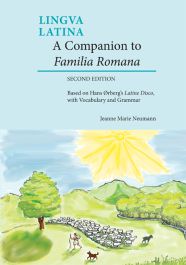
But the good thing about it is that it's got supplementary resources such as a book called a companion to LLPSI which has grammar explanations in english for the comprehensible input sections of the book

I can read most texts rather ok with a dictionary for extremely rare words- I can read Calvin and Augustine decently well after finishing 2 volumes of the series(LLPSI Familia Romana and Roma Aeterna)
+ There are multiple reddit and discord forums for asking your questions so those would help

Once you finish some 25 ish chapters of the first book
You can read the vulgate decently well
Then you can work your way through portions of the vulgate using dictionaries and parsing tools like Whittakers words

There are plenty of interlinear resources available too

Each word of the gospel of John in the vulgate parsed and analyzed
 
I self studied Latin(and the biblical languages and syriac) a few years back

There's an excellent book called Lingua Latina Per Se Illustrata(latin through latin)
It's full comprehensible input
But the good thing about it is that it's got supplementary resources such as a book called a companion to LLPSI which has grammar explanations in english for the comprehensible input sections of the book

I can read most texts rather ok with a dictionary for extremely rare words- I can read Calvin and Augustine decently well after finishing 2 volumes of the series(LLPSI Familia Romana and Roma Aeterna)
+ There are multiple reddit and discord forums for asking your questions so those would help

You beat me to it.

@Sam Jer I used Lingua Latina to get my kickstart in Latin. It was my textbook. You'd do fine with it since you've already become proficient in one or two other languages.

The book works like a graded reader. You start with a very simple chapter all in Latin ("Roma in Italia est. Graeca in Europa est. Eegyptus in Europa non est.") Each chapter introduces new words and new grammar ideas, and you get to see the words used. There are grammar helps, but they are all in Latin. There are exercises too. Not a word of English in this book.

I'm not sure what to recommend for a standard textbook.
 
Hello,

I know I want to learn Greek & Latin at some point. I also know it is usually recommended to start with Latin.

Basically, I need to decide what method and resources to use.

I don't buy into the whole "immersion only" idea, especially not for a language like Latin. Of course, I don't by into a no input or tailored input only approach either.
Then on the other hand, I do not know how much rote memorisation only is a path I want to go down. In classical Arabic, that worked for the morphology, but not the syntax, which I never really learned properly. In vocabulary both input and memorization worked for me in Arabic (mostly when I learned the dialect, but much of the vocabulary is shared).
I also think that the approach to grammar will probably need to be more rigorous then what I did in the Arabic dialect I learned, seeing as Latin is more complex and is a written language and not a spoken one.


I have found online versions of some older Latin resources, such as William Lilly's A short introduction of grammar (which was used in the reformation and puritan era) or The child's Latin primer, and I have nothing against using one of them, though it seems they assume you have a tutor so they'd probably need to be supplemented. There are also newer things, like Fredrick Wheelock's Latin or the courses by Cambriedge and Oxford, and most of these seem to be very story-based (which I don't necessarily have anything against) or limit their goal to comperhension from the get-go.

For those here who know Latin, and especially if anyone is self taught - what did you use? How well did it go? What do you recommend?


I did already decide what pronounciation to use in the beginning. I can't stand the heavily anglicized one, and there is no reason to learn funny Italian sound diffrences where too many letters have several pronounciations, so I'll stick to something approximating reconstructed classical pronounciation.
The stuff I'd be interested in reading are mostly later stuff (reformers, puritans) but possibly any other period too (patristics, medeiveal and classical authors)
I self studied Latin(and the biblical languages and syriac) a few years back

There's an excellent book called Lingua Latina Per Se Illustrata(latin through latin)
It's full comprehensible input
But the good thing about it is that it's got supplementary resources such as a book called a companion to LLPSI which has grammar explanations in english for the comprehensible input sections of the book

I can read most texts rather ok with a dictionary for extremely rare words- I can read Calvin and Augustine decently well after finishing 2 volumes of the series(LLPSI Familia Romana and Roma Aeterna)
+ There are multiple reddit and
I self studied Latin(and the biblical languages and syriac) a few years back

There's an excellent book called Lingua Latina Per Se Illustrata(latin through latin)
It's full comprehensible input
But the good thing about it is that it's got supplementary resources such as a book called a companion to LLPSI which has grammar explanations in english for the comprehensible input sections of the book

I can read most texts rather ok with a dictionary for extremely rare words- I can read Calvin and Augustine decently well after finishing 2 volumes of the series(LLPSI Familia Romana and Roma Aeterna)
+ There are multiple reddit and discord forums for asking your questions so those would help

Once you finish some 25 ish chapters of the first book
You can read the vulgate decently well
Then you can work your way through portions of the vulgate using dictionaries and parsing tools like Whittakers words

There are plenty of interlinear resources available too

Each word of the gospel of John in the vulgate parsed and analyzed
It may seem that Latin isn't spoken but there is a huge community of spoken Latin content creators out there
Who make plenty of hours long videos in Latin
[automerge]1762020671[/automerge]
You beat me to it.

@Sam Jer I used Lingua Latina to get my kickstart in Latin. It was my textbook. You'd do fine with it since you've already become proficient in one or two other languages.

The book works like a graded reader. You start with a very simple chapter all in Latin ("Roma in Italia est. Graeca in Europa est. Eegyptus in Europa non est.") Each chapter introduces new words and new grammar ideas, and you get to see the words used. There are grammar helps, but they are all in Latin. There are exercises too. Not a word of English in this book.

I'm not sure what to recommend for a standard textbook.
Yep
There's a book called A companion to Familia Romana that has English grammar explanations and commentary on each chapter of LLPSI
 
Great to hear you want to learn Latin - we need more good Latin readers!

I'll echo the recommendations for Lingua Latina per se Illustrata - it was my main method. The supplements and service volume are needed if you want to get to a high level, and I felt I didn't have a great grasp of detailed grammar afterwards. But it's excellent for fast fluid reading.

For 'standard' textbooks, my recommendation would be Keller & Russell's 'Learn to Read Latin'. It's pricey, but pedagogically excellent, rigorous but clear, with good drills. And yet it also contains ample reading practice, unlike most regular textbooks. Though I didn't learn with it, I've heard that those who finish it seem to have better Latin than any others I've heard of.

Wheelock is... fine? It's clear, and has lots of resources, but nowhere near enough practice and drills. I've been through it as revision since learning Latin, and an glad I didn't learn from it.

Older textbooks trend to assume you am have a teacher and plenty time to hammer things into your head and practice. And they do assume a lot of rote learning.

The app Legentibus is brilliant for reading and listening practice, and includes audio for Lingua Latina. I'd use it from day 1 if I was starting over. Listening from the start helps you read far better, processing the language at full speed and more fluently - even if like me you aren't interested in communicative Latin.

There are plenty Decks of Latin vocabulary cards for the (brilliant if slightly hard to learn) app Anki. It's hard work, but a decent vocab is key.

As a closing note, I wouldn't over-stress the advantage of learning Latin before Greek. It's certainly true if you want to learn classical Greek; but Koine is much easier, and you only need 6000 words to know every word in the NT. It's a far easier prospect than learning a language to read generally, or, for that matter, a modern language.

Hope your learning goes well!
 
Looking online, most say that you will need to invest at least 1,000-2,000 hrs of study to start to feel comfortable reading without looking in a dictionary every other word. For most people, at an hour a day, that is close to 4-6 years of consistent study.
It's a lot of hard, regular work, sure, but learning to read to a tolerable level (not to talk or write) takes nowhere near this long, at least with decent methods. It certainly didn't take me anything like that!

2000 hours is enough to get you to a professional working capacity in a modern language. Reading is just far, far easier. If you want to read in a focused area (theology?) it's easier still.

Not trying to play down the serious investment of time it takes, or the daily commitment, but you can easily be reading Caesar and the Vulgate in a year.
 
After reading and watching a few podcast on the subject yesterday, what was interesting to find out, is I guess there are quite a bit of professional Latinists, who do not know Latin fluently as we would envision it. What I mean by this, is when we think of reading fluently, we think about what most of us do with English, i.e. pick up a book and very rarely have to look something up. What the podcast was saying, is that even many Latinists in the academic arena, do not have this type of fluency, but can only read Latin with a lexicon besides them. Nor, do they ever really pursue the same fluency we would have in English.
This is often said, but is misleading. Obviously there has been a catastrophic decline in the classics and so in the standards. But there are plenty of competent readers of Latin in academia, and academia gives you the tools to read Latin well. There are several factors that give the result that many can't:
  • Many academics don't need to: many classicists are actually specialists in other aspects of the classical world, and their Latin doesn't need to be brilliant. It should be, but it isn't.
  • Classical Latin texts are often extraordinarily hard. What we have of Classical Latin is often picked from the most literary and abstruse authors that a culture that loved a bit of literary abstruseness had. So Quintilian the Roman educator and orator, described Varro's writing as really obscure and hard to read for natives. Imagine that there were only twenty books surviving from the twentieth Century English, and one of them was James Joyce - and you had to try and read that. And then try and read some fragments from Spenser and Chaucer that survived on the back of an envelope. Often classicists that admit they can't read Latin well aren't saying 'I can't read Caesar/Cicero/Augustine' or whatever; they are saying 'when I read Lucretius I still need a dictionary'. That's not the same, and is pretty similar to a good second language speaker of English trying to read Joyce and Chaucer.
  • There are many words that occur literally once in all classical Latin, despite a pretty large corpus - how are you supposed to learn those? Even the dictionaries can't necessarily be sure what they mean.
  • Many of the best Latinists aren't classicists. If you have to read Medieval or Renaissance texts, there aren't any translations or good editions. You are on your own. These texts are often a bit simpler than the above, but still... So there are plenty good Latinists around.
And it has to be said that if your goal is to read theology, the task of learning Latin is much easier and really doesn't need any clever thought. Getting to the point where you can read Cicero like a novel is perfectly manageable, if hard work; getting to the point where you can read Aquinas is easier.
This baffled me a bit, because it doesn't seem fun at all to try to read something and have to stop every other word to look it up. Of course, I can see that in the beginning, but not from people who are considered professionals in Latin.
No, but obviously there's a sliding scale here - what about once a page? once a chapter?
This got me thinking, how could I use the tools we have to try to remedy this?
You really don't need to. Plenty of tools exist.

One of the things I thought of, which, I don't know if it will work, is utilizing AI, and a Latin word-list/definition (about 38,000 unique words) and try and produce a 20 vol. - 400pg-500pg (per vol.) science-fiction series in Latin, that utilizes all of those words at least 3 times each in the series. I am trying to stay away from overtly religious themes, but tried to base it off of a mixture between The Matrix, Alita Battle Angel, Interstellar, and Altered Carbon.

I know it is going to be real rough going at first, because I will need to look up so many words. But one of the people were saying, that while there are different methods to picking up the grammar rules, one of the main short-comings is restricted vocabulary intake, so that, while one may do good with the words in any given textbook; when they come to an actual Latin book, whose vocabulary has not been restricted, it is back to the slow-trod of Lexicon translation, rather than leisurely reading.

Now, I don't know if something like this will work.
Please please please don't! Firstly, there are solutions to learning this word list that are far more effective than reading those 20 volumes (we'll get to that) but secondly, AI Latin is not good. Like, terrible. If you ask our basic models to produce ten independent sentences, you nearly always get substantive and problematic errors that would mislead anyone new to Latin. I do use AI to produce sentences with words in context for vocab learning, very regularly, and I have to weed out a lot of errors!
It is not even slightly ready to produce longform text. Some have tried to produce Latin readers with AI, and they have been awful. Even finding all the errors is hard for a good Latinist, because many of them are so unexpected. All you'll do is wreck your sense of Latin grammar. I've tried, many times, and sure, it can write a short story in Latin... as long as you don't mind lots of awful mistakes, a puerile level of simplicity, and no sense of Latin style. It doesn't prepare you for real Latin at all, because the sentence structure is not like real Latin. The challenges of real Latin are often about clause construction and verb order and so on, and none of that is present in AI Latin, even if you ask for it.

Will the answer be different in five years? Maybe. But not next year.

Back to the bigger question: how best to actually learn Latin. Obviously Efraim is a capable language learner who knows multiple languages, and plenty of others here are too, and there are better Latinists on this board than me too.

But reading is not the best way to learn vocabulary. It is necessary (in large quantities) to learn it well, but it is not efficient as a learning method, especially for less common words. Learning via extensive reading only was fashionable in the 80s and remains so online, but research has shown it is far from optimal.

If you are interested in language learning, it's really worth reading some of Paul Nation's work, particularly his short (free) article 'What do you need to know to learn a foreign language?' and especially his table on how much reading is necessary to learn vocab by reading only (p55). In order to learn a word reliably through reading, you need to be exposed to it around 12 times. That's easy with common words - you need to read around 200,000 words to learn the most common 1000 words in English, for instance - 7 minutes a day for a year will do, if you read at 150 words per minute (not that learners can do that!. But to learn the top 9000 words, you need to read 3,000,000 words, 1 hour 40 minutes a day, due to decreasing frequency. The increase is of course not linear, so this is far worse for 10,11, and 12 thousand. And again, learners can't read at this speed, at least not without a very carefully designed program of graded readers of the sort that basically only exists for English/Spanish/maybe French learners. There are a lot of new graded readers in Latin, and they are great, but it's nothing like this, and some day you are going to have to open Caesar and you aren't going to be going that fast. In actual reality you aren't getting to these levels without studying full time or for a number of years...

9000 words is enough to read a language without constant resort to the dictionary... but you probably need 12,000 to read comfortably. Most natives have 20,000+; literate natives with a good university education, 35,000+.

Back to the classicists who can't read Latin, this is what has happened: they have learned, but not read nearly enough, nor continued to do so over years. And it's hard to get enough exposure to many of the harder texts to absorb all their words - if a particular Latin word only occurs once in one text, do you have read that text 12+ times to learn that word???

Nation does very strongly encourage extensive reading, but to learn vocab well demonstrates it should be combined with vocab flashcards, which are several times better in terms of time investment. And he wrote before tools like Anki leveraged spaced repetition that uses Ebbinghaus' forgetting curve. This makes flashcards more effective but takes 1/10th of the time. Add it all together and a deck of words ordered by frequency learned via Anki, combined with a rigorous reading, is orders of magnitude more effective than just reading.

You also want to target words that actually occur in what you want to read. Once you've got to 8000 words or so, most of the new words you encounter are domain specific - relevant to theology/history/military things/whatever. Using a general list of Latin terms isn't ideal beyond this point if you want to learn theology, as you'll be learning obscure vegetables and bits of military kit and Greek loanwords for Persian clothing and whatever, rather than the words you need.

How best to tackle vocabulary learning, then? Assuming you have been through a good textbook first (or at the same time) My method has been to use a frequency list deck for Anki with the first 10,000 ish words, and then move to adding words drawn from particular books I'm working on so that I learn relevant words. For many common classical works, you can extract lists from The Haverford Bridge and add them to Anki - including some Augustine etc. There are lists for Aquinas floating around too, which is helpful for technical theology in the 17th Century as well as medievals. Then it gets harder - you can add words manually as you go, when you look them up in the dictionary, meaning you only ever look them up once and actually learn them. Some day I'd love to put Muller's Dictionary of Greek and Latin Theological Terms into Anki.

Obviously this is a waste of time if not combined with reading and/or listening in reasonable quantity as well, but for those of us who are busy, it's worth it.

 
Last edited:
You beat me to it.

@Sam Jer I used Lingua Latina to get my kickstart in Latin. It was my textbook. You'd do fine with it since you've already become proficient in one or two other languages.

The book works like a graded reader. You start with a very simple chapter all in Latin ("Roma in Italia est. Graeca in Europa est. Eegyptus in Europa non est.") Each chapter introduces new words and new grammar ideas, and you get to see the words used. There are grammar helps, but they are all in Latin. There are exercises too. Not a word of English in this book.

I'm not sure what to recommend for a standard textbook.
I self studied Latin(and the biblical languages and syriac) a few years back

There's an excellent book called Lingua Latina Per Se Illustrata(latin through latin)
It's full comprehensible input
But the good thing about it is that it's got supplementary resources such as a book called a companion to LLPSI which has grammar explanations in english for the comprehensible input sections of the book

I can read most texts rather ok with a dictionary for extremely rare words- I can read Calvin and Augustine decently well after finishing 2 volumes of the series(LLPSI Familia Romana and Roma Aeterna)
+ There are multiple reddit and

It may seem that Latin isn't spoken but there is a huge community of spoken Latin content creators out there
Who make plenty of hours long videos in Latin
Yep
There's a book called A companion to Familia Romana that has English grammar explanations and commentary on each chapter of LLPSI
Great to hear you want to learn Latin - we need more good Latin readers!

I'll echo the recommendations for Lingua Latina per se Illustrata - it was my main method. The supplements and service volume are needed if you want to get to a high level, and I felt I didn't have a great grasp of detailed grammar afterwards. But it's excellent for fast fluid reading.

For 'standard' textbooks, my recommendation would be Keller & Russell's 'Learn to Read Latin'. It's pricey, but pedagogically excellent, rigorous but clear, with good drills. And yet it also contains ample reading practice, unlike most regular textbooks. Though I didn't learn with it, I've heard that those who finish it seem to have better Latin than any others I've heard of.

Wheelock is... fine? It's clear, and has lots of resources, but nowhere near enough practice and drills. I've been through it as revision since learning Latin, and an glad I didn't learn from it.

Older textbooks trend to assume you am have a teacher and plenty time to hammer things into your head and practice. And they do assume a lot of rote learning.

The app Legentibus is brilliant for reading and listening practice, and includes audio for Lingua Latina. I'd use it from day 1 if I was starting over. Listening from the start helps you read far better, processing the language at full speed and more fluently - even if like me you aren't interested in communicative Latin.

There are plenty Decks of Latin vocabulary cards for the (brilliant if slightly hard to learn) app Anki. It's hard work, but a decent vocab is key.

As a closing note, I wouldn't over-stress the advantage of learning Latin before Greek. It's certainly true if you want to learn classical Greek; but Koine is much easier, and you only need 6000 words to know every word in the NT. It's a far easier prospect than learning a language to read generally, or, for that matter, a modern language.

Hope your learning goes well!

Seems it is very hard to get ebook versions of most of these (and some of the resources I shared). Ordering a physical copy is of course possible but it takes time, costs shipping fees, and for all the benefits of physical books I am not in a season of life where it makes sense to own more of them than I already have.

Does anyone know if this online version of Familia Romana is legit? https://hackettpublishing.com/familia-romana-online-individuals

Do any of the others have an online or ebook version that does not violate the eighth commandment?
 
Seems it is very hard to get ebook versions of most of these (and some of the resources I shared). Ordering a physical copy is of course possible but it takes time, costs shipping fees, and for all the benefits of physical books I am not in a season of life where it makes sense to own more of them than I already have.

Does anyone know if this online version of Familia Romana is legit? https://hackettpublishing.com/familia-romana-online-individuals

Do any of the others have an online or ebook version that does not violate the eighth commandment?
Yes, it is hard to find good ebooks of most of these.

But the Hackett version is totally legitimate, they are the publisher. From a quick test it seems ok to use, but a bit clunky - it includes the English-language companion Latine Disco which is helpful. But it also looks difficult to use on a small screen, so not ideal for e.g. phones - it's basically windows containing pdfs/videos.

There are other textbooks with e-versions (Teach yourself Latin, kindle and Logos; Shelmerdine, Logos; Basics of Latin, which is focused on Christian Latin, in kindle and Logos). None of these are truly top notch, but you can of course learn with any of them, as with Wheelock, also on Kindle. The whole Latin to/beyond GCSE is also on kindle - I know people who rate them highly, but don't know how accurate this is.

Another option is Perlego, the subscription e-library, which contains Routledge's Intensive Basic Latin and Intensive Intermediate Latin (I haven't used these but the Persian equivalents are very well done for fairly traditional-style textbooks, and it's a good series overall) as well as Latin to GCSE/beyond GCSE and various supplements. Perlego also has some helpful theology books, so if you are studying stuff regularly it can be worth it.

Personally I also try to keep to ebooks/Logos only nowadays, but I make an exception for language textbooks, since you spend so much more time with them than other books.


**********Edit - 5 minutes later********
Moreland and Fleischer's 'Latin: an intensive course', used at Harvard and many other equivalent places, I believe, is also available on Kindle and Perlego. It's excellent. It's also utterly unapologetically hardcore, requiring loads of memorisation, and takes no prisoners. It's designed for bringing new masters students with no Latin up to speed for the courses in a few weeks, and it works... if you are willing to bleed. It's the basis for the much broader and better paced Keller and Russell course I mentioned earlier.
 
Moreland and Fleischer's 'Latin: an intensive course', used at Harvard and many other equivalent places, I believe, is also available on Kindle and Perlego. It's excellent. It's also utterly unapologetically hardcore, requiring loads of memorisation, and takes no prisoners. It's designed for bringing new masters students with no Latin up to speed for the courses in a few weeks, and it works... if you are willing to bleed.
Do you know how much time they are assuming you have on your hands?
 
sorry, I didn't realise you were a staff member (it dosen't display for me yet though).
I don't have a problem with you responding, but from past experience I can tell that the chance that everyone will leave it at that and get back on topic is minimal
I'm not a staff member, I just deleted my posts. Don't trip, no spilled milk. Life goes on.
 
I'm not a staff member, I just deleted my posts. Don't trip, no spilled milk. Life goes on.
oh, em, uh... that's not at all what I meant, but thank you anyway. I'll go ahead and delete my answer to the deleted posts. Feel free to start a new thread if you still want to respond, even link to it here
 
oh, em, uh... that's not at all what I meant, but thank you anyway. I'll go ahead and delete my answer to the deleted posts. Feel free to start a new thread if you still want to respond, even link to it here
If I have to start a new thread to respond to a comment directed at me, why would I link it here? Having to do so means a response is not wanted. Again, not a biggy. Enjoy your day.
 
Seems it is very hard to get ebook versions of most of these (and some of the resources I shared). Ordering a physical copy is of course possible but it takes time, costs shipping fees, and for all the benefits of physical books I am not in a season of life where it makes sense to own more of them than I already have.

Does anyone know if this online version of Familia Romana is legit? https://hackettpublishing.com/familia-romana-online-individuals

Do any of the others have an online or ebook version that does not violate the eighth commandment?
I’ve been reading familia romana on archive.org

Totally free and issue free although it is in black and white. Not sure if that matters to you.
 
Do you know how much time they are assuming you have on your hands?
To do it in the original intensive course sense, it envisages one month full time by dedicated and clever students. By that time they'll have a good formal knowledge of Latin, and nowhere near enough vocab or reading fluency; they'll be able to work their way through texts painfully and with a dictionary, but their brains will be dribbling out through their ears. It's then meant to be followed by 6 weeks intensive reading with teachers, also full time, in which reading practice hammers in the formal knowledge to a point where you can read well. You'd still be short on vocab, of course, as with any course.

For those of us in the real world, longer! There are 18 units, and I daresay a dedicated, clued-up and experienced language learner, with a decent knowledge of grammar and good study methods, could get through one a week while working. But there isn't any number of study hours recommended. And my own language learning plans never go that smoothly!

Personally I've moved to preferring a quick work through of one language textbook by another slower, more leisurely and careful one, once I have a bit of reading and listening under my belt. It seems to be more effective than trying to get everything in one, and two textbooks means you get two sets of different explanations, too.
 
Here is my current plan. Don't be afraid to write pushback - that is the very reason I am writing this!

These things, done in parallel:
Textbook 1 - Familia Romana. I'll have to see if there is any preface or resource that gives a more detailed idea of how it is used (I got the impression that it is mostly just about reading it), but basically I will just go through it on the online version.
Textbook 2 - A Short Introduction of Grammar (by Lily). Here I will not only read through the explenations but make sure I understand it, practice conjugating & declining etc, and continue to the next subject when I understand the previous. The preface actually recommends to a switch in focus to reading ones you get to the syntax but by the time I will get there I will have had more information and experience to decide by.
Additional things - vocabulary flashcards, reading the Vulgate and other billingual texts.
 
Additional things - vocabulary flashcards, reading the Vulgate and other billingual texts.

This is invaluable. Reading the Vulgate, even with its weaknesses, is a great tool for practicing Latin. You already know what the text should say, and so reading it will inform your sense of Latin.
 
Here is my current plan. Don't be afraid to write pushback - that is the very reason I am writing this!

These things, done in parallel:
Textbook 1 - Familia Romana. I'll have to see if there is any preface or resource that gives a more detailed idea of how it is used (I got the impression that it is mostly just about reading it), but basically I will just go through it on the online version.
Textbook 2 - A Short Introduction of Grammar (by Lily). Here I will not only read through the explenations but make sure I understand it, practice conjugating & declining etc, and continue to the next subject when I understand the previous. The preface actually recommends to a switch in focus to reading ones you get to the syntax but by the time I will get there I will have had more information and experience to decide by.
Additional things - vocabulary flashcards, reading the Vulgate and other billingual texts.
Sounds very sensible to me!

There's a bunch of good suggestions of how to use Familia Romana online. Repetitive reading is definitely at the heart of it, trying to figure out the meaning as you go using the clues in the margin, context, etc.

But don't underplay the importance of the grammar summary at the end of the chapter (also in Latin!). And I found the excercita (excercises) really important - doing them doesn't just check how well you've learned things, but also shows you things you've totally missed. That missing of things happens much more easily in an inductive textbook! Doing them out loud and more than once (on different days) is even better.

My usual plan was to read through it twice, first time fighting through, second time a bit faster, and then turn to the Latine Disco manual by Neumann which explains things in English. And then go through making sure I understood everything. And then it's on regular rotation for a few weeks listening/reading with other chapters to cement the learning. Spacing things over a few days/weeks - so that you are doing some preliminary reading on one new chapter, really working through the difficulties on the one before that, and hammering in the lessons of the one before that - was much easier than trying to squeeze all the goodness out of one chapter at once. Some people will say never to use a dictionary - this seems daft to me; certainly you want to work hard to figure out things on your own, but if you are really stuck, Whitaker's Words will allow you to look up conjugated forms of words that are hard to find in a regular dictionary - and it conjugates them too, which is really helpful.

Again, listening makes a massive difference to reading comprehension - either online recordings of Familia Romana, or the excellent app Legentibus, which includes all the audio and text for Familia Romana, as well as other really easy good listening tied to the early chapters. The other thing to be said for listening is that it stops you getting too bored of re-reading endlessly; and with Legentibus you can improve that even further with some accessible stories to listen to at the right level for each chapter.
 
I concur with most recommendations in terms of Hans Ørberg Lingua Latina per se Illustrata and Roma Aeterna. However, these are immersive. I would add Ørberg’s Grammatica Latina and Robert Carfagni’s Nova Exercitia Latina I, that expands LLPSI’s grammar exercises.

If this takes too long or are not sufficient in terms of grammar, I recommend Aguilar and Tarrega’s Via Latina: De Lingua et Vita Romanorum. It strikes a good balance between the immersive method and grammatical learning. It also contains dialogue and direct commands and speech, which will actually help with using the language. (Oh, I forgot about Ørberg’s Colloquial Personarum, which is a collection of dialogues that supports LLPSI.

If you want something more English-based, I would recommend Wheelock’s Latin. It is very thorough.

What I have found to work the best for myself is Ørberg's book, including the LLPSI selections from the Vulgate with macrons, together with ViaLatina: De Lingua et Vita Romanorum. Any grammar book has weak points where one can easily get stuck and supplementing it with others help a lot.

I would propose that you look at YouTube content such as Scorpio Martianus where the passages from LLPSI is read by Luke Ranieri and his wife. He has done quite a lot in terms of pronunciation. You will have to decide if you are going to learn restored classical pronunciation or ecclesiastical. I found it easier to go from restored classical pronunciation to ecclesiastical pronunciation.
 
I would propose that you look at YouTube content such as Scorpio Martianus where the passages from LLPSI is read by Luke Ranieri and his wife. He has done quite a lot in terms of pronunciation. You will have to decide if you are going to learn restored classical pronunciation or ecclesiastical. I found it easier to go from restored classical pronunciation to ecclesiastical pronunciation.
I am going with a mostly classical pronounciation as it makes more sense with the sounds that exist in the languages I already know and is closer to a 1 sound per letter principle. I will skip some of the weirder and really inconsequential features of it like the nasal vowels
 
...I would add Ørberg’s Grammatica Latina...
This is actually printed in the back of Neumann's companion, which gives a lot of added value.
I would propose that you look at YouTube content such as Scorpio Martianus where the passages from LLPSI is read by Luke Ranieri and his wife. He has done quite a lot in terms of pronunciation. You will have to decide if you are going to learn restored classical pronunciation or ecclesiastical. I found it easier to go from restored classical pronunciation to ecclesiastical pronunciation.
Scorpio Martianus has helpful content, but his LLPSI recordings have been taken down, as they were in violation of copyright.
 
It seems that something very similar to my plan already exists, and is called the Dowling method.
It is also very similar to what Lily's preface says (start to focus on reading when you get to the syntax)
(I watched this eithout the middle section that explains grammatical concepts, after looking for an explenation of how to best use Famila Romana).

The one diffrence is that Dowling actually recommends getting started with Lingua Latina only after getting through all the declensions and such, and discourages doing it in parallel as a cheap shortcut.

Change of plans: I will wait with Lingua Latina as Dowling recommends, but will still read the Vulgate and bilingual texts before I get to that stage. I also may not actually practice each form 100 times, my experience from Classical Arabic tells me I learn sooner than that. I may still do more than I did in Arabic however to really drill it deep.
 
Seems it is very hard to get ebook versions of most of these (and some of the resources I shared). Ordering a physical copy is of course possible but it takes time, costs shipping fees, and for all the benefits of physical books I am not in a season of life where it makes sense to own more of them than I already have.

Does anyone know if this online version of Familia Romana is legit? https://hackettpublishing.com/familia-romana-online-individuals

Do any of the others have an online or ebook version that does not violate the eighth commandment?


There are a few ones on archive.org
You can find them on scribd.org too(I believe it isn't a pirating site)
[automerge]1762609249[/automerge]
It seems that something very similar to my plan already exists, and is called the Dowling method.
It is also very similar to what Lily's preface says (start to focus on reading when you get to the syntax)
(I watched this eithout the middle section that explains grammatical concepts, after looking for an explenation of how to best use Famila Romana).

The one diffrence is that Dowling actually recommends getting started with Lingua Latina only after getting through all the declensions and such, and discourages doing it in parallel as a cheap shortcut.

Change of plans: I will wait with Lingua Latina as Dowling recommends, but will still read the Vulgate and bilingual texts before I get to that stage. I also may not actually practice each form 100 times, my experience from Classical Arabic tells me I learn sooner than that. I may still do more than I did in Arabic however to really drill it deep.
Btw, do you read Koine greek? If you do the grammar of greek and latin is more or less the same
e.g. the case declension system
 
Status
Not open for further replies.
Back
Top