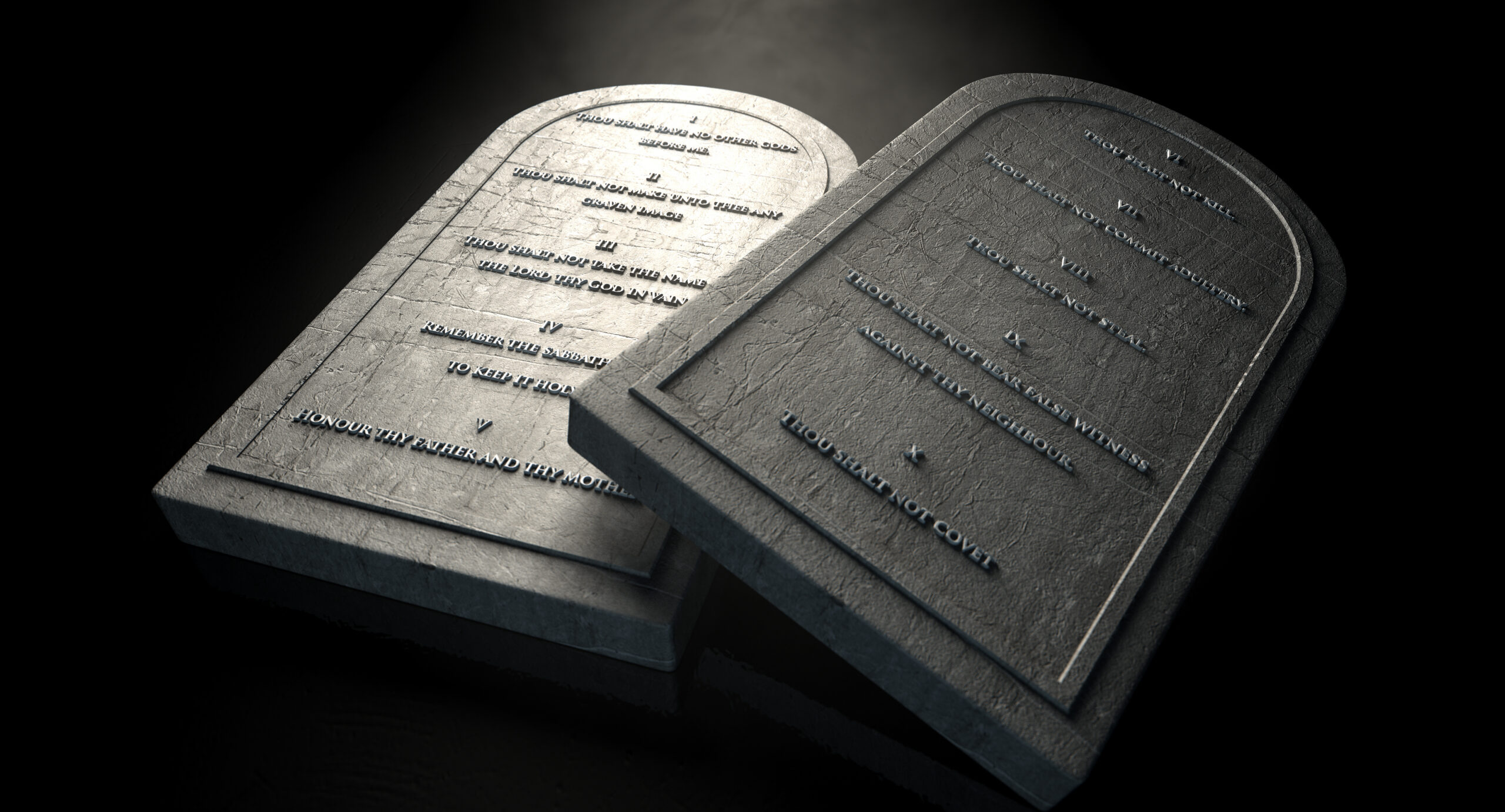
Second Commandment Violation

Status
Not open for further replies.

lunarWood

Puritan Board Freshman
Exodus 20:4-6 [NKJV]

You shall not make for yourself a carved image—any likeness of anything that is in heaven above, or that is in the earth beneath, or that is in the water under the earth; you shall not bow down to them nor serve them. For I, the Lord your God, am a jealous God, visiting the iniquity of the fathers upon the children to the third and fourth generations of those who hate Me, but showing mercy to thousands, to those who love Me and keep My commandments.

Westminster Larger Catechism (italics mine)

Q. 109. What are the sins forbidden in the second commandment?
A. The sins forbidden in the second commandment are, all devising, counselling, commanding, using, and anywise approving, any religious worship not instituted by God himself; tolerating a false religion; the making any representation of God, of all, or of any of the three Persons, either inwardly in our mind, or outwardly in any kind of image or likeness of any creature whatsoever; all worshipping of it, or God in it or by it; the making of any representation of feigned deities, and all worship of them, or service belonging to them; all superstitious devices, corrupting the worship of God, adding to it, or taking from it, whether invented and taken up of ourselves, or received by tradition from others, though under the title of antiquity, custom, devotion, good intent, or any other pretence whatsoever; simony; sacrilege; all neglect, contempt, hindering, and opposing the worship and ordinances which God hath appointed.

Heidelberg Catechism

Q. 97. May we then not make any image at all?
A. God cannot and may not be visibly portrayed in any way. Creatures may be portrayed, but God forbids us to make or have any images of them in order to worship them or to serve God through them.

It is absolutely clear that the confessional documents forbid outright making any representations of any of the three Persons of God. I agree with the confessions.

However, I have a hard time substantiating the confessions on this point exegetically. The immediate context in Ex. 20:4-6 is a prohibition against images of God used in worship or service — as an example, Israel sinned this way in making the golden calf and calling it the god that brought them out of Egypt (Ex. 32:4).

What do we say as adherents to the confessions, to those that hold to sola scriptura but are not confessional? They would say we are Pharisees, adding to God’s Word and binding people’s conscience by the catechisms.
 
I wouldn't teach against the confession on this one and I don't make images, but my personal biblical conviction has become that images are okay, so long as they aren't being worshipped. I do think the context is worship. Most of the elders in my life think the same as well.

I hope saying that doesn't land me in hot water here. Have mercy, admins :)
 
I wouldn't teach against the confession on this one and I don't make images, but my personal biblical conviction has become that images are okay, so long as they aren't being worshipped. I do think the context is worship. Most of the elders in my life think the same as well.

I hope saying that doesn't land me in hot water here. Have mercy, admins :)
Images of what or whom are okay, as long as they are not being worshipped?

I think that is the issue.
 
Images of what or whom are okay, as long as they are not being worshipped?

I think that is the issue.
Personally I don't think we can reasonably make an image of the Father or the Spirit because they are spirit, but of Jesus I do not see the issue with. But that's all I'm going to say because I don't want to come across as somebody pushing a non-confessional view.
 
What would be the purpose of making an image of Jesus if not for worship? And if it is an image of Jesus in a place of worship - for example, a stained glass with an image of Jesus - how do you know others won’t worship it just because you don’t?
 
However, I have a hard time substantiating the confessions on this point exegetically. The immediate context in Ex. 20:4-6 is a prohibition against images of God used in worship or service — as an example, Israel sinned this way in making the golden calf and calling it the god that brought them out of Egypt (Ex. 32:4).

What do we say as adherents to the confessions, to those that hold to sola scriptura but are not confessional? They would say we are Pharisees, adding to God’s Word and binding people’s conscience by the catechisms.
There are two prohibitions explicitly stated in the second commandment. 1) Do not make a carved image [of God]. 2) Do not worship the image. Thus, the prohibition is not simply against worshipping images of God.
See also Acts 17:29—it is not possible to accurately represent God, so it is not allowable to imagine or create an artwork of an image of God.
 
Personally I don't think we can reasonably make an image of the Father or the Spirit because they are spirit, but of Jesus I do not see the issue with. But that's all I'm going to say because I don't want to come across as somebody pushing a non-confessional view.
Would this apply to supposed deities from other religions? That deities that have temporal bodies can be depicted, but spirit beings prohibited? Just curious.
 
Most of the elders in my life think the same as well.
This seems troubling to me that the majority of your elders are OK with images. And I think it would be problematic if these elders did not fully disclose this as an exception/scruple when they were being vetted for the office. Are elders even allowed to have exceptions/scruples in the PCA?
 
Personally I don't think we can reasonably make an image of the Father or the Spirit because they are spirit, but of Jesus I do not see the issue with. But that's all I'm going to say because I don't want to come across as somebody pushing a non-confessional view.
Too late for that. What is the value of seeing how many toes you can put over the line before getting pushback?
 
Too late for that. What is the value of seeing how many toes you can put over the line before getting pushback?
I'm just saying the original post is a valid argument, and I don't really know any Christians at this point in life that are against images of Jesus, so long as they aren't being worshiped. But I'm not going to be the one arguing for that because this is the Puritan Board. I was just being sympathetic to the original post.

Are elders even allowed to have exceptions/scruples in the PCA?
Yes the exceptions are allowed, and I'm not sure if they took formal exceptions, but most of the elders in the PCA that I know are not opposed to images of Jesus. Even those that are very conservative.
 
most of the elders in the PCA that I know are not opposed to images of Jesus. Even those that are very conservative.
I think that'd be troubling... What standard keeps more crucial doctrines going the way of the second commandment? This looks like something that at least in theory could lead to things watering down as much as they did in the most liberal of denominations.
 
I'm not sure how directly helpful this will be in addressing the exegetical question in the OP, but I thought I'd share this piece my husband wrote last year on the subject of images:


It comes at the question from a slightly different angle.

I'd also note that while taking exception to the Standards on the Second Commandment is sadly common in the PCA, there is definitely a remnant that holds strongly to the confessional view. It's just more rare to hear it taught or even discussed.
 
However, I have a hard time substantiating the confessions on this point exegetically. The immediate context in Ex. 20:4-6 is a prohibition against images of God used in worship or service — as an example, Israel sinned this way in making the golden calf and calling it the god that brought them out of Egypt (Ex. 32:4).
If we just look at the surface level meaning of Scripture we are not doing good exegesis, as the Lord Jesus implies from His own teaching (for example in Matthew 5, and his denunciation of hypocrites) against only looking at the letter of the law for the sake of outward appearance.

The second commandment teaches us that we must be careful that our hearts are not in any way drawn into worshipping an idol. We know that God is to be worshipped in spirit and in truth. For what purpose is the making or use of images of Jesus other than worship? And what warrant is there for depictions of the Lord of glory by means other than those sanctioned by God in the Scriptures (viz. preaching, listening, prayer & meditation upon the word of God, or sacramentally)?

Regarding Exodus 32:4, a question springing to mind in response is "would God be pleased if Aaron made the image of the golden calf and said "this is my artwork of God but it's only a representation from my imagination so don't worship it"?"

*edited for clarity of argumentation*
 
Last edited:
To the defense of the confession, I think there can be great danger as seen worldwide throughout history in the Church, in making images of God. Idolatry and sacrilege are plentiful.
 
The commandment is Don't make 'em; oh, and don't worship 'em either (if they got made). Any representation not commanded by the LORD fails to meet the standard, and is but a lie in one's right hand.
 
I wouldn't teach against the confession on this one and I don't make images, but my personal biblical conviction has become that images are okay, so long as they aren't being worshipped. I do think the context is worship. Most of the elders in my life think the same as well.

I hope saying that doesn't land me in hot water here. Have mercy, admins :)
Isn’t that the Romanist view? And don’t they deny offering worship? Does the PCA allow elders to take exception to the Confession on this? How do we know when our deceitful hearts are sliding into worship rather than simple artistic appreciation or whatever.

Personally I don't think we can reasonably make an image of the Father or the Spirit because they are spirit, but of Jesus I do not see the issue with. But that's all I'm going to say because I don't want to come across as somebody pushing a non-confessional view.
But you are pushing a non-confessional, and more importantly, a non-biblical view. Would any depiction of Jesus be false by definition?
 
They would say we are Pharisees, adding to God’s Word and binding people’s conscience by the catechisms.

Interpreting and applying the Word is not adding to the Word. When you draw out an implication you are only bringing out the full import of what Scripture teaches. It is not only what is expressed in words, but what is contained in the words, that is authoritative and binding.

Let me ask, How do you not worship and serve God by making a representation of Him? Doesn't that representation evoke high thoughts of God?

But I might also ask, If it is not to be done in service to God, what use is it? Even if you had Christian liberty to make this representation of God, that liberty is to be used to the glory of God, 1 Cor. 10:31.
 
I wonder if any church historians can provide some insight on the following please..

RC Sproul who did advocate for the use of images of the Lord Jesus seems to have had a contrary view to Michael Horton regarding the use of images in the early church. In these two videos they argue contrarily about the early church's use of images of Jesus:
Horton -
Sproul -
 
I wonder if any church historians can provide some insight on the following please..

RC Sproul who did advocate for the use of images of the Lord Jesus seems to have had a contrary view to Michael Horton regarding the use of images in the early church. In these two videos they argue contrarily about the early church's use of images of Jesus:
Horton -
Sproul -

I think Horton was speaking theologically whereas Sproul was referring to the archaeological record. Principle and practice may well differ. It is well known from experience that religious practice doesn't always reflect a group's principles. Yet even in the record there is evidence of elaboration, from the simplest symbols to gospel illustrations to iconography.
 
If I may, and I apologize if this has been said.
Images of Jesus ought to be included in the prohibition because Jesus is God. To exclude him from the prohibition draws, in my mind, a separation between the human and divine nature that can be problematic. Namely, we can’t separate the human from the divine - especially in our minds. Thus a depiction of the “human” nature is mentally inseparable from the divine nature. God is depicted in an image of Christ, whether the intention is there or not. With that in mind, whether or the image is worshipped isn’t the deciding factor to me. The image itself is wrong, worshipping it is adding to the problem.
 
God desires to be worshipped for who He is and what He has done, not for what he “looks like”. That’s a principle problem with images of Christ. They simply are not depictions of who God is and what He has done.

God cannot be worshipped for what he “looks like” because we cannot encapsulate what he “looks like”. We know who He is by His nature and character, by what He has done. This applies to God Incarnate, as well. What His human form looked like is immaterial to who He is and what He has done. It is of no small moment that His visage was unrecognizable in the very moment of His atoning death. What Christ looked like does not matter (and is also unknowable, just as in the rationale behind the 2nd commandment) and images of Christ afford no insight to who He is and His mighty acts. They can only and ever be the vain imaginations of men seeking to add to what God has revealed about Himself and declare what is good concerning God in a way that He has not.
 
Personally I don't think we can reasonably make an image of the Father or the Spirit because they are spirit, but of Jesus I do not see the issue with. But that's all I'm going to say because I don't want to come across as somebody pushing a non-confessional view.
By Articulating this view in a Theology forum does that violate any strictures your Presbytery has put on you teaching or espousing this view?

To me this is pretty black and white- Christ is the God Man. You cannot separate the Divine and Human natures, they are joined in one person therefore you can't depict images of Christ.
 
Westminster Larger Catechism (italics mine)


Heidelberg Catechism


It is absolutely clear that the confessional documents forbid outright making any representations of any of the three Persons of God. I agree with the confessions.

However, I have a hard time substantiating the confessions on this point exegetically. The immediate context in Ex. 20:4-6 is a prohibition against images of God used in worship or service — as an example, Israel sinned this way in making the golden calf and calling it the god that brought them out of Egypt (Ex. 32:4).

What do we say as adherents to the confessions, to those that hold to sola scriptura but are not confessional? They would say we are Pharisees, adding to God’s Word and binding people’s conscience by the catechisms.
This is a significant topic for me because of the drama that it has caused in my own life. Issues surrounding the second commandment as it pertains to images of Jesus are a significant part of the reason why I am as avidly confessional as I am now.

My own backstory is that this issue was "within view" in my childhood, meaning that I don't remember any specific teaching on it but I had a distinct awareness that according to Reformed Christianity, images of Jesus were not quite right. Clearly it was taught by body language, gesture, and implication at the very least. When I came to faith as an adult, it wasn't something I really thought about much except as one of many quirks Christians argue over, right up there along with red-letter Bibles, chapter divisions, and arcane debates about eternal submission. As I began to study the confessional standards more seriously, and to peruse threads on the topic here, it became more plain to me that the standard Reformed view on this issue does indeed reflect the sense of Scripture.* But it has taken some time to steer my family in that direction and to acquire acceptance from some others in close enough proximity to us to where it has come up as an issue.

That process has done a lot to convince me of the extraordinary intolerance and intransigence of "latitudinarianism" on this and many other topics, and has left me with a much more skeptical reaction when I hear talk of "being winsome" and "finding a third way". It dealt a mortal blow for me to the trope of conversatives and confessionalists as intolerant and narrow-minded. As regards the issue of images of Jesus, I can vouch for the fact that many of those who hold to a non-confessional view on this topic do NOT view such images as a matter of indifference. Start articulating a confessional view on the topic and you may quickly find that you have touched on a sacred cow, and that these images are not merely tolerated but cherished with great fervor.

The irony is that I have for some years seen the 2nd Commandment as being about much more than merely the question of whether a family should have a Jesus Storybook Bible in their house, and I would have been content to not dwell on that particular sidepoint at length. But the animosity raised by this issue has brought it front and center in discussions regarding the Second Commandment.

You didn't really ask for my life story, so I'm sorry for rambling on at such length. My point is this: it definitely takes some time, and some practice reading Scripture through a certain (/Reformed/confessional) lens, but I strongly believe that there is excellent Scriptural warrant for a clear prohibition against any and all visual representations - statues, paintings, carvings - of any of the persons of the Godhood, including the Son in his incarnate state. There are many many excellent threads on this board; I recommend that you search through the archives and read some of them. I would also recommend this sermon on the Second Commandment, which does a good job of showing Scriptural warrant for the Westminster view on the topic. I've recommended this sermon to people who think that "Sola Scriptura" gives them license to have an allergic reaction to the Westminster standards.

Additionally, in your study of Refomed sources on the topic, I would recommend that you study the Scripture prooftexts of the WLC and HC where they address this issue. I would also recommend Chapter 4 of the 2nd Helvetic Confession as a truly excellent exposition of this issue. Lastly, I would direct you to Matthew Henry's commentary on Exodus 20, and to the portion of Calvin's Institutes where he exposits the Ten Commandments. Most of these sources are more or less saying the same thing, but to me, the slightly varied repetition helped me to better grasp that 1) this is a very logical reading of Scripture and 2) this really was, across the board, the standard Reformed view, and for good reason.

As a rather tangential aside, my own pastor has taught an explicitly non-confessional view of the 2nd commandment from the pulpit. In the PCA, to varying degrees depending on the presbytery, my sense is that this exception is standard enough that actually holding to the confessional view may be seen as something of an exception.

*I remember my first application for membership here, some years back, being rejected with that issue being one of the reasons, and I had to clarify that I wasn't explicitly opposed to the confessional view: I simply didn't yet understand it very well.
 
Yeah, honestly I don’t know why this is even a question.

And if it is an image of Jesus in a place of worship - for example, a stained glass with an image of Jesus - how do you know others won’t worship it just because you don’t?
Exactly.

Q. 99. What rules are to be observed for the right understanding of the ten commandments?
A. For the right understanding of the ten commandments, these rules are to be observed:

6. That under one sin or duty, all of the same kind are forbidden or commanded; together with all the causes, means, occasions, and appearances thereof, and provocations thereunto.

7. That what is forbidden or commanded to ourselves, we are bound, according to our places, to endeavor that it may be avoided or performed by others, according to the duty of their places.
 
This is a significant topic for me because of the drama that it has caused in my own life. Issues surrounding the second commandment as it pertains to images of Jesus are a significant part of the reason why I am as avidly confessional as I am now.

My own backstory is that this issue was "within view" in my childhood, meaning that I don't remember any specific teaching on it but I had a distinct awareness that according to Reformed Christianity, images of Jesus were not quite right. Clearly it was taught by body language, gesture, and implication at the very least. When I came to faith as an adult, it wasn't something I really thought about much except as one of many quirks Christians argue over, right up there along with red-letter Bibles, chapter divisions, and arcane debates about eternal submission. As I began to study the confessional standards more seriously, and to peruse threads on the topic here, it became more plain to me that the standard Reformed view on this issue does indeed reflect the sense of Scripture.* But it has taken some time to steer my family in that direction and to acquire acceptance from some others in close enough proximity to us to where it has come up as an issue.

That process has done a lot to convince me of the extraordinary intolerance and intransigence of "latitudinarianism" on this and many other topics, and has left me with a much more skeptical reaction when I hear talk of "being winsome" and "finding a third way". It dealt a mortal blow for me to the trope of conversatives and confessionalists as intolerant and narrow-minded. As regards the issue of images of Jesus, I can vouch for the fact that many of those who hold to a non-confessional view on this topic do NOT view such images as a matter of indifference. Start articulating a confessional view on the topic and you may quickly find that you have touched on a sacred cow, and that these images are not merely tolerated but cherished with great fervor.

The irony is that I have for some years seen the 2nd Commandment as being about much more than merely the question of whether a family should have a Jesus Storybook Bible in their house, and I would have been content to not dwell on that particular sidepoint at length. But the animosity raised by this issue has brought it front and center in discussions regarding the Second Commandment.

You didn't really ask for my life story, so I'm sorry for rambling on at such length. My point is this: it definitely takes some time, and some practice reading Scripture through a certain (/Reformed/confessional) lens, but I strongly believe that there is excellent Scriptural warrant for a clear prohibition against any and all visual representations - statues, paintings, carvings - of any of the persons of the Godhood, including the Son in his incarnate state. There are many many excellent threads on this board; I recommend that you search through the archives and read some of them. I would also recommend this sermon on the Second Commandment, which does a good job of showing Scriptural warrant for the Westminster view on the topic. I've recommended this sermon to people who think that "Sola Scriptura" gives them license to have an allergic reaction to the Westminster standards.

Additionally, in your study of Refomed sources on the topic, I would recommend that you study the Scripture prooftexts of the WLC and HC where they address this issue. I would also recommend Chapter 4 of the 2nd Helvetic Confession as a truly excellent exposition of this issue. Lastly, I would direct you to Matthew Henry's commentary on Exodus 20, and to the portion of Calvin's Institutes where he exposits the Ten Commandments. Most of these sources are more or less saying the same thing, but to me, the slightly varied repetition helped me to better grasp that 1) this is a very logical reading of Scripture and 2) this really was, across the board, the standard Reformed view, and for good reason.

As a rather tangential aside, my own pastor has taught an explicitly non-confessional view of the 2nd commandment from the pulpit. In the PCA, to varying degrees depending on the presbytery, my sense is that this exception is standard enough that actually holding to the confessional view may be seen as something of an exception.

*I remember my first application for membership here, some years back, being rejected with that issue being one of the reasons, and I had to clarify that I wasn't explicitly opposed to the confessional view: I simply didn't yet understand it very well.
The end of your post reminds me of the reality “don’t grant an exception unless you are willing for it to become the rule”.
 
Status
Not open for further replies.
Back
Top