How Do We Know The Apostles Used The Septuagint?

Status
Not open for further replies.

jwright82

Puritan Board Professor

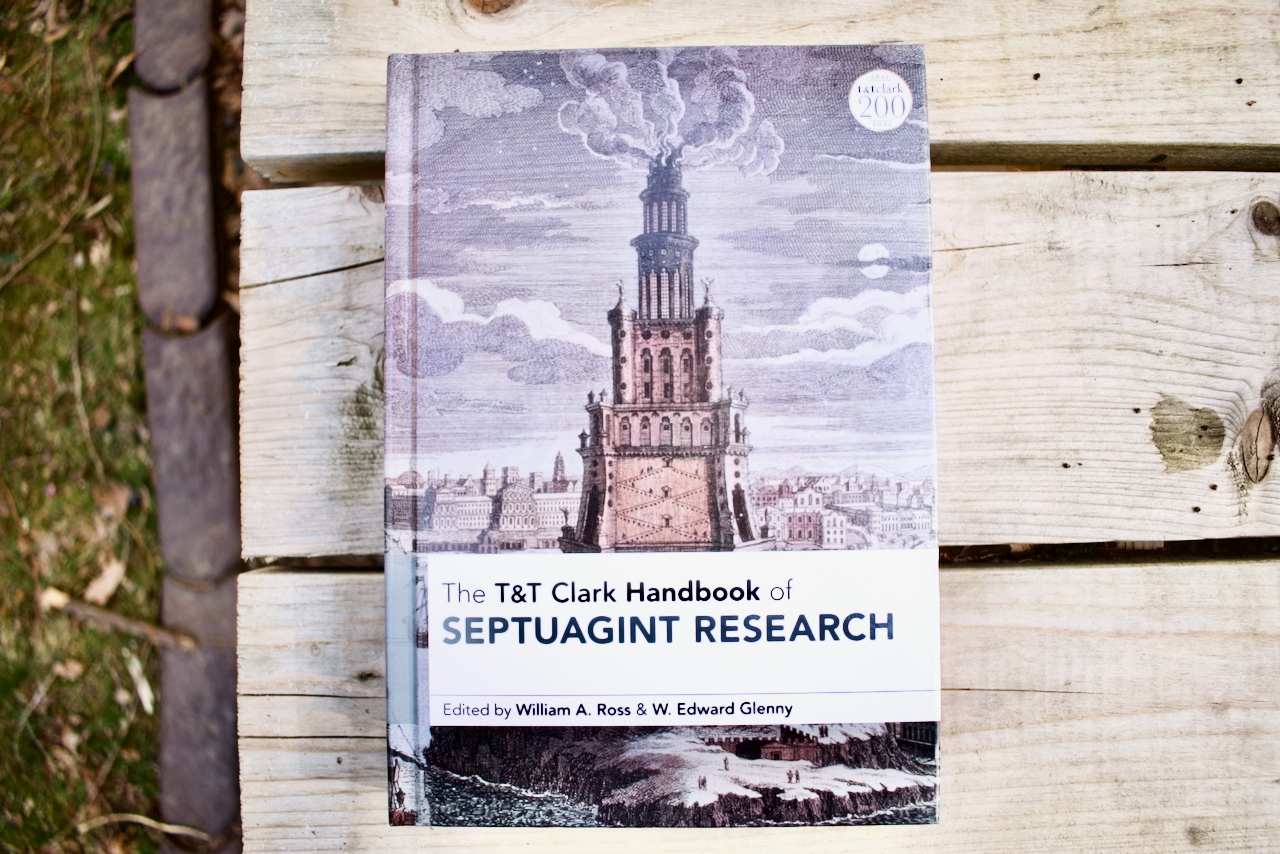
Here's a review of a book I'm currently reading to introduce myself to this subject. It's a fascinating subject.
My question is, I keep reading in my research that the Apostles used the Septuagint to quote the OT. How do they know that? I'm 3/4 through the book and maybe I'm impatient but why does everyone keep saying that?
Couldn't they have just translated it directly themselves? Also the term "Septuagint" gives the impression of a single monolithic thing but it's better to say "Septuagint's" plural. Wouldn't their translation count as a "Septuagint" translation without looking at whatever Septuagint they had to quote?
Or am I overthinking this being that translation type stuff is not my strong suit? Thanks in advance.
 
Regardless of whether we want to call it the "Septuagint" or not, I think it's better to call it the "Old Testament in Greek".

I think the main reasons people claim Apostles used the Greek OT are:
1. Greek was the Lingua Franca of that region of the world at that time, and definitely under Roman rule, most people would be familiar with Greek. (Think about the parts of the United States NOW that used to be part of Mexico. Spanish is still widely spoken, but English is the "norming norm").
2. The wording of the verses as quoted in the NT generally (but not always) pretty closely match the wording of the Greek OT.
3. Since the NT was composed in Greek, it's reasonable to assume that the men who composed the NT generally worked with the Greek language.

That's my take as a layman, for whatever it's worth (or not worth, as the case may be).
 
Regardless of whether we want to call it the "Septuagint" or not, I think it's better to call it the "Old Testament in Greek".

I think the main reasons people claim Apostles used the Greek OT are:
1. Greek was the Lingua Franca of that region of the world at that time, and definitely under Roman rule, most people would be familiar with Greek. (Think about the parts of the United States NOW that used to be part of Mexico. Spanish is still widely spoken, but English is the "norming norm").
2. The wording of the verses as quoted in the NT generally (but not always) pretty closely match the wording of the Greek OT.
3. Since the NT was composed in Greek, it's reasonable to assume that the men who composed the NT generally worked with the Greek language.

That's my take as a layman, for whatever it's worth (or not worth, as the case may be).
Thanks. Makes sense. I've just been thinking it's a moot point to say they used the Septuagint, when all we know is that they used a Greek translation of the OT Hebrew.
 
Hello Jamey,

Are you familiar with these two recent threads? :

Dr. Kirk D. DiVietro, Did Jesus and the Apostles Quote from the Septuagint (LXX)? now in pdf

MT vs LXX resources?
Yes and thanks for the reminder. I'll have to read that. I'm planning on getting two T and T Clark (publisher) books on the Septuagint. I'll post them but I'll try that book first and thanks.
 
When scholars talk about "the Septuagint" everyone knows there wasn't really one cohesive work known as such. It is a strawman to simply dismiss the Greek translations because there was no LXX. However, the language is so ingrained that it's very hard to talk meaningfully about the issue without reference to LXX.

This issue has been debated much here before, and I'm not interested in getting into it. Suffice to say that what the NT writers often write/cite matches up well at times with what's known as the LXX of that particular book being quoted.
 
When scholars talk about "the Septuagint" everyone knows there wasn't really one cohesive work known as such. It is a strawman to simply dismiss the Greek translations because there was no LXX. However, the language is so ingrained that it's very hard to talk meaningfully about the issue without reference to LXX.

This issue has been debated much here before, and I'm not interested in getting into it. Suffice to say that what the NT writers often write/cite matches up well at times with what's known as the LXX of that particular book being quoted.
Yeah I think you're right. I just kept reading it and the philosopher in me was like "how do they know that?" But I thought like you do that it's probably just semantics. It's a fascinating area of study though.
 

Here's one of them, and the other companion book is mentioned on the Septuagint. I plan on getting both and a third companion book by the same company on the Masoretic text.
 

I have one of these series books on "Neo-Calvinism And The French Revolution" and I'm impressed with the whole series. So I'm planning on getting the two books on the Septuagint and the one on the Masoretic text, but we know that plans don't always work out.
My brother is becoming Roman Catholic so I'm also planning on getting Leonardo Chirico, I believe that's right (post stuff on that), who's a Reformed expert on contemporary RCC stuff with his ministry in Italy to engage my brother in this.
I don't want to railroad my own thread by bringing that up, only to point out that I have split focus on what I really want to study (Bavinck's in that too, love that guy) and what I think is best for my immediate situation.
 
Please don’t let this thread turn into another debate on this subject.

admins, if possible please keep an eye on this thread.
I started two different thread's on the series and my brother going RCC. But I concur, if I understand you, this is not a TR vs CT thread. It's about the Septuagint only.
 

Here's one of them, and the other companion book is mentioned on the Septuagint. I plan on getting both and a third companion book by the same company on the Masoretic text.
Though the Kindle version at $49.08 is a bit much! But the topic is of great interest to me.
 
Of Interest:
Did you ever notice that many of the Patriarchs listed in Genesis chapter 5, the children died before their parents. In the Septuagint there's an extra 100 years added on in the beginning of every story that allows for the children to live beyond their parents. Which seems more likely to you? I started to do a workup on it graphically to show you the difference. So bear with me a little longer as I have a lot of work to do, and I'll I'll post the graphic results.
 
Regardless of whether we want to call it the "Septuagint" or not, I think it's better to call it the "Old Testament in Greek".

I think the main reasons people claim Apostles used the Greek OT are:
1. Greek was the Lingua Franca of that region of the world at that time, and definitely under Roman rule, most people would be familiar with Greek. (Think about the parts of the United States NOW that used to be part of Mexico. Spanish is still widely spoken, but English is the "norming norm").
2. The wording of the verses as quoted in the NT generally (but not always) pretty closely match the wording of the Greek OT.
3. Since the NT was composed in Greek, it's reasonable to assume that the men who composed the NT generally worked with the Greek language.

That's my take as a layman, for whatever it's worth (or not worth, as the case may be).
Wonder if they did not use that text directly, but a text that was more accurate in the Hebrew to Greek, like maybe a proto version of the text we now call the Septuagint?
 
What do you enjoy studying about it?
Hi Jamey, you asked what I enjoy studying about the Septuagint — and I would answer from this earlier post (please note the bold emphasis below) :

What I would deny is that the writers of the N.T. (& Jesus) used Greek translations if they differed from the Hebrew. If a Greek portion of the OT they had rightly translated Hebrew words or phrases, they could have used them. As Dr. Kirk D. DiVietro in his, Did Jesus & the Apostles Quote the Septuagint (LXX)?, says,​
​
What value does the LXX have for us?​
Just because the LXX is not the Bible of Jesus and the writers of Scripture does not mean that it is valueless. The Septuagint married the vocabulary of Greece to the theology of Israel. If this marriage had not taken place Christianity would have either died as an extension of Israel’s law, or Greece’s logic. But in the Septuagint, God provided a commentary and word study….[bold emphasis added]​
​
The work of the early Greek translators of the Old Testament provided a ready made translational database for Jesus and the writers of Scripture. While on occasion they may have coined a phrase or borrowed vocabulary, the writers of the New Testament had established Greek equivalents to work with. The similarities between fragmentary Greek Old Testament manuscripts and the New Testament may well have been the joyful result of not having to reinvent the wheel. While they may not have used the pseudo-Septuagints for their daily Bible, they may well have used them to shortcut the process of restating a Hebrew quote in the Greek New Testament. When the pseudo-Septuagint fell short in accuracy, the writer would offer a Holy Ghost inspired running translation.​
​
The pseudo-Septuagint offers the modern Bible student a rich source of semi-Biblical, theological literature. Having this large homogenous yet diverse body of literature, the student can determine with relative accuracy the meaning of words he finds in the Greek New Testament. The search facilities of modern computers allows the student to do original statistical analysis and reach first hand decisions on matters of definition and use. The student is no longer servant to the scholars. (p. 7)​

It is the value of the Septuagint is that it "provided a ready made translational database for Jesus and the writers of Scripture", while the outstanding scholarship of men like Devietro, and Floyd Jones in his, The Septuagint: A Critical Analysis (in pdf), demonstrate where it is of value, and where it is not.
 
Last edited:
Status
Not open for further replies.
Back
Top