

Favorite Teas

Status
Not open for further replies.
When my wife and I travel we go out of our way to visit tea growing areas. Our favorites have been Assam in India, Darjeeling in India and Ilam in Nepal. We were able to visit these areas in 2016.

Ilam, as most of you know, is one of the major tea growing areas in the eastern part of Nepal. It is located immediately to the west of the Indian tea growing area of Darjeeling. The differences between Ilam tea and Darjeeling tea are so subtle they elude me.

They call the black tea here 'Orthodox Tea' When tea is called orthodox it refers the way the tea is dried. The leaves are rolled, not shredded.

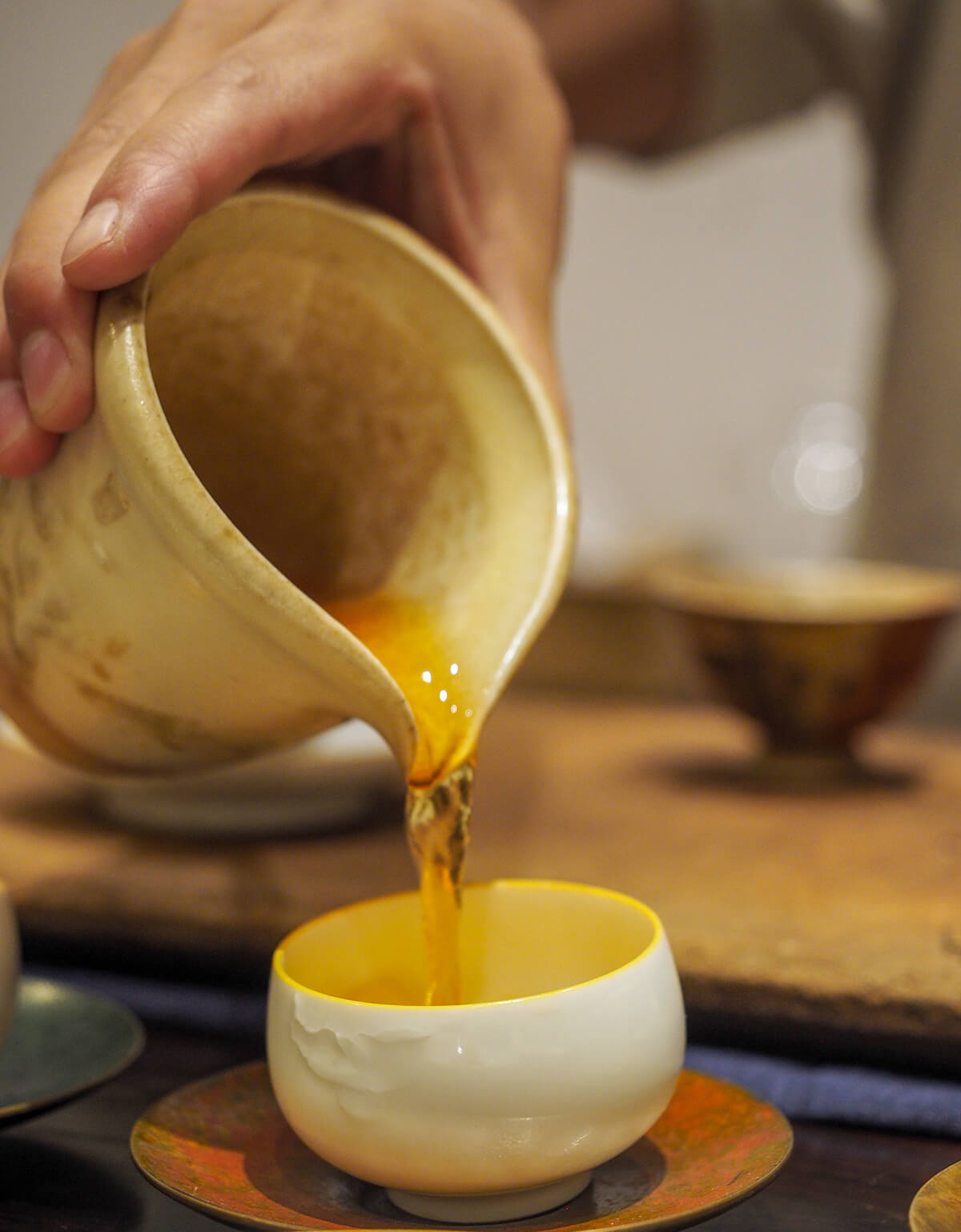
Because we are late in the season; the tea we saw drying was from the autumn flush. The tea is still delicate; but somewhat more robust, with more of a tangy aroma, then one would expect from a Darjeeling style tea. The tea's liquor is amber. It is has hints of musky flavors.

The tea we ended up purchasing is from a tea grove high in the foothills. The plants here are only about 25 years old. Other plantations we visited had plants over one hundred and fifty years old. We had appropriate contacts, and were buying enough that we able to obtain our tea to bring back home at whole sale prices.

We noticed that the cattle and goats were no where to be found in the tea plantations. Usually they are ubiquitous. This proves they can be controlled if their is a will to control them.

Most of the people in Ilam were ethnic Limbu. Their were also Brahman caste and other Aryan peoples in the area, but they were a minority.
 
Chai is better when it is made from Water Buffalo milk than when it is made from cows milk.
Authentic Nepali Chai (Chiya) is characterized by a strong, aromatic blend of fresh, warming spices, with green cardamom and fresh ginger being essential staples. Common spices used in Nepal include crushed green cardomon, ginger, cinnamon, cloves, black pepper. Bay leaf and fennel is not usually found in Nepali Chai.
 
When my wife and I travel we go out of our way to visit tea growing areas. Our favorites have been Assam in India, Darjeeling in India and Ilam in Nepal. We were able to visit these areas in 2016.

Ilam, as most of you know, is one of the major tea growing areas in the eastern part of Nepal. It is located immediately to the west of the Indian tea growing area of Darjeeling. The differences between Ilam tea and Darjeeling tea are so subtle they elude me.

They call the black tea here 'Orthodox Tea' When tea is called orthodox it refers the way the tea is dried. The leaves are rolled, not shredded.

Because we are late in the season; the tea we saw drying was from the autumn flush. The tea is still delicate; but somewhat more robust, with more of a tangy aroma, then one would expect from a Darjeeling style tea. The tea's liquor is amber. It is has hints of musky flavors.

The tea we ended up purchasing is from a tea grove high in the foothills. The plants here are only about 25 years old. Other plantations we visited had plants over one hundred and fifty years old. We had appropriate contacts, and were buying enough that we able to obtain our tea to bring back home at whole sale prices.

We noticed that the cattle and goats were no where to be found in the tea plantations. Usually they are ubiquitous. This proves they can be controlled if their is a will to control them.

Most of the people in Ilam were ethnic Limbu. Their were also Brahman caste and other Aryan peoples in the area, but they were a minority.
This is fascinating. I'm guessing rolling the tea leaves for drying affects the flavor. Have you tasted the difference that drying style makes?

I don't think i've ever had Ilam tea, I'll have to see if I can find some!
 
I'm guessing rolling the tea leaves for drying affects the flavor. Have you tasted the difference that drying style makes?

I don't think i've ever had Ilam tea, I'll have to see if I can find some!
I suspect, though I can not prove, Ilam tea is usually sold as Darjeeling Tea. Very little is sold abroad as Ilam tea.

All proper Nepali tea snobs will tell you that Shredded [Crush Tear Curl] tea is designed to maximize surface area, resulting in a rapid release of color and tannins. This makes shredded tea leafs ideal for a quick, cup of strong tea.
Rolled tea leaves release flavor slowly, often allowing for multiple infusions as the tea leaves sit in the pot.

I consumed most of the Ilam tea that we bought as Chai. I can not affirm that the Nepali tea snobs are right. I do not know with certainty that the drying style makes a big difference.
 
John Wesley preferred and recommended ale over tea, which he considered unhealthy and a waste of money.
In 1746, Wesley became a "tea-totaller," claiming that tea made his hands shake and caused "nervous disorders" among the poor. As an alternative, Wesley recommended drinking "small beer" [by which I think he meant second run weak] ale, which was common in 18th-century England where water was often unsafe.

 
Ooh!


Chaozhou Phoenix Eyebrow (oolong), Da Hong Pao (oolong), Yunnan pu'erh, and a certain variety of Miaozu Longjing I had in Hunan while visiting. Generally, I prefer gongfu style, but in Sichuan, E'meishan bamboo leaf tea simply dropped in glasses with water added was lovely.

I miss Chinese tea culture.

Oh, a rich, Hong Kong Milk Tea is not to be missed either.

Gonna make some haters here, but Taiwan bubble milk tea is generally overrated, in my opinion. Though I have had some good ones.
 
Mint!


Tea served in a Chinese gathering is an all new experience. I love the way our Asian brothers and sisters do it.
You ever have a chance to try a Moroccan mint? They served us that while I was visiting.... Morocco (not to be redundant). Little glasses filled with gunpowder green tea poured over fresh mint leaves with sugar. A bit tricky to make on your own, but really tasty. Highly recommend.
 
Rolled tea leaves release flavor slowly, often allowing for multiple infusions as the tea leaves sit in the pot.
That makes sense. I've heard similar things from communities interested in Chinese tea culture (brewing tea in a gaiwan, multiple infusions). I've seen some say they like whole leaf better since tannins don't leach out as fast. The only tea I've had that had whole leaves in tact was a jasmine green tea. It was rolled into "pearls".
 
You ever have a chance to try a Moroccan mint? They served us that while I was visiting.... Morocco (not to be redundant). Little glasses filled with gunpowder green tea poured over fresh mint leaves with sugar. A bit tricky to make on your own, but really tasty. Highly recommend.

I've not, but it sounds good. I'm a fan of most things mint.
 
Ilex vomitoria is used to make a caffeinated tea like beverage, that had a following especially in the Southeastern United States up until about 1920.

Ilex vomitoria has more caffeine than green tea. it is closely related to Ilex paraguariensis or yerba mate – a caffeinated holly native to subtropical South America.

Those who habitually drink Ilex suffer almost no crash and and almost no jitters. Cherokees, and perhaps other native Americans cultivated Ilex vomitoria. Native Americans are believed to have brewed it for centuries. It grows wild in yards in the Southeast United States and in Cuba. The Cherokee transplanted it to Oklahoma.

I have tried it and prefer Yerba Mate
 
John Wesley preferred and recommended ale over tea, which he considered unhealthy and a waste of money.
In 1746, Wesley became a "tea-totaller," claiming that tea made his hands shake and caused "nervous disorders" among the poor. As an alternative, Wesley recommended drinking "small beer" [by which I think he meant second run weak] ale, which was common in 18th-century England where water was often unsafe.

This is a fascinating point in history. You see similar sentiments on caffeinated beverages around the same time coming from Adolph Frederick and his son Gustav III of Sweden.
[automerge]1777389606[/automerge]
Ooh!


Chaozhou Phoenix Eyebrow (oolong), Da Hong Pao (oolong), Yunnan pu'erh, and a certain variety of Miaozu Longjing I had in Hunan while visiting. Generally, I prefer gongfu style, but in Sichuan, E'meishan bamboo leaf tea simply dropped in glasses with water added was lovely.

I miss Chinese tea culture.

Oh, a rich, Hong Kong Milk Tea is not to be missed either.

Gonna make some haters here, but Taiwan bubble milk tea is generally overrated, in my opinion. Though I have had some good ones.
I'll have to check these out! The only types I've had that you listed are oolong an some form of pu'erh. The bamboo leaf tea sounds interesting. What was it's flavor like?
 
Last edited:
I didn't like black tea, until I was served Pickwick English breakfast tea with sugar in a Dutch household. In spite of the name, it's a Dutch tea.

Hibiscus is currently the most frequently recurring tisane in these parts.

There's an immense variety with yerba mate, based on country of origin (Argentina, Brazil, Paraguay, Uruguay), whether or not it includes stems, method of drying, and any blends. Our long-term supplier for all things yerba mate is here, and out of many brands sampled Nobleza Gaucha has become the favorite.
 
Last edited:
My youngest loves tea in all forms. Taylors of Harrogate loose leaf English breakfast is his favorite. We've been introduced to Upton Tea Importers which he loves. Ginger tea is my cure-all for whatever ails you.
 
I didn't like black tea, until I was served Pickwick English breakfast tea with sugar in a Dutch household. In spite of the name, it's a Dutch tea.

Hibiscus is currently the most frequently recurring tisane in these parts.

There's an immense variety with yerba mate, based on country of origin (Argentina, Brazil, Paraguay, Uruguay), whether or not it includes stems, method of drying, and any blends. Our long-term supplier for all things yerba mate is here, and out of many brands sampled Nobleza Gaucha has become the favorite.
I'll have to look into Pickwick. I think I've had a Hibiscus flavored lemonade before, but not Hibiscus by itself. I'll have to try that out as well!
[automerge]1777399845[/automerge]
My youngest loves tea in all forms. Taylors of Harrogate loose leaf English breakfast is his favorite. We've been introduced to Upton Tea Importers which he loves. Ginger tea is my cure-all for whatever ails you.
I especially like lemon ginger tea when I have a sore throat. For nausea it's between that and mint for me. I don't think I've had ginger tea without lemon before. I'll have to give it a try!
 
Last edited:
This is a fascinating point in history. You see similar sentiments on caffeinated beverages around the same time coming from Adolph Frederick and his son Gustav III of Sweden.
[automerge]1777389606[/automerge]

I'll have to check these out! The only types I've had that you listed are oolong an some form of pu'erh. The bamboo leaf tea sounds interesting. What was it's flavor like?
A bit hard to explain. Kind of nutty, I guess, and with a good aroma? I like the simplicity of its preparation: no frills--just throw it in a glass and add boiling water. Then add more water when it's done.

It's been years. It's a little hard to find outside southwest China, I think, though not impossible.
 
What is your Yerba Mate set up Yeutter? What nation's leaves? What style of vessel and Bombila do you drink with?
I am not a purist with regard to the preparation of Yerba Mate. Instead of a gourd I have a dedicated tea pot for the preparation of the Yerba. I use just over one tablespoon of loose-leaf yerba mate per 8 ounces of water.. I add a cup of hot, but not quite boiling water. I use a tea strainer after it has steeped for five minutes or so. The last batch I bought was from Paraguay.
 
Last edited:
From about 2014-2016, my late stepbrother, Drew Bednasek, kept a blog about his world tea adventures. It's only available in the archive now but some of you may enjoy it.

 
That's the only way we have it so no comparison

We don't have Bojangles here but when we visited TN, bojangles' sweet tea is soooo good :cheers:
I was sooooo tempted to answer "Luzianne" and Dixie Crystals (or the Virginia equivalent) which constitutes the majority of my tea consumption. I did start afternoon hot tea and goodies with my kids so I didn't have to serve supper at 5 p.m.
 
No one has mentioned Tea that is grown on Wadmalaw Island, South Carolina. That is where the largest tea farm in the United States, producing American Classic Tea from Camellia sinensis plants. South Carolina's climate, particularly in the Lowcountry, provides suitable conditions, with a history of tea cultivation dating back to the late 1800s.
 
No one has mentioned Tea that is grown on Wadmalaw Island, South Carolina. That is where the largest tea farm in the United States, producing American Classic Tea from Camellia sinensis plants. South Carolina's climate, particularly in the Lowcountry, provides suitable conditions, with a history of tea cultivation dating back to the late 1800s.
I've never heard of that. I'll have to look into it. I've always wondered about tea cultivation in The US.
 
Status
Not open for further replies.
Back
Top