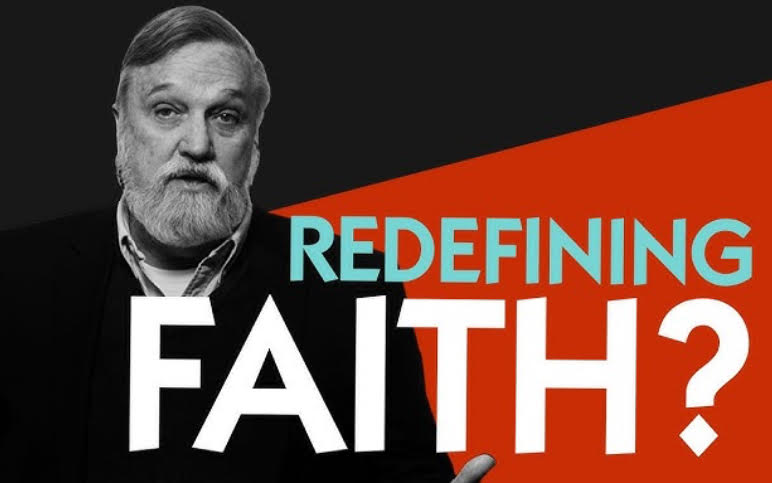
Is Doug Wilson a False Teacher?

Status
Not open for further replies.

Reformed Sojourner

Puritan Board Freshman
Doug Wilson’s theology and ministry have raised concerns within Reformed circles. I’m looking to understand these concerns clearly and biblically.

How do his views on Federal Vision, covenant theology, or justification compare with classic Reformed confessions?

Are there patterns in his ministry or pastoral practice that conflict with Reformed principles?

For those who see his teaching as dangerous or “false,” what doctrinal errors or emphases lead to that judgment?

How did Reformers and Puritans distinguish minor deviations from teaching that truly undermines the gospel, and how can we apply that today?

I’m seeking thoughtful perspectives, not controversy.

 
We can say it another way: Has every conservative Reformed body in North America condemned his teachings? If yes, would that answer your question?
 
Doug Wilson’s theology and ministry have raised concerns within Reformed circles. I’m looking to understand these concerns clearly and biblically.
An Aside:
I like Doug Wilson. And I'm not ashamed to say it. I mean he's no brainiac, not a profit, and pretty simple really. But that Christian nationalism sounds like a cult, doesn't it. What could possibly be wrong with our country becoming a Christian Nation. I think our constitution was a coup.
EW
 
Doug Wilson: "The faith that God gives is alive from the moment that God first gives it. It is not a dead, inert faith that receives justification, and then somehow comes to life after that. It is alive from the get-go. And this living faith, at each stage, does what it was given in order to do. And the very first thing it does is rest and receive. That obedient resting and receiving is the instrument of justification."


Even when he goes all out to reduce the act of justifying faith to receiving and resting on Christ alone, he has to creep in unawares with the word "obedient." It seems he can't help himself. It controls his mindset. He wants to sound orthodox, but in the end his "speech bewrays him."

In this article he quotes the Confession. Notice very carefully where the semicolon appears so as to distinguish two different things:

“Faith, thus receiving and resting on Christ and his righteousness, is the alone instrument of justification; yet is it not alone in the person justified, but is ever accompanied with all other saving graces, and is no dead faith, but worketh by love.” WCF 11.2

Did you catch it? The alone instrument is all alone in the one half of the statement; then the accompaniments are brought in to show it is a living faith in the second half of the statement. But for all his words and explanations Wilson still insists that what belongs to the second half of the statement -- obedience -- really belongs to the first half of the statement.

Yes, this is false; yes, he is teaching it; yes, it falls within an essential doctrine of the Christian faith as embodied in our confessional statements.
 
Doug Wilson: "The faith that God gives is alive from the moment that God first gives it. It is not a dead, inert faith that receives justification, and then somehow comes to life after that. It is alive from the get-go. And this living faith, at each stage, does what it was given in order to do. And the very first thing it does is rest and receive. That obedient resting and receiving is the instrument of justification."


Even when he goes all out to reduce the act of justifying faith to receiving and resting on Christ alone, he has to creep in unawares with the word "obedient." It seems he can't help himself. It controls his mindset. He wants to sound orthodox, but in the end his "speech bewrays him."

In this article he quotes the Confession. Notice very carefully where the semicolon appears so as to distinguish two different things:

“Faith, thus receiving and resting on Christ and his righteousness, is the alone instrument of justification; yet is it not alone in the person justified, but is ever accompanied with all other saving graces, and is no dead faith, but worketh by love.” WCF 11.2

Did you catch it? The alone instrument is all alone in the one half of the statement; then the accompaniments are brought in to show it is a living faith in the second half of the statement. But for all his words and explanations Wilson still insists that what belongs to the second half of the statement -- obedience -- really belongs to the first half of the statement.

Yes, this is false; yes, he is teaching it; yes, it falls within an essential doctrine of the Christian faith as embodied in our confessional statements.
You’re right that WCF 11.2 clearly separates the instrument of justification from the fruits that follow. The problem with Wilson is that he treats obedience as part of the instrument, not just the fruit. That’s a serious doctrinal error because it blurs justification with sanctification.

Whether that makes him a “false teacher” biblically is weighty, but there’s no question this is a significant deviation from what the Confession teaches.
 
Whether that makes him a “false teacher” biblically is weighty, but there’s no question this is a significant deviation from what the Confession teaches.

He has been doing this for years, has made the same error repeatedly, has refused to hearken to patient correction and seasonable rebukes, and justifies people separating from churches on the basis of his teaching, which is schism. All these things make it biblically weighty.
 
He has been doing this for years, has made the same error repeatedly, has refused to hearken to patient correction and seasonable rebukes, and justifies people separating from churches on the basis of his teaching, which is schism. All these things make it biblically weighty.
I agree. The repeated nature of these errors, along with the refusal to respond to correction and the encouragement of separation from churches, makes the situation biblically serious. Scripture reminds us of the danger of unrepentant teachers and the harm that division can cause, so this assessment is rightly weighty.
 
An Aside:
I like Doug Wilson. And I'm not ashamed to say it. I mean he's no brainiac, not a profit, and pretty simple really. But that Christian nationalism sounds like a cult, doesn't it. What could possibly be wrong with our country becoming a Christian Nation. I think our constitution was a coup.
EW
Christian nationalism sounds like the illegitimate offspring of Kuyperianism and the Deutsche Christen. It serves as a rallying cry for many who seem to proclaim something along the lines of: “There is not a square inch of our Blut und Boden over which Christ, who is King over all, does not cry ‘Mine!’” This is regardless of Doug Wilson’s views, who, to my knowledge, first coined the term.
 
An Aside:
I like Doug Wilson. And I'm not ashamed to say it. I mean he's no brainiac, not a profit, and pretty simple really. But that Christian nationalism sounds like a cult, doesn't it. What could possibly be wrong with our country becoming a Christian Nation. I think our constitution was a coup.
EW
There is Christian nationalism in theory, and then there are the actual voices promoting it. CN is tied with Hitlerites like Stone Choir and buffoons like Joel Webbon.
 
One thing to keep in mind is that he has his own definitions.. Like a Jesuit, you have to parse everything your hear from him very carefully.
 
From the Evangel Presbytery's Joseph Spurgeon:

"One of the things that I really love about my brother, Douglas Wilson, is his creativity and his prolific nature as a writer. He has written a lot of good books and articles defending the faith and important truths. One thing many people do not realize is that he has written some solid fiction too. Things like the Maritime series, The Man in the Dark, Ride Sally Ride, and of course all of his works on paedocommunion."
 
We can say it another way: Has every conservative Reformed body in North America condemned his teachings? If yes, would that answer your question?

This is key. Read the statements by the major NAPARC denominations on the Federal Vision.

Full disclosure: I defended the legitimacy of Doug Wilson's views on the covenant for many years, arguing that today's Federal Vision, while I have never agreed with it, is a modern version of Klaas Schilder's views on the covenant and is within the bounds of the Three Forms of Unity, though contrary to the Westminster Standards. In other words, I argued that the Federal Vision is wrong -- my own position on soteriology, after all, is that of classic Anglo-American Puritanism and I am therefore fundamentally opposed to the FV view of children and the covenant -- but that it is within the spectrum of legitimate disagreement in Reformed theology.

The position papers of the NAPARC denominations changed my view on that. Especially the internal fight in the URC over what to do about certain ministers and seminaries who advocated that view, or something close to it.

I like Doug Wilson. I think he's done a lot of good, though some of the people who have attached themselves to him have done him no favors. I also think he's taken a lot of unfair hits for things he doesn't believe -- it's normal in politics to demonize our opponents and that's been done to Wilson in the secular media and to some extent in the church world.

What I can't do is continue to defend the legitimacy of a theological position, i.e., the Federal Vision, with which I have never agreed, when most of the major NAPARC denominations have declared it to be outside the bounds of the Reformed confessions, not only the Westminster Standards (that's pretty obvious) but also outside the bounds of the Three Forms of Unity. I always did say the Federal Vision was wrong. The NAPARC denominations have gone beyond that and said it violates the confessions. While we don't believe in synodical infallibility, this is no longer just a few denominations but pretty much every major conservative Reformed denomination out there that has rejected the Federal Vision, and that needs to carry weight for Reformed people.

There is Christian nationalism in theory, and then there are the actual voices promoting it. CN is tied with Hitlerites like Stone Choir and buffoons like Joel Webbon.

Spot on.

If we are going to debate Two Kingdoms theology, we need to know what version of 2K. If we are going to debate "Christian Nationalism," we need to know what version of it.

The words are not being used the same way, and that has led to many problems.

People who want to define "Christian Nationalism" as an ethnostate, and to argue that Christ saves people via ethnic nationalism -- go take that version of Reformed theology to Afrikanerdom in South Africa from a half-century ago and try to make it work. It has a history in Reformed circles, both politically and theologically, with confessionally Reformed people making serious biblical and theological arguments for "separate development of peoples."

I can show articles written long before the modern "Christian Nationalist" controversies by leading men in the Reformed world, not just in South Africa but also in the United States, including men who were (or who later became) leaders in NAPARC denominations, advocating that sort of thing. I have personally interacted with some of those men decades ago who had to find a way to be polite to me and my wife in our interracial marriage.

They were wrong. I thought their bad theology had died with them. I was wrong, it's coming back, and instead of the older generation who actually made legitimate (though wrong) theological arguments of why we need to have separate development of peoples as a means to more effective evangelism, the new people promoting this stuff are flat-out bigots who couldn't care less about non-white minorities. They don't want separate development of peoples to help them develop; what they're really advocating is not "Christian Nationalism" but "White Nationalism" and they ought to be honest in their choice of words.

I trust the anger is obvious despite the fact that I am "holding my fire" here.

Now if we want to argue that Christ is a king and has crown rights over all civil governments, let's talk. But don't use ethnic nationalism arguments with me and claim to advocate Christian nationalism, when what you're actually doing is advocating "Christian" racism, with a thin veneer of support for "Western Christian culture" disguising your dislike for people with a different ethnic background. That's not Christian at all.


Doug Wilson’s theology and ministry have raised concerns within Reformed circles. I’m looking to understand these concerns clearly and biblically.

How do his views on Federal Vision, covenant theology, or justification compare with classic Reformed confessions?

Are there patterns in his ministry or pastoral practice that conflict with Reformed principles?

For those who see his teaching as dangerous or “false,” what doctrinal errors or emphases lead to that judgment?

How did Reformers and Puritans distinguish minor deviations from teaching that truly undermines the gospel, and how can we apply that today?

I’m seeking thoughtful perspectives, not controversy.

 
Last edited:
Christian nationalism sounds like the illegitimate offspring of Kuyperianism and the Deutsche Christen. It serves as a rallying cry for many who seem to proclaim something along the lines of: “There is not a square inch of our Blut und Boden over which Christ, who is King over all, does not cry ‘Mine!’” This is regardless of Doug Wilson’s views, who, to my knowledge, first coined the term.

You are very close to the mark here, and I personally think you've hit it dead-center.

Some of the Reformed people advocating "Christian Nationalism" know Kuyper, and not just the good parts. They also know his attitudes regarding the Boers in South Africa and toward missionary work and "separate development of peoples."

They've taken it, crossed it with the Southern Presbyterian history here in the United States, and come up with something that I think Verwoerd would recognize, and might well like.

I do think your "Blut und Boden" (Blood and Soil) reference may go too far with regard to the American advocates of Christian nationalism, though I see your point about equivalent European movements and I probably agree with you about developments on your side of the ocean. Viktor Orban is an ethno-nationalist in ways that Doug Wilson is not.

We just don't have that history here of ethnic ties to land and geography, partly because our nation is so new, and because many of our most conservative parts of the United States were settled in the early-to-mid 1800s, or even the late 1800s. The REALLY old parts of the United States, such as New England, are now centers of American liberalism. Conservative places like Texas just don't have a sense of the people having lived there since time immemorial, since they are well aware that the founders of Texas were fighting frontiersmen brought by the Mexican government into an ungovernable and dangerous territory in the early 1800s to fight off Native Americans, then got mad at the Mexican government, declared their independence, joined the United States, and ended up on the losing side of the Civil War. Most people living in Texas today are descended from people who came long after the founding of the Texas Republic, so while they may greatly admire the history of Texas, they know that very few Texan today can claim to have relatives who fought at the Alamo. And even if they did, it was in 1836, less than two hundred years ago, not a thousand or more years ago like the founders of the Netherlands, of Hungary, of Poland, of France, or of other European nations that are (or used to be) defined by ethnicity. It's not like Le Pen's claim to the heritage of the Battle of Tours, defining France as the first group of Christian Europeans to successfully defeat and drive out the Muslim invaders. Charles Martel's victory was in 732; the Alamo was in 1836. That is over a thousand years, and it marks a huge difference in how history gets viewed between America and Europe.

Still, many of these "Christian Nationalists" are actually quite smart men. They read, their reading is extensive, and they know the linkage of patriotism in Europe with ethnic nationalism and geographic territory. Poland is the "land of the Poles." Hungary has been an ethnostate for well over a thousand years, and Viktor Orban is quite aware of that. The history of the Netherlands is more complicated, but those who know Dutch history mostly by reading Abraham Kuyper and his political conflicts are well aware of the wars for liberation from Spain.

I think the smarter Christian Nationalist thinkers in America realize that we just can't operate with a nationalist ethno-state model over here. It just isn't factually defensible.

As others on this thread have pointed out, however, there are "buffoons" who do precisely that.

It would be laughable if it weren't for the fact that liberals pick up on their buffoonery and made the rest of us who are conservative Christians in politics have to defend ourselves and explain why we aren't like them.

I don't want to take time to deal with that sort of person. Unfortunately, I am being forced to do so because they've gotten the ear of major national news media that have given them a platform far out of proportion to their actual following in the States.
 
I think Douglas Wilson is very helpful in regards to culture and political commentary, but I certainly wouldn't recommend him for new converts. Sometimes he can be very edifying and encouraging to me, and other times he misses the mark entirely. I view him similarly to John Piper. Just take the good and spit out the bad.
 
Concise summary of the seven characteristics of false teachers by Thomas Brooks (1608-1680):

1. Men-pleasers — Tell people what they want to hear instead of God’s truth.

2. Attack faithful ministers — Undermine and slander true servants of Christ.

3. Teach their own ideas — Share visions or notions not grounded in Scripture.

4. Ignore weightier matters — Fixate on minor issues while neglecting gospel essentials.

5. Dress error attractively — Use impressive or spiritual-sounding language to hide falsehood.

6. Make followers, not disciples — Convert people to their opinions rather than to holiness.

7. Exploit the flock — Use followers for personal gain instead of serving their souls.
 
I think Douglas Wilson is very helpful in regards to culture and political commentary, but I certainly wouldn't recommend him for new converts. Sometimes he can be very edifying and encouraging to me, and other times he misses the mark entirely. I view him similarly to John Piper. Just take the good and spit out the bad.

These might appear as different "times." It is more likely the case that while you are reading him as saying one thing he is in fact telling you another. The freedom of the gospel and the bondage of the law work their way through everything, including culture and politics. After the apostle Peter speaks of true Christian freedom he goes on to address servants (1 Peter 2). If the foundation and the material for building on it are confused there is little hope that the building will make much sense. A wise builder first lays the foundation as something complete in itself; then he builds on top of it.
 
You’re right that WCF 11.2 clearly separates the instrument of justification from the fruits that follow. The problem with Wilson is that he treats obedience as part of the instrument, not just the fruit. That’s a serious doctrinal error because it blurs justification with sanctification.

Whether that makes him a “false teacher” biblically is weighty, but there’s no question this is a significant deviation from what the Confession teaches.
Wilson is terrible on justification, to be sure. But is he, on balance, a major asset to the kingdom of God? Absolutely.
 
Wilson is terrible on justification, to be sure. But is he, on balance, a major asset to the kingdom of God? Absolutely.

Is that the kingdom of grace? Then, no. Of course you might be referring to the kingdom of nature (power), where everything is worked out in terms of the cultural mandate.
 
Doug Wilson’s theology and ministry have raised concerns within Reformed circles. I’m looking to understand these concerns clearly and biblically.

How do his views on Federal Vision, covenant theology, or justification compare with classic Reformed confessions?

Are there patterns in his ministry or pastoral practice that conflict with Reformed principles?

For those who see his teaching as dangerous or “false,” what doctrinal errors or emphases lead to that judgment?

How did Reformers and Puritans distinguish minor deviations from teaching that truly undermines the gospel, and how can we apply that today?

I’m seeking thoughtful perspectives, not controversy.
Haven't we discussed this on this board before?
 
"Terrible on justification" seems a pretty insurmountable minus to still be an asset on balance, let alone a major one.

This is not defending Doug Wilson's views, but most of us who voted for Donald Trump would say he has been an asset on balance despite all sorts of awful beliefs and actions. Is Wilson better than Trump, morally and doctrinally? I would say yes to both. So it's entirely possible to say that someone has been an asset on balance despite pretty serious problems.

If the alternative is President Kamala Harris, I'll vote for Trump, as I think most people here would, apart from those who say, "I'm not voting at all." Their choice. It's not mine.

I voted for Ted Cruz in 2016, Rick Santorum in 2012, and Mike Huckabee in 2008 for the Republican nomination. (Yes, zero for three.) I can think of many people who have done a lot of good in American politics, and the conservative Christian movement, who I would never want in the pulpit of any church I would be likely to join.

Comparing Doug Wilson to Francis Schaeffer or D. James Kennedy is not the right use of categories. If we think of Doug Wilson less as a Reformed theologian and more as a conservative Christian political activist who began his career in trying to reform American views of education and moved into culture and politics, I think that helps.
 
If we think of Doug Wilson less as a Reformed theologian and more as a conservative Christian political activist who began his career in trying to reform American views of education and moved into culture and politics, I think that helps.
But does this do justice to the reality of his influence? How many people does he influence who are outside of a broadly reformed (here I mean at minimum TULIP) background? Probably very little. Instead, people are drawn into his circle because of the theological foundation of his cultural mandate, plus they love the manly man image. No one is going to Wilson for culture alone.

So I don’t think it’s right to think of him that way. Instead, we ought to think of him as a so-called Reformed theologian who has, repeatedly, adamantly, and stubbornly, botched one of the central truths we confess.

If anyone asked me, I would steer them away from Wilson and his ilk for this alone, not to mention my disagreements with how he engages culture and the theology behind it.
 
Comparing Doug Wilson to Francis Schaeffer or D. James Kennedy is not the right use of categories.

Neither is comparing Doug Wilson to Trump and Harris.

If we think of Doug Wilson less as a Reformed theologian and more as a conservative Christian political activist who began his career in trying to reform American views of education and moved into culture and politics, I think that helps.

Not as long as he thinks of himself as a Reformed theologian and claims pastoral authority without any history of Biblical ordination and calling.

But even if you can look past all those faults, are his attempts at reform helpful? I cannot name one of them.

Most of his takes are wordy, a bit obtuse and lack any real substance. What reforms in culture and politics do you refer to?
 
Status
Not open for further replies.
Back
Top