KJV-ers: Unicorns? Please explain!

Status
Not open for further replies.

he beholds

Puritan Board Doctor
I just got an email from an atheist friend who recently read about Job 39:9-12 where it mentions unicorns. I have read Job before and never met a unicorn, so I assumed that he was listening to ignorant atheists, but I found that the KJV does say unicorn. Does anyone have an explanation as to why? My two guesses are either it was a bad translation or the word unicorn used to mean something else, like wild ox (which is the ESV, etc. translation). What does the Hebrew say?

Also, does anyone know what the Geneva says? Mine is at home and I am on vacation.

Thanks♥
 
Haven't done any research on this myself. But I did look up unicorn in websters 1828 dictionary and here's what it says:

unicorn

U'NICORN, n. [L. unicornis; unus, one, and cornu, horn.]

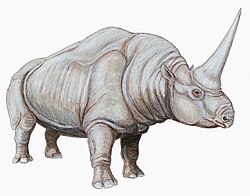
1. an animal with one horn; the monoceros. this name is often applied to the rhinoceros.

2. The sea unicorn is a fish of the whale kind, called narwal, remarkable for a horn growing out at his nose.

3. A fowl.

fossil unicorn, or fossil unicorn's horn, a substance used in medicine, a terrene crustaceous spar.

Search => [word] => unicorn :: 1828 Dictionary :: Search the 1828 Noah Webster's Dictionary of the English Language (FREE) :: 1828.mshaffer.com

And here are all of the instances "unicorn" is translated in the KJV,

Numbers 23
22 God brought them out of Egypt; he hath as it were the strength of an unicorn.

Numbers 24
8 God brought him forth out of Egypt; he hath as it were the strength of an unicorn: he shall eat up the nations his enemies, and shall break their bones, and pierce them through with his arrows.

Deuteronomy 33
17 His glory is like the firstling of his bullock, and his horns are like the horns of unicorns: with them he shall push the people together to the ends of the earth: and they are the ten thousands of Ephraim, and they are the thousands of Manasseh.

Job 39
9 Will the unicorn be willing to serve thee, or abide by thy crib?

10 Canst thou bind the unicorn with his band in the furrow? or will he harrow the valleys after thee?

Psalms 22
21 Save me from the lion's mouth: for thou hast heard me from the horns of the unicorns.

Psalms 29
6 He maketh them also to skip like a calf; Lebanon and Sirion like a young unicorn.

Psalms 92
10 But my horn shalt thou exalt like the horn of an unicorn: I shall be anointed with fresh oil.

Isaiah 34
7 And the unicorns shall come down with them, and the bullocks with the bulls; and their land shall be soaked with blood, and their dust made fat with fatness.
 
This reminds me of a Far Side Cartoon I saw years ago.

Noah is pictured looking sternly at two lions with guilty expressions. Two hoofed haunches lay dead in the foreground.

The caption reads: "Ok, so much for the Unicorns. From now on all carnivores are confined to C deck."
 
3743 Unicorn, described as an animal of great ferocity and strength Nu 23:22 R.V., "wild ox," marg., "ox-antelope;" Nu 24:8 Isa 34:7 R.V., "wild oxen", and untamable Job 39:9 It was in reality a two-horned animal; but the exact reference of the word so rendered (reem) is doubtful. Some have supposed it to be the buffalo; others, the white antelope, called by the Arabs rim. Most probably, however, the word denotes the Bos primigenius ("primitive ox"), which is now extinct all over the world. This was the auerochs of the Germans, and the urus described by Caesar (Gal. Bel., vi.28) as inhabiting the Hercynian forest. The word thus rendered has been found in an Assyrian inscription written over the wild ox or bison, which some also suppose to be the animal intended (comp.) De 33:17 Ps 22:21 29:6 92:10
EASTON’S BIBLE DICTIONARY

NKJ Job 39:9 "Will the wild ox be willing to serve you? Will he bed by your manger?

NAS Job 39:9 "Will the wild ox consent to serve you? Or will he spend the night at your manger?

ASV Job 39:9 Will the wild-ox be content to serve thee? Or will he abide by thy crib?

ESV Job 39:9 "Is the wild ox willing to serve you? Will he spend the night at your manger?

GNV Job 39:12 Will the vnicorne serue thee? or will he tary by thy cribbe?

KJV Job 39:9 Will the unicorn be willing to serve thee, or abide by thy crib?

NIV Job 39:9 "Will the wild ox consent to serve you? Will he stay by your manger at night?

NLT Job 39:9 "Will the wild ox consent to being tamed? Will it stay in your stall?

LXT Job 39:9 boulh,setai de, soi mono,kerwj douleu/sai h' koimhqh/nai evpi. fa,tnhj sou
 
Does the hebrew word imply it must have a single, "uni" horn? If so, then I would think it to be something like a rhinoceros. But were rhinoceros' located in the middle east?

Or is the wild-ox (two horns) more probable?

Thanks.
Adam
 
Many translations have wild ox and unicorn. Wild ox doesn't make sense to me in the place of Job because it seems to be referring to a domesticated animal.

Here are some other translations:

buffalo (Darby and MLB)
forest-ox (Leeser)
ox of the mountains (BBE)
reem (YLT, this is a transliteration)
rhinoceros (DRC, RCC translation from Vulgate)
unicorn 'ox' (UKJV, exactly how it appears...)

Oh, and here's an evolution of the spelling of unicorn:

1395 Wycliffe: vyncorn
1534 Tyndale: vnycorne
1535 Coverdale: vnicorne
1568 Bishop: vnicorne
1587 Geneva: vnicorne
1611 King James: unicorne
1769 King James: unicorn
 
Don't tell the atheist about the Satyrs in Isaiah 13:21 :)

And don't let him see the Geneva marginal note explaining the Zijm in that passage:

13:21 1 Which were either wild beasts, or fowls, or wicked spirits,
whereby Satan deluded man, as by the fairies, goblins, and such like
fantasies.
 
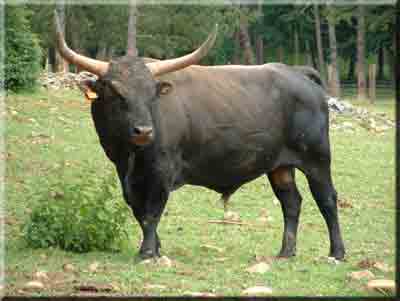
There have been some really cool breeding programs going on in Europe over the last 70 years or so to bring back the wild ox, and they're stunningly successful

aurochsgr.jpg


But the unicorn and the dragon of the KJV are myths. I wish they weren't, but they are. The translators of the KJV simply didn't have the knowledge that we do today, so modern versions don't talk about dragons and unicorns.

Jessi, for you atheist friend who thinks he's found out some sort of weak spot in Christianity, only the KJV onlies need to get into linguistic and historical gymnastics to defend the faith against such as him. The rest of us just yawn, and assume that if he really wants to pursue the matter he'll come up empty handed.

PS nowadays the Aurochs are (unless someone changed the nomenclature when I wasn't looking) are grouped under Bos taurus, the ancestor of our domestic cattle.

-----Added 7/6/2009 at 08:38:21 EST-----

If so, then I would think it to be something like a rhinoceros. But were rhinoceros' located in the middle east?

They were in Egypt and India at least, so everyone knew of them. We used to have a bunch of them a few miles from the farm I managed. Strong isn't the word!!
 
I am curious as to how much the LXX translation (monokeros) played in translating the Hebrew as "unicorn" rather than "wild ox" or "rhinoceros" -- even though the Greek word appears to be closely related to rhinoceros!
 
I actually was quite pleased with this Q from my friend, for it was so easy to answer! Sometimes his question make me do lots of research, but as soon as I read this one, I responded to him with: "Either the KJV used the word unicorn for something other than what we call a unicorn today, or it was figurative. I don't think figurative, since none of the other translations I've looked at are figurative, but I will ask my KJV expert friends [this is where the PB comes in]."

And then the first answer I get from you all is a definition from the 1800's where unicorn had more than the mythological meaning (my first guess!). So this one was an easy, non-debatable issue. Which really, I knew it would be as soon as I saw it. I thought, "I don't know this answer, but I know it's going to be an easy one!"
Thanks!

-----Added 7/6/2009 at 09:38:14 EST-----

I am curious as to how much the LXX translation (monokeros) played in translating the Hebrew as "unicorn" rather than "wild ox" or "rhinoceros" -- even though the Greek word appears to be closely related to rhinoceros!

LXX= ?

So do you think it means rhino as opposed to wild ox? (I don't think it matters for faith, but just for knowledge.)
 
I actually was quite pleased with this Q from my friend, for it was so easy to answer! Sometimes his question make me do lots of research, but as soon as I read this one, I responded to him with: "Either the KJV used the word unicorn for something other than what we call a unicorn today, or it was figurative. I don't think figurative, since none of the other translations I've looked at are figurative, but I will ask my KJV expert friends [this is where the PB comes in]."

And then the first answer I get from you all is a definition from the 1800's where unicorn had more than the mythological meaning (my first guess!). So this one was an easy, non-debatable issue. Which really, I knew it would be as soon as I saw it. I thought, "I don't know this answer, but I know it's going to be an easy one!"
Thanks!

Ever the advantage of the scoffer. He can release as many rabbits as we are willing to chase!
 
I am curious as to how much the LXX translation (monokeros) played in translating the Hebrew as "unicorn" rather than "wild ox" or "rhinoceros" -- even though the Greek word appears to be closely related to rhinoceros!

LXX= ?

So do you think it means rhino as opposed to wild ox? (I don't think it matters for faith, but just for knowledge.)

LXX is the abbreviation for the Septuagint, the Greek translation of the Hebrew Scriptures (c. 300 B.C.). It was thought to have been translated by 70 (or 72?) scholars, hence the abbreviation LXX.

Unless I miss my guess, monokeros literally means "one-horn" just as rhinoceros means "nose horn." It is not too difficult to see how "one horn" becomes "unicorn" in an English translation, but that is a far cry from saying this is a reference to a mythological being.

If I am not mistaken, there are other instances of animals listed in Scripture in which we do not quite know what animal is being referenced. Compare different translations of 1 Kings 10:22, for instance; what did the ships from Tarshish deliver along with the apes? Was it baboons, monkeys, or peacocks? I don't think the foundations of Christianity are shaken here, In my humble opinion.
 
I am curious as to how much the LXX translation (monokeros) played in translating the Hebrew as "unicorn" rather than "wild ox" or "rhinoceros" -- even though the Greek word appears to be closely related to rhinoceros!

That's it! I knew I had heard something that was supposed to be why the word unicorn was used and why rhino was a better translation, and it was the LXX.

Apostle's Bible and NETS, translations of the LXX, have unicorn For what it's worth.
 
Umm . . . exactly how does this do any damage? What if there were unicorns? What if the modern definition of unicorn is just wrong? I'd sure put the unbelieving scoffer to the test before I question the Bible. I don't have to apologize for there being dragons or unicorns in the text.

:rolleyes:

I will not be embarrassed if the Lord shows us one day that there are actual unicorns (properly and historically so called). BTW glad to see that you are able to post again Josh.
 
This unicorn question comes up occasionally. From an earlier discussion (check the link in the post referred to):

http://www.puritanboard.com/f63/KJV-bible-how-overcome-language-barrier-40664/#post502435
 
I preached on Psalm 22 last Lord's Day evening, where unicorns are mentioned in verse 21, KJV. I explained this as most likely the aurochs, or ancient breed of wild cattle, now extinct. The translators of the KJV and Geneva bible took the description of the re’em and translated it with the word for a mythical creature of great strength. They had no way of knowing unicorns didn’t exist or hadn’t existed in creation. I came across a description by Marco Polo of an unicorn, which was obviously (from his words) a rhinoceros.

Why should I not understand dragons as some large ancient serpent creature known in man’s past? Genesis describes a serpent cursed by God to hence go on its belly, implying it may have conveyed itself otherwise before. Job 41 describes a dragon like creature which may have been a dinosaur species. After all, as non evolutionists, we believe men once lived on the earth with every ancient kind of creature, including those now extinct.
 
Didn't you know? Unicorns actually exist. Humans killed most of them for their horn, though, so the only ones that survived are of the invisible pink variety. They've occasionally been spotted around a certain atheistic day camp.
 
Why should I not understand dragons as some large ancient serpent creature known in man’s past?
Because, Pastor Ferrell, we are to capitulate to "science" at every turn. If modern man defines unicorn and dragon in a certain way, we must adjust, because there's no way to make the Bible translation fit otherwise. Thus we need constantly to bring out new translations instead of educating folks on what already is. Else, people will use words like unicorn and dragon to disprove the Bible! And that would shake my faith. :eek:

Or one could assume that the translators existed in a day and time in which their science insisted dogmatically (and had so for centuries) that dragons existed, and the translators mistranslated a word. Would science be to blame if a mule was mistranslated as a camel?

one's faith would only be shaken if one did not know any Hebrew or Greek, had no access to a minister who did, and who insisted that there was no possibility of a faithful English translation occurring in the last 400 years.
 
I came across a description by Marco Polo of an unicorn, which was obviously (from his words) a rhinoceros.

In Serendipities Umberto Eco has some engaging reflections upon that description by Marco Polo, and other similar adjustments of existing verbiage to the pressure of new situations.
 
Because, Pastor Ferrell, we are to capitulate to "science" at every turn. If modern man defines unicorn and dragon in a certain way, we must adjust, because there's no way to make the Bible translation fit otherwise. Thus we need constantly to bring out new translations instead of educating folks on what already is. Else, people will use words like unicorn and dragon to disprove the Bible! And that would shake my faith. :eek:

Or one could assume that the translators existed in a day and time in which their science insisted dogmatically (and had so for centuries) that dragons existed, and the translators mistranslated a word. Would science be to blame if a mule was mistranslated as a camel?

one's faith would only be shaken if one did not know any Hebrew or Greek, had no access to a minister who did, and who insisted that there was no possibility of a faithful English translation occurring in the last 400 years.
Your position is noted, Pastor, and please know that I didn't intend for my comment to be a swipe at every person without exception that doesn't like the use of the terms unicorn and dragon, but rather those who would regularly and at a moment's notice change things just to "keep up with the joneses" of Science. My apologies for implying otherwise.

Understood. But I personally don't view a change every couple of centuries as "a moment's notice." :)
 
My Geneva actually calls it a "vnicorne" is that the same thing? :lol:

Will the vnicorne serue thee? or will he tary by thy cribbe?(Job 39:9 Geneva)

I don't think it means "one horned" at all. I think it means either:
(1) great strength, Num_23:22; Job_39:11;
(2) two horns, Deu_33:17;
(3) fierceness, Psa_22:21;
(4) untameableness, Job_39:9-11, where the unicorn, probably the wild bison, buffalo, ox, or urus (now only found in Lithuania, but then spread over northern temperate climes, Bashan, etc., and in the Hercynian forest, described by Caesar as almost the size of an elephant, fierce, sparing neither man nor beast)
 
Status
Not open for further replies.
Back
Top