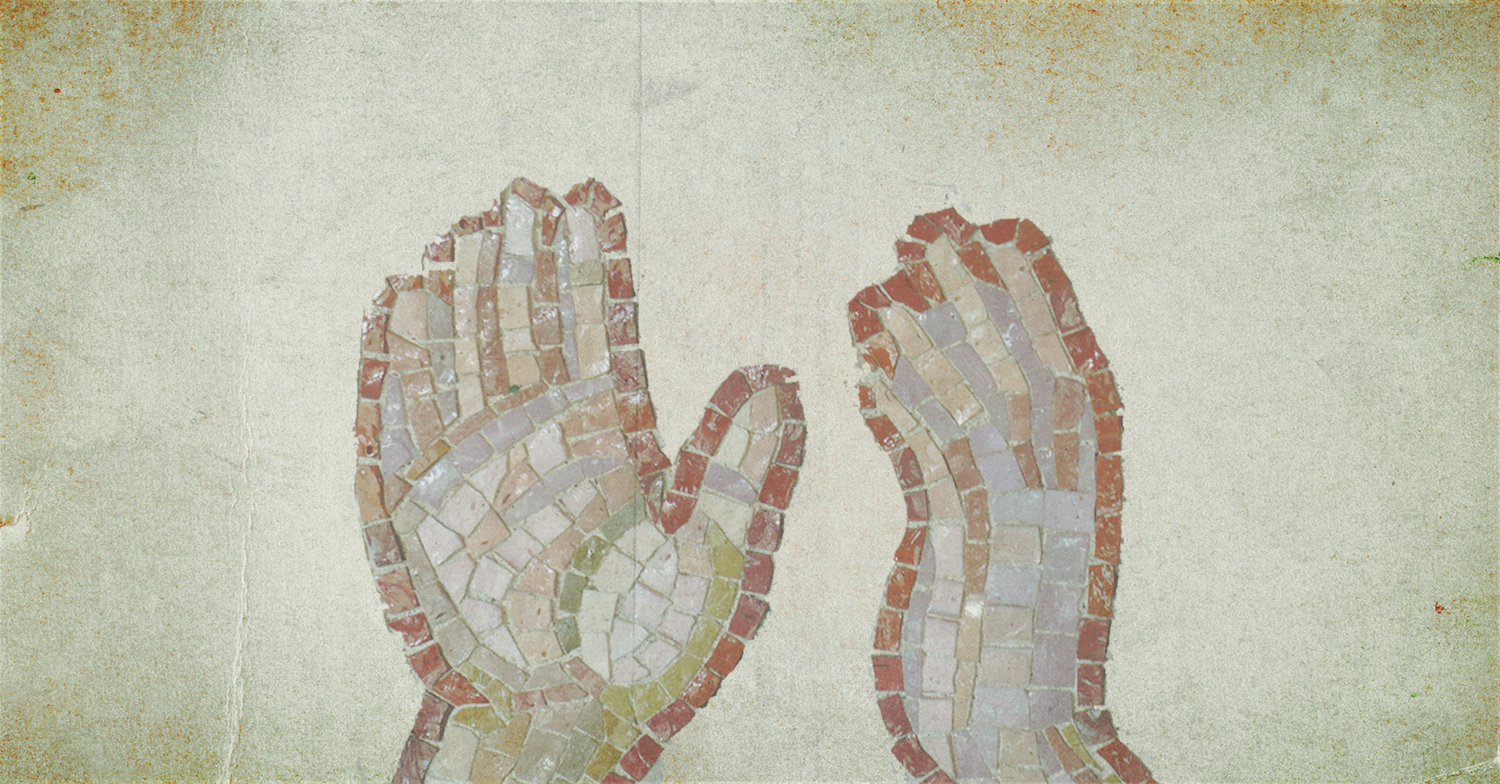
Receiving the Benediction

Status
Not open for further replies.

Dashboard_Dog

Puritan Board Freshman
Hey everyone, I was wondering if anyone had any thoughts on the raising up of hands to “receive the benediction” at the end of a church service? I did not grow up Reformed, so this has been a new element to worship for me to get used to the past few years. Was curious why people raise their hands to receive the benediction instead of merely hearing it and receiving it in that sense. Is the raising of hands merely a physical posture of reception? Curious to know where this started if anyone has historical resources as well! Appreciate the responses in advance. God bless.
 
Raising of hands is adiophora, that is, "a thing indifferent". Do it if you want to or refrain from it if it makes you feel weird. Neither raising hands makes the benediction work better nor refraining from raising makes it work less.
 
Raising of hands is adiophora, that is, "a thing indifferent". Do it if you want to or refrain from it if it makes you feel weird. Neither raising hands makes the benediction work better nor refraining from raising makes it work less.
Appreciate your response, brother. I definitely agree that there is no “power” in it and people, like myself, are free to refrain from doing it; however, I am more so curious to know the “why” behind receiving the benediction in this manner.
 
For what it's worth, I don't know of any Reformed* churches in which this practice is the norm. This isn't done in any of the Reformed Baptist / OPC / Lutheran churches I've visited in my Christian life.

I'd assume it's more common in Southern Baptist / Pentecostal type churches.
 
That is interesting! All of the PCA churches I have attended have done this practice. I also grew up Southern Baptist, I have never heard of or experienced a benediction whatsoever in any Southern Baptist churches (not saying it is not done, but I think it is rare).
 
Ah. I've never personally visited a PCA church. There's much more of a mixed bag with the PCA, from what I understand. It seems that the PCA has a huger spectrum of practice and "confessional fidelity" than the OPC, for example. I've probably visited half-a-dozen OPC churches, and every single one has been almost exactly the same.
 
I raise one hand when giving the benediction. I have one man in the congregation who holds his two hands palms up - but he doesn't raise them - when receiving it. I've never seen a congregation that raises their hands (I gather you mean, raise them up high).
 
I raise one hand when giving the benediction. I have one man in the congregation who holds his two hands palms up - but he doesn't raise them - when receiving it. I've never seen a congregation that raises their hands (I gather you mean, raise them up high).
Sorry, I should have been more specific. By “raising” I mean holding out there hands with their palms up, I don’t mean raising there hands high (which I mostly see the elder giving the benediction do with one hand).
 
There's plenty of Reformed tradition behind the pastor raising his hands or a single hand, palms out, to give the benediction. I can't recall being in a Reformed service where the congregation raises their hands in any way to receive it, and I'm pretty sure some Reformed people would find that irregular or inappropriate.

However, the palms-up posture is one that indicates receiving in some traditions. If this church is using that form of hand raising to signify receiving the benediction, I suppose I can see how there might be good intentions behind it. I can understand the desire to get the congregation physically involved in receiving the benediction, especially if the benediction has become for them little more than a cue to get ready to gather their jackets and head for the door. Taking the benediction seriously is a Reformed thing, for sure. I doubt there are many PCA presbyteries that would stop a pastor who suggests to his congregation that they raise hands palms up, even if it is not the practice in most churches.

If the congregation were joining the pastor in raising hands palms out, as if to signify everyone giving the benediction to each other, that would raise different and more serious questions.
 
My family (mostly) and I raise my hands waist-high with my palms up when receiving the benediction. I learned to do this at an OPC in Illinois. Not everyone did it but a handful. At the church I serve now, more people raise their hands for both the salutation and benediction. I've seen the practice more commonly down south in Alabama (ARP and PCA).

As was said above, it's a matter of adiaphora.
 
My family (mostly) and I raise my hands waist-high with my palms up when receiving the benediction. I learned to do this at an OPC in Illinois. Not everyone did it but a handful. At the church I serve now, more people raise their hands for both the salutation and benediction. I've seen the practice more commonly down south in Alabama (ARP and PCA).

As was said above, it's a matter of adiaphora.
Yeah I think it's a Southern thing, and adiaphora.
 
Appreciate the conversation, friends. Again, I understand that it’s adiaphora. That really isn’t what I am after in the OP; rather, my question is more so one of “why” this is a practice and where it comes from. Is it merely a physical act of reception or has anyone heard of a different reason for this? And has anyone heard of where this began? Would love to hear more of your all’s thoughts! Blessings.
 
Appreciate the conversation, friends. Again, I understand that it’s adiaphora. That really isn’t what I am after in the OP; rather, my question is more so one of “why” this is a practice and where it comes from. Is it merely a physical act of reception or has anyone heard of a different reason for this? And has anyone heard of where this began? Would love to hear more of your all’s thoughts! Blessings.
Sorry, brother! It's silly how you can read a question and completely forget the question in your answer. Well, maybe that's just something that happens to me. I'm not sure where it comes from besides having a posture of receiving. If anyone has written about it, I'd bet it would have been Hughes Oliphant Old.
 
Hey everyone, I was wondering if anyone had any thoughts on the raising up of hands to “receive the benediction” at the end of a church service? I did not grow up Reformed, so this has been a new element to worship for me to get used to the past few years. Was curious why people raise their hands to receive the benediction instead of merely hearing it and receiving it in that sense. Is the raising of hands merely a physical posture of reception? Curious to know where this started if anyone has historical resources as well! Appreciate the responses in advance. God bless.
Congregations I attended early in my Reformed journey all raised their hands to receive the benediction. When I came to the FCC, I found it strange that they didn't.

One thing we have to realize is that the Scriptures regulate worship posture. If a posture is used in Scripture, it ought to be used in church. To add a posture that carries significance--such as the lifting of hands to receive the benediction--is to add to what the Lord has given us. These things are not adiaphora.

In the Scriptures, the one who pronounces the blessing raises his hands. That's the prescription. The congregation raising their hands goes beyond that prescription.
 
Appreciate the conversation, friends. Again, I understand that it’s adiaphora. That really isn’t what I am after in the OP; rather, my question is more so one of “why” this is a practice and where it comes from. Is it merely a physical act of reception or has anyone heard of a different reason for this? And has anyone heard of where this began? Would love to hear more of your all’s thoughts! Blessings.
It could just be an unconscious reaction with no rhyme or reason behind it. That, I imagine, would make it hard to pin down "when or why it started".
 
Congregations I attended early in my Reformed journey all raised their hands to receive the benediction. When I came to the FCC, I found it strange that they didn't.

One thing we have to realize is that the Scriptures regulate worship posture. If a posture is used in Scripture, it ought to be used in church. To add a posture that carries significance--such as the lifting of hands to receive the benediction--is to add to what the Lord has given us. These things are not adiaphora.

In the Scriptures, the one who pronounces the blessing raises his hands. That's the prescription. The congregation raising their hands goes beyond that prescription.
As far as I know, there isn't any warrant for sitting during the service. I understand that some might buck against this and say that hands raised to the hips or so with palms up is quite different than sitting or standing, but if the regulative principle pertains to posture, then these things are equally regulated or disallowed.
 
As far as I know, there isn't any warrant for sitting during the service. I understand that some might buck against this and say that hands raised to the hips or so with palms up is quite different than sitting or standing, but if the regulative principle pertains to posture, then these things are equally regulated or disallowed.
Eutychus was sitting in Acts 20. It seems to be what the other people were doing, too, unless you think they were standing while Paul preached until midnight.
 

Hope this helps.

This one has some spelling errors (maybe typos?).
 
Eutychus was sitting in Acts 20. It seems to be what the other people were doing, too, unless you think they were standing while Paul preached until midnight.
The text gives no indication that others were sitting. Eutychus was at the window, or, rather, in the window. That could mean it was a packed house and that was the only spot he could get. Who knows. But I'm not sure I'd see it as regulative, especially since Eutychus paid the price of death. Maybe it was for sitting? Certainly sleeping isn't acceptable.
 
In the Scriptures, the one who pronounces the blessing raises his hands. That's the prescription.
Can you give us the reference?

As far as I know, there isn't any warrant for sitting during the service. I understand that some might buck against this and say that hands raised to the hips or so with palms up is quite different than sitting or standing, but if the regulative principle pertains to posture, then these things are equally regulated or disallowed.
Eutychus was sitting in Acts 20. It seems to be what the other people were doing, too, unless you think they were standing while Paul preached until midnight.
The text gives no indication that others were sitting. Eutychus was at the window, or, rather, in the window. That could mean it was a packed house and that was the only spot he could get. Who knows. But I'm not sure I'd see it as regulative, especially since Eutychus paid the price of death. Maybe it was for sitting? Certainly sleeping isn't acceptable.
Pardon my ignorance here, but isn't the worship of the new testament a continuation of the solemn assemblies the Jews had on their'e sabbaths in the old testament church, to the degree where there should be continuity on things like posture unless otherwise proven?
If it is, Luke 4:20 may apply, Eutychus or not:
"And he closed the book, and he gave it again to the minister, and sat down. And the eyes of all them that were in the synagogue were fastened on him."
As long as there is continuity here, this should suffice

Edited for clarity
 
Can you give us the reference?


Pardon my ignorance here, but isn't the worship of the new testament a continuation of the solemn assemblies the Jews had on their'e sabbaths in the old testament church, to the degree where there should be continuity on things like posture unless otherwise proven?
If it is, Luke 4:20 may apply, Eutychus or not:
"And he closed the book, and he gave it again to the minister, and sat down. And the eyes of all them that were in the synagogue were fastened on him."
As long as there is continuity here, this should suffice

Edited for clarity
I'm certainly not an expert. The worship of the synagogues prior to the rabbinic period (post AD70) is not entirely clear to us. Customs don't seem to be uniform as well. That said, there isn't a one-for-one between NT practice and the greater practice in the synagogues, let alone the temple.

At best, there is an assortment of evidence from Scripture and then from practice adhering to the Bible, though with some variation in interpretation. I think we desire having a narrow understanding of these practices, but simply don't have it. Being dogmatic is good, but with the lack of evidence, dogma must be gently held.
 
The text gives no indication that others were sitting. Eutychus was at the window, or, rather, in the window. That could mean it was a packed house and that was the only spot he could get. Who knows. But I'm not sure I'd see it as regulative, especially since Eutychus paid the price of death. Maybe it was for sitting? Certainly sleeping isn't acceptable.
I'll grant you the point. However, sitting and other postures that do not contain any religious significance aside, postures that contain religious significance are doubtlessly regulated by Scripture. Lifting of hands isn't something people do out of convenience; they do it because of what it represents.
 
I'll grant you the point. However, sitting and other postures that do not contain any religious significance aside, postures that contain religious significance are doubtlessly regulated by Scripture. Lifting of hands isn't something people do out of convenience; they do it because of what it represents.
I agree that certain postures or movements have or can have a religious significance. I honestly don't know, but is folding of the hands or putting hands together during prayer a regulatory issue? What about closing the eyes, swaying a bit while singing, or other movements? These are often tied to religious experiences.

I'm not trying to be combative. It's that things are put into the categories that, I'm not sure belong.
 
Appreciate your response, brother. I definitely agree that there is no “power” in it and people, like myself, are free to refrain from doing it; however, I am more so curious to know the “why” behind receiving the benediction in this manner.
It's a symbol of giving and receiving. Just like a host of other postures we use. Kneeling to show reverence. Raising an eyebrow to show curiosity. Putting your face in your hands and shaking your head back and forth to show disappointment. All communicate to others what is going on.
 
I agree that certain postures or movements have or can have a religious significance. I honestly don't know, but is folding of the hands or putting hands together during prayer a regulatory issue? What about closing the eyes, swaying a bit while singing, or other movements? These are often tied to religious experiences.
In Scripture, people pray while standing or kneeling/bowing, sometimes with uplifted hands, and sometimes with their eyes lifted up to heaven. Those all have significance.

I think closing the eyes is more a matter of convenience, to reduce distractions. Folding the hands is a gesture of pleading, but doesn't come from Scripture as far as I know.

I don't know about swaying. Probably more of an animal-level bodily response. So long as it doesn't turn into a dance, I wouldn't over-analyze it.

Fundamentally, though, I'm talking about a principle. I don't pretend to have all the answers to how that principle applies in any given particular.
 
Ps.123:1-2 "1 Unto thee lift I up mine eyes,
O thou that dwellest in the heavens.
2 Behold, as the eyes of servants look unto the hand of their masters,
and as the eyes of a maiden unto the hand of her mistress;
so our eyes wait upon the Lord our God,
until that he have mercy upon us."

Ps. 88:9 "...Lord, I have called daily upon thee,
I have stretched out my hands unto thee."

Job.11:13 "...prepare thine heart, and stretch out thine hands toward him"

Ps.143:6 "I stretch forth my hands unto thee: my soul thirsteth after thee, as a thirsty land. Selah."

Ps.134:1-2 "1 Behold, bless ye the Lord, all ye servants of the Lord,
which by night stand in the house of the Lord.
2 Lift up your hands in the sanctuary,
and bless the Lord."

Lam.2:19 "Arise, cry out in the night: in the beginning of the watches pour out thine heart like water before the face of the Lord: lift up thy hands toward him for the life of thy young children...."

Neh.8:6, "and Ezra blessed the Lord, the great God. And all the people answered, Amen, Amen, with lifting up their hands: and they bowed their heads, and worshipped the Lord with their faces to the ground."

Lk.21:28 "...look up, and lift up your heads; for your redemption draweth nigh."

Job.22:26 "For then shalt thou have thy delight in the Almighty, and shalt lift up thy face unto God."

Ezr.9:6 "...O my God, I am ashamed and blush to lift up my face to thee, my God."


Confession of sin and a downcast countenance are suited to each other.

At the close of worship, I might encourage the congregation to lift up their eyes or faces to God who has lifted their heads, and receive his benediction. If the people extended their hands as it were to receive the bounty of their God, I would not rebuke them. There is that posture or pose that is fitting for receivers, but there is no command for any.

 
In Scripture, people pray while standing or kneeling/bowing, sometimes with uplifted hands, and sometimes with their eyes lifted up to heaven. Those all have significance.

I think closing the eyes is more a matter of convenience, to reduce distractions. Folding the hands is a gesture of pleading, but doesn't come from Scripture as far as I know.

I don't know about swaying. Probably more of an animal-level bodily response. So long as it doesn't turn into a dance, I wouldn't over-analyze it.

Fundamentally, though, I'm talking about a principle. I don't pretend to have all the answers to how that principle applies in any given particular.
Thanks, Tyler, for the interaction today. Honestly, this whole thread has been nice to watch unfold and to learn from.

I appreciate the desire to adhere to the principles our God has put forth in his word. May we all seek to do so!
 
Thanks, Tyler, for the interaction today. Honestly, this whole thread has been nice to watch unfold and to learn from.

I appreciate the desire to adhere to the principles our God has put forth in his word. May we all seek to do so!
Amen! Thank you for the congenial interaction, brother.
 
Status
Not open for further replies.
Back
Top